
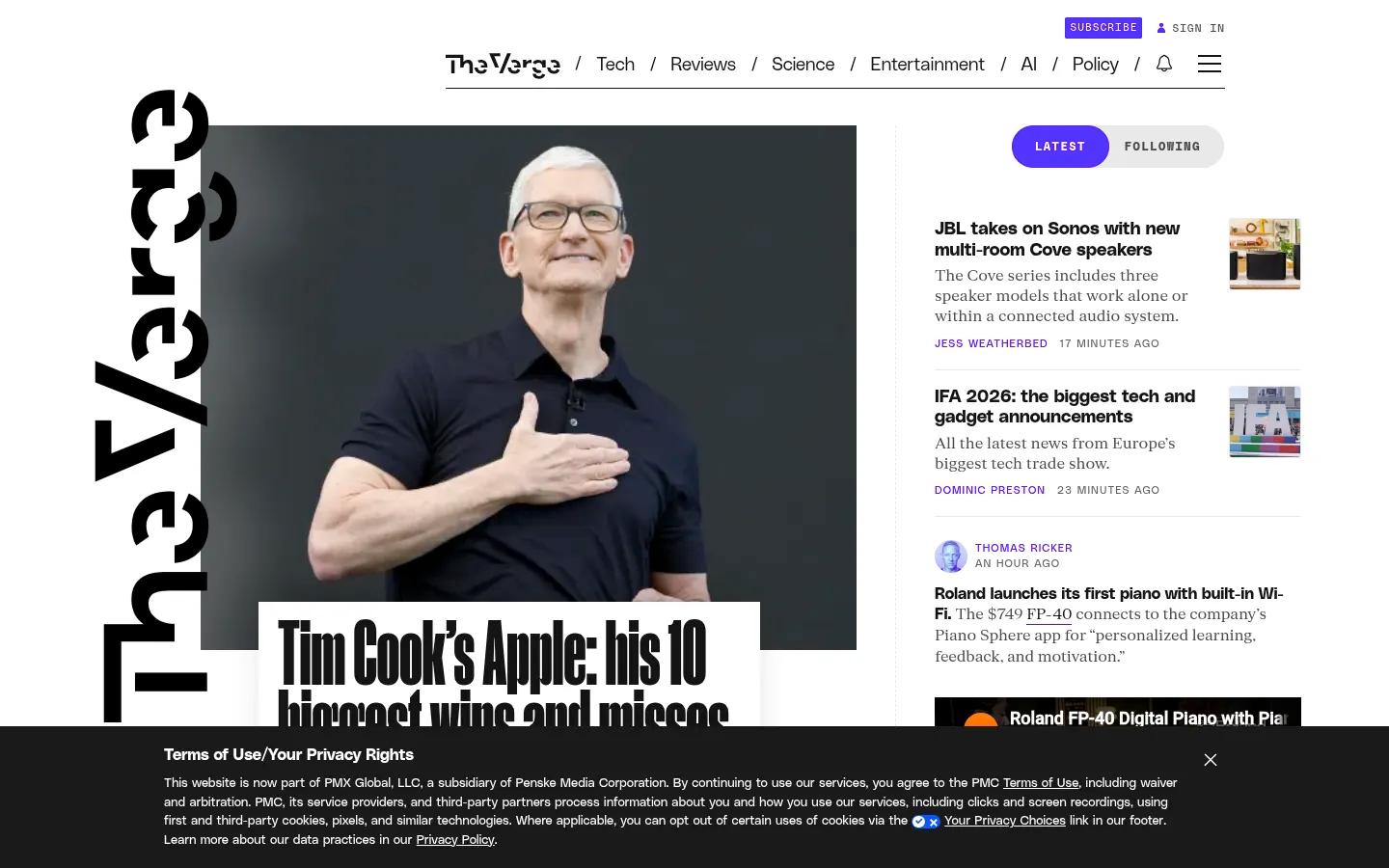
The Verge
theverge.com
The Verge is a US technology and culture news publication covering consumer technology, science, entertainment, transportation, policy, and the ways digital products affect everyday life. It publishes breaking news, product reviews, explainers, investigations, videos, podcasts, and analysis for a broad consumer-tech audience.
93
72
441.5K
0
Our Verdict
Strong earned-media and digital PR potential for genuinely newsworthy technology stories; routine link inserts and guest posting are generally unsuitable.
Who Owns or Publishes It?
What Does It Cover?
In-Depth Analysis
The Verge is a digital editorial publication launched in 2011 by Vox Media, initially as the successor to the technology blog Engadget’s former leadership and as a flagship for a more magazine-like approach to technology journalism. It was founded by Joshua Topolsky, Nilay Patel, and Marty Moe and quickly established an identity that combined fast technology news with design-conscious presentation, ambitious long-form features, and video. The site remains one of Vox Media’s major editorial brands and operates as a general-interest technology publication rather than a trade outlet focused solely on business buyers or industry insiders.
Its remit is deliberately broad. The Verge reports on major technology companies and platforms, including Apple, Google, Microsoft, Meta, Amazon, OpenAI, and hardware manufacturers, while also covering smartphones, laptops, gaming, streaming, social media, cybersecurity, artificial intelligence, transportation, science, climate-related technology, media, and technology policy. A central editorial premise is that technology cannot be separated from culture, politics, labor, entertainment, and daily life. Consequently, coverage often moves beyond product announcements to examine regulation, corporate power, privacy, platform governance, accessibility, creator culture, and the social consequences of emerging technologies.
The publication has a strong industry reputation for accessible but informed tech journalism. It is particularly recognized for polished product reviews, timely news coverage, explainers that translate complicated developments for mainstream readers, and opinionated analysis. Its writing can be conversational and personality-led, but its most consequential stories generally rely on named reporting, official documents, interviews, product testing, or clearly attributed external sources. Reviews commonly emphasize real-world use, design, software experience, value, and consumer implications rather than only technical specifications.
As with many high-volume digital newsrooms, the depth of individual posts varies by format: breaking-news articles may be concise, whereas features, investigations, reviews, and certain policy pieces receive substantially more reporting and editorial framing. Notable Verge franchises include its product-review operation, video programming, the Decoder interview podcast hosted by editor-in-chief Nilay Patel, and The Vergecast, a longstanding technology news and discussion podcast. The site has also been associated with high-production visual storytelling and documentary-style video, although its format mix has evolved with changes in the digital-media market.
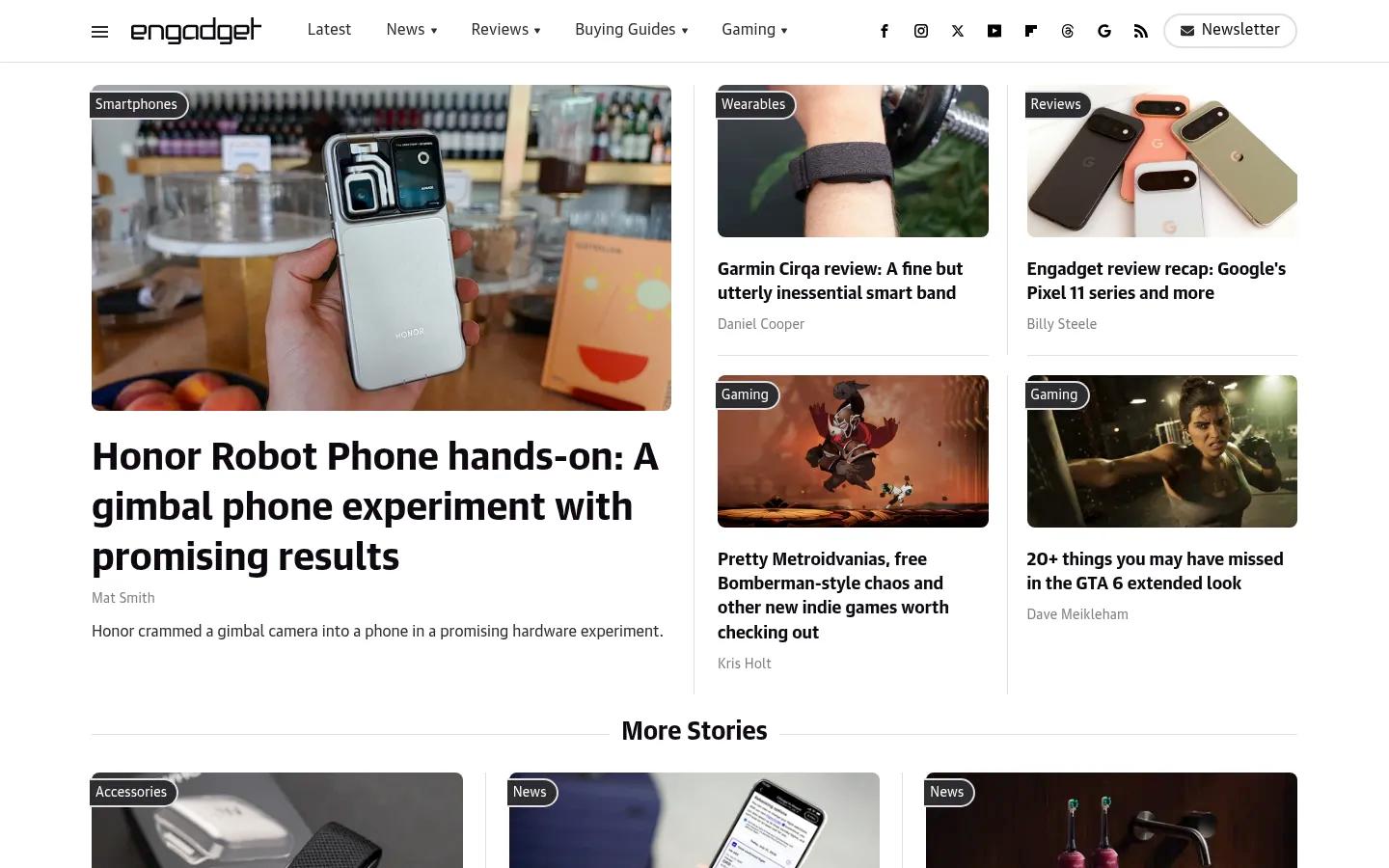
Its product coverage is often supported by buying guidance and deal-oriented service journalism, while major industry events such as CES, Apple launches, Google I/O, and large gaming or streaming announcements are recurring editorial moments. The Verge’s audience is principally consumers who are highly engaged with technology, digital media, and gadgets, but it also reaches marketers, founders, product professionals, journalists, policymakers, and communications teams seeking a mainstream read on the technology sector. Its market position sits between enthusiast outlets such as Ars Technica and broad tech-business publications such as TechCrunch, with greater emphasis than many competitors on consumer experience, design, culture, and editorial voice. Compared with Wired, The Verge is generally faster-moving and more product-news-oriented; compared with CNET, it is less primarily service-and-review-led and more focused on news, opinion, and cultural interpretation.
For digital PR and link-building professionals, The Verge matters because a credible mention or editorial citation can carry significant reputational value with technology-interested audiences. However, it is not a routine placement destination. Its newsroom is selective, news-driven, and unlikely to publish generic guest articles, prewritten promotional copy, commercial link inserts, or lightly evidenced trend claims. The strongest pitches are timely, independently verifiable, and directly relevant to a reporter’s beat: original research with a meaningful finding, exclusive news, a demonstrable product shift, a well-qualified source on a breaking issue, or compelling documentation of consumer impact.
Brands should expect journalists to retain control of framing and should not treat coverage as guaranteed, positive, or link-led. The publication has at times attracted debate for its strongly voiced criticism of technology companies, platform decisions, and the industry’s concentration of power, as well as for its coverage and commentary on labor, moderation, privacy, antitrust, AI, and climate. These are editorial positions and reporting priorities rather than evidence that it is unsuitable for corporate sources; they do mean that pitches need to withstand skeptical questioning. Overall, The Verge is a high-authority editorial target for genuinely newsworthy technology and culture stories, but its value derives from earned coverage rather than scalable SEO tactics.
Editorial Intelligence
Authoritative, conversational, and often analytical, with a distinct point of view. It mixes fast breaking-news reporting with accessible explainers, rigorous product reviews, interviews, and longer features.
Link Policy
The publication uses contextual external links where they serve reporting, sourcing, product information, or reader utility. Commercial, affiliate, and sponsored relationships may be disclosed and handled differently from ordinary editorial citations.
Author Bio Policy
The Verge is not an open contributor publication, so it does not offer routine guest-author bios with promotional links.
Outreach Intelligence
Pitch the individual reporter or editor whose recent coverage precisely matches the subject rather than sending a generic newsroom blast. Lead with the news, evidence, and why the development matters to Verge readers; offer primary documents, usable data, access to qualified decision-makers, or a legitimate exclusive where appropriate. Make product claims testable and be prepared for critical questions about privacy, labor, pricing, accessibility, competition, and consumer impact. Avoid attaching SEO requirements, requesting a specific anchor-text link, sending prewritten articles, or presenting a weak survey as major news. For paid activations, contact Vox Media’s advertising team separately from the editorial newsroom.
Newsletter, Podcast & Feeds
The Verge publishes editorial newsletters, including The Verge Daily, which summarizes notable technology news; subscriber counts are not publicly verified here.
The Vergecast is a recurring technology news and discussion podcast, while Decoder features interviews focused on technology, business, policy, and power.
Editorial Model
The Verge is a professionally staffed Vox Media newsroom that publishes reported editorial work, reviews, analysis, and service journalism. Commercial programs may be produced separately through Vox Media’s advertising and branded-content operations, distinct from newsroom coverage.
Who Reads It?
The audience consists primarily of technology-interested consumers and enthusiasts, alongside product professionals, media workers, marketers, founders, and policy-aware readers. Readers commonly seek trusted coverage of devices, platforms, entertainment, and the societal effects of technology.
Audience Interests
Audience Quality
Is It Suitable for PR & Link Building?
It is a valuable target for exclusive, timely, well-evidenced technology, consumer, policy, or culture stories with clear public interest.
Explore Digital PR ServicesRelevant reporters may use credible, non-promotional experts when their expertise directly advances a current story.
Explore Expert Quote Link BuildingBrands can earn mentions through significant launches, research, product relevance, or newsworthy developments, not through routine outreach.
Explore Brand Mention ServicesA major editorial newsroom is not an appropriate venue for paid or retrospective SEO link insertion requests.
The Verge does not operate as an open contributor platform for externally submitted brand or agency articles.
Vox Media offers advertising and branded-content solutions, subject to commercial availability and clear separation from editorial coverage.
Explore Sponsorship OptionsWhy This Matters
The Verge can deliver meaningful awareness, credibility, and qualified technology audience reach when a story earns editorial attention. Success depends on relevance, evidence, timing, and a reporter-specific angle, rather than on a request for a backlink or favorable coverage. Commercial activity should be handled through Vox Media’s advertising channels, not presented as editorial outreach.
Link & Content Behaviour
Best Suited For
Not Suitable For
Guest Content & Sponsorship
The Verge is a staff-led editorial publication and does not publicly operate a general write-for-us or guest-post program for marketers, agencies, or brands.
SEO Metrics
High — Multiple verified sourcesAhrefs Metrics
Majestic Metrics
Link Profile
Metrics last updated: 1 September 2026
Data Sources
Profile last checked: 1 September 2026
Metrics can change. SEO metrics are estimates from third-party providers and may differ from real-time values. They should be used as indicators rather than exact figures.
Contact Information
Publicly sourcedSocial Profiles
Top Organic Keywords
| Keyword | Volume | Position |
|---|---|---|
| the verge | 301K | 1 |
| iphone review | 823K | 3 |
| tech news | 1.2M | 6 |
Frequently Asked Questions
Is The Verge a suitable target for digital PR and editorial link building
Yes, but only for genuinely newsworthy technology stories. The Verge focuses on consumer technology, product launches, platforms, AI, policy, design, science, and the cultural impact of technology, so campaigns need a strong public-interest or industry angle rather than a simple brand announcement.
Can brands buy editorial backlinks or guaranteed coverage from The Verge
No. The Verge states that its newsroom does not produce paid content and maintains a separation between editorial and advertising teams. Paid campaigns may be available through its commercial operations, but they should not be treated as guaranteed editorial coverage or ordinary earned links.
Does The Verge accept guest posts or general guest article submissions
The site does not promote an open guest-post marketplace or a standard SEO-focused contributor program. The Verge does publish occasional contributor work, but contributors are expected to meet the same rigorous journalistic standards as staff writers and must disclose relevant conflicts of interest.
What type of PR pitch is most likely to interest The Verge
Pitches should offer original reporting value, meaningful data, exclusive access, a major product or platform development, or a compelling technology story with consumer, policy, design, or cultural significance. Purely promotional releases, routine company updates, thin product placements, and stories created mainly to obtain a backlink are poor fits.
How should a PR professional contact The Verge with a story idea or news tip
The Verge provides a contact system for tips, questions, and feedback, and its newsroom has also publicly used the tips@theverge.com address for story leads. For the best chance of relevance, a pitch should also be directed to the reporter or editor who covers the specific technology beat.
Does The Verge publish a response-time policy for pitches
No published response-time commitment or editorial pitch service-level agreement was found. PR teams should assume that unsolicited pitches may receive no reply and should make the initial email concise, exclusive where possible, and supported by immediately usable evidence or sources.
What advertising and sponsorship options are available through The Verge
The Verge’s commercial offerings include display advertising, newsletter placements, podcast spots, video, social promotion, jobs advertising, and branded or sponsored content developed through its commercial creative operation. Sponsored work is clearly labeled, and advertising discussions are handled outside the newsroom through the company’s advertising sales process.
What editorial restrictions should brands understand before approaching The Verge
The Verge says it does not accept gifts, meals, discounted services, paid trips, or other things of value from companies it covers, and it does not allow subjects to approve stories before publication. Communications professionals should also treat conversations as on the record unless a reporter explicitly agrees to background or off-the-record terms.
Can a company reuse The Verge coverage, quotes, logos, or review awards in marketing
Not automatically. Vox Media handles permissions and licensing requests on a case-by-case basis, and commercial use of review quotes, logos, awards, articles, images, podcasts, or videos may require approval, attribution, and a licensing agreement; marketing materials must not imply endorsement or affiliation.
Represent this publication?
If you work for The Verge and want to suggest an update — corrected contact details, editorial policy changes, or commercial information — we'd like to hear from you.
Suggest an UpdateExplore suitable opportunities on The Verge
iNet Ventures can help you assess whether The Verge fits your Digital PR or link building campaign.
Discuss a Digital PR campaign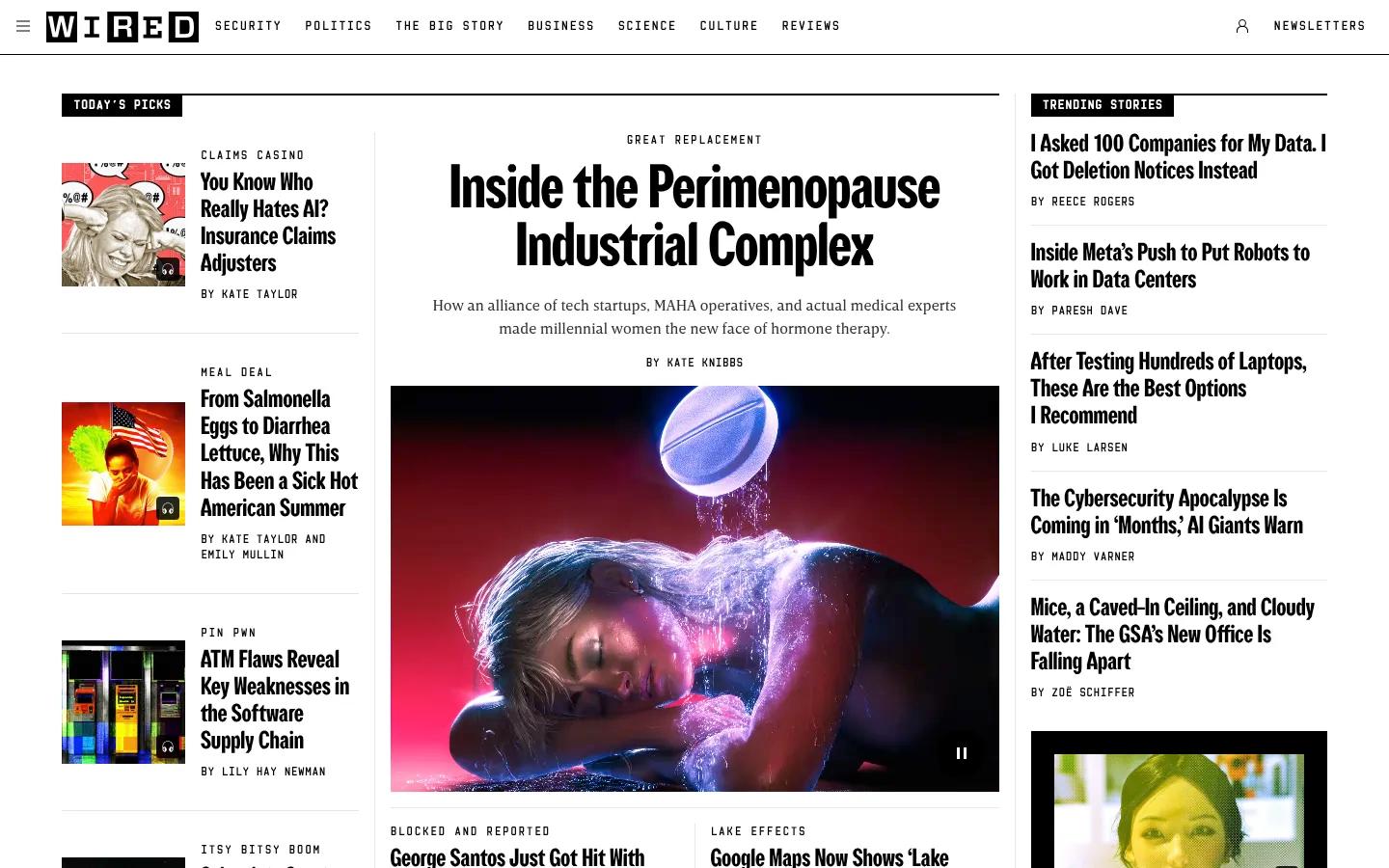
Competitors
Build Better Backlinks with iNet Ventures
We've worked with thousands of publishers. Let us handle your outreach — real, manual, white-label link building.
Trusted by 200+ agencies worldwide