

Crunchbase is worth it for a digital marketing agency when private, funded or fast-growing B2B companies are central to its ideal client profile. Its combination of company, funding, investor, leadership and growth data can make account selection and outreach timing much better.
It is not automatically worth paying for if the agency mainly targets local businesses, consumers, mature small companies or publishers. It is also not a complete outbound platform: Pro is primarily a company-intelligence product, while deeper CRM integration, predictions and contact functionality sit in Business or separate contact packages.
A database only creates value when it changes a decision. For agencies, the useful decisions are: which companies fit our offer, which ones have the budget and urgency to buy, what happened recently that gives us a relevant reason to contact them, and who should we approach?
Crunchbase is unusually strong on the first three questions for private-market companies. It is less complete on the fourth unless you pay for the appropriate contact access or pair it with another source. This guide explains where the platform earns its keep, where it does not, what the current plans actually include and how to test it without confusing a large spreadsheet with a real pipeline.

Crunchbase for agencies at a glance
| Agency task | How useful is Crunchbase? | Why |
|---|---|---|
| Finding funded startups and scaleups | Excellent | Funding stage, round date, industry, geography and company size are core strengths. |
| Building B2B account lists | Very good | Advanced search, AI search, saved searches, lists and exports support focused account selection. |
| Timing agency outreach | Very good | Funding, leadership, acquisition, growth and other company events provide timely triggers. |
| Competitor and market research | Very good | Funding histories, investors, similar companies and category data reveal market structure. |
| Finding named decision-makers | Mixed | People and leadership data help, but unlocked emails and phone numbers are not the main strength of Pro. |
| Running email sequences | Poor | Crunchbase is not a dedicated sequencing, deliverability or multichannel engagement platform. |
| Local-business prospecting | Poor | Google Maps, local directories and vertical databases generally provide better coverage. |
| SEO and backlink analysis | Poor | It does not replace Ahrefs, Semrush or a backlink-quality tool. |
Analyze Your Backlink Profile
Get detailed insights into your backlink quality with Moz, Ahrefs & Majestic data combined.
What is Crunchbase?
Crunchbase is a private-company intelligence platform. It is best known for profiles of startups, scaleups, investors and funding rounds, but its current product covers a wider set of firmographic, financial and market signals. Depending on the plan, users can search companies and people, monitor activity, export data, connect a CRM, access contacts, and use predictive signals relating to growth, funding, acquisitions and IPOs.
Crunchbase says its data is built from five broad sources: direct input from companies, investors and partners; aggregated user-engagement signals; automated ingestion systems; more than 1,000 news and government-filing sources; and analyst validation. Its data methodology page currently reports more than 4,000 venture partners, 600,000 active contributors and over 30 million verified updates a year.
Those are Crunchbase's own coverage claims, not an independent accuracy audit. They nevertheless explain the product's advantage: it organises private-market events and relationships that are awkward to assemble consistently from search engines, company websites, press releases and regulatory filings.
How much does Crunchbase cost in 2026?
Pricing and allowances change, so treat this as a dated snapshot checked on 3 September 2026. Confirm the live terms before purchasing.
| Plan | Published price | Search and export access | Relevant agency features |
|---|---|---|---|
| Free | $0 | Limited search; Crunchbase's comparison page states up to five results per search | Basic profile research and a limited way to test data coverage |
| Pro monthly | $99 per month | Up to 1,000 results per search and up to 2,000 exported rows per month | Advanced and AI search, lists, saved searches, alerts, company insights and productivity tools |
| Pro annual introductory offer | $588 for the first year for eligible new users | Pro allowances | Equivalent to $49 per month for the introductory year; check renewal pricing before buying |
| Business | Contact sales | Up to 1,000 results per search and up to 5,000 exported rows per month | Team administration, CRM integrations, SSO, private-market predictions and broader intelligence |
| API / data licensing | Contact sales | Contract-dependent programmatic access | Enrichment, internal products, large research workflows and automation |
The figures above come from Crunchbase's live plan comparison, Pro purchase guidance and Pro product page. The annual $588 figure is explicitly described as a first-year introductory offer, not a permanent renewal price.
Contact data needs separate scrutiny. Crunchbase's Knowledge Center says Business customers receive 10 contact unlocks per month, with current add-on packages listed at 100 for $29, 250 for $59 or 500 for $99 per month. If email and phone data are your main reason for buying, compare the full Business quote plus contact package—not the $99 Pro headline price.
Where Crunchbase creates real value for a digital marketing agency
1. It turns a vague niche into a defensible account list
“We work with SaaS companies” is not an ideal client profile. It is a market description. A useful agency ICP might be:
- Privately held B2B software companies
- Headquartered in the UK, Ireland or selected US states
- 50 to 500 employees
- Raised Seed, Series A or Series B funding in the past 18 months
- No agency competitors, consultancies or holding companies
- A website and active senior marketing leadership
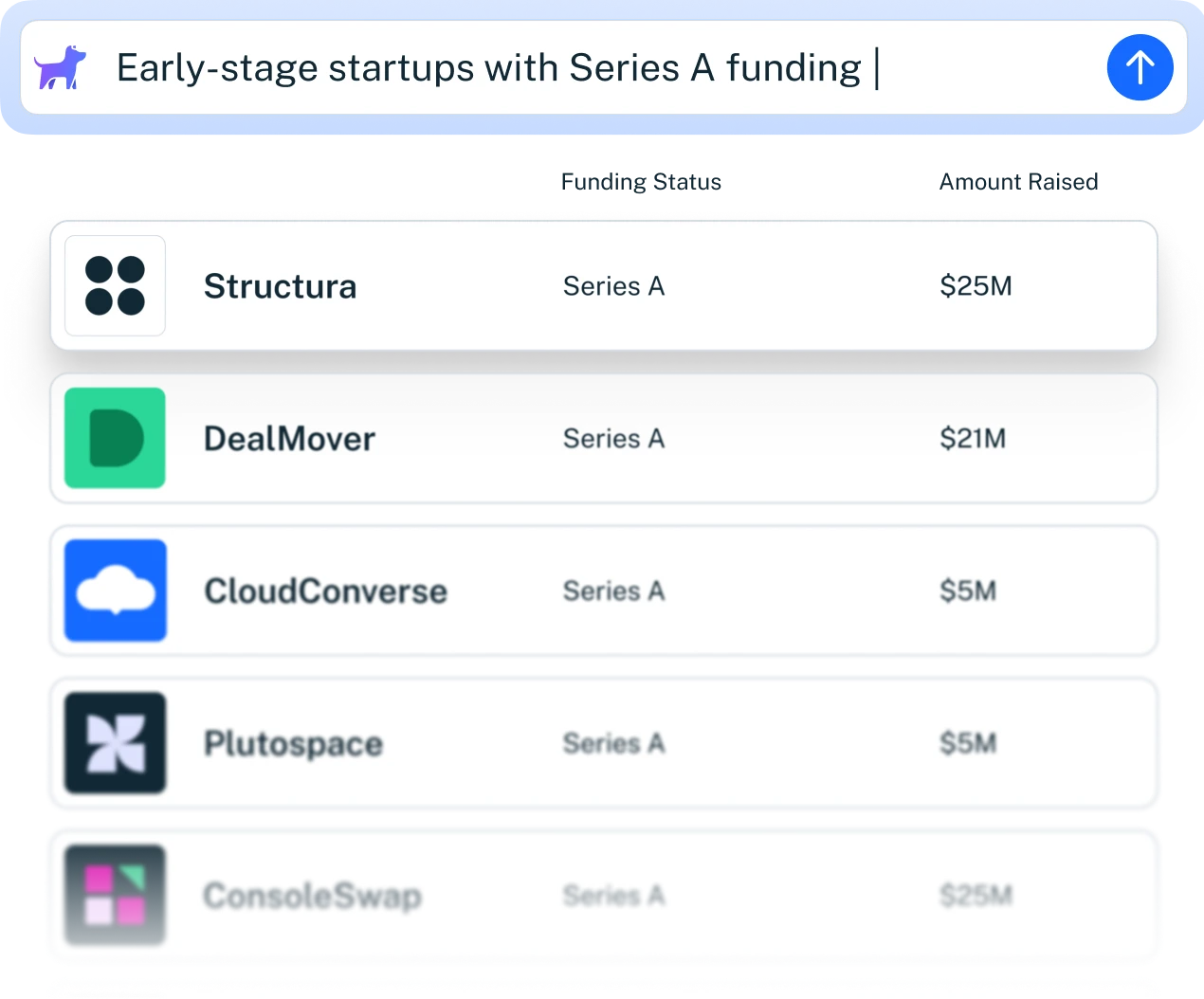
Crunchbase is designed for this kind of filtering. Its search documentation states that paid users can combine hundreds of filters and view up to 1,000 search results. The result is not a finished lead list, but it is a much better research universe than a generic “top SaaS companies” article.
2. Funding events create timing, not guaranteed budget
A recent funding round is useful because it can signal new targets, hiring, market expansion, product launches and increased pressure to grow. An agency can monitor recently funded businesses and approach them with an offer connected to the stage they are entering.
But “funded” does not mean “ready to hire our agency.” Capital may be allocated to product development, compliance, inventory, acquisitions or runway. Treat funding as a reason to research, not a reason to blast every executive with the same message.
A stronger approach is to combine the funding event with at least one additional signal:
- A new CMO, VP Marketing or Head of Growth
- Open roles in content, SEO, demand generation or communications
- Entry into a new market
- A redesigned site or newly launched product
- A visible content, authority or organic-search gap
- A competitor gaining share of voice
Authority Link Building
Flexible link building plans with allocation across clients. Track everything via your live dashboard.
3. Saved searches and alerts create a repeatable prospecting system
Pro users can save a dynamic search and receive alerts as new companies match it. Crunchbase distinguishes these from static lists: a saved search updates with new matching records, while a list monitors a fixed set of selected profiles. Its alerts guide explains how users can choose the activity and frequency they want to follow.
For an agency, that means one careful setup can produce a weekly queue of accounts worth reviewing. It is more efficient than repeating broad searches, and it creates a consistent process that can be measured.
4. Market maps improve strategy and client conversations
Crunchbase is useful before outreach too. An agency pitching or onboarding a private B2B company can use it to map funded competitors, identify adjacent categories, compare investment histories and find the investors connecting a market.
That context can improve:
- Competitor sets for SEO and share-of-voice analysis
- Campaign positioning and audience segmentation
- Digital PR angles based on investment or category trends
- Partnership and co-marketing research
- New-business pitch preparation
- Client expansion into new regions or verticals
It can also supply the starting dataset for a genuinely useful research-led campaign. If you turn private-market trends into stories, methodology and interpretation still matter. Our digital PR ideas tool can help develop angles, while our digital PR service covers campaign creation and journalist outreach.
5. Company signals make personalisation more concrete
Good personalisation is not inserting a first name into a template. It is showing that the message reflects the account's situation. A funding event, leadership hire, acquisition or expansion can explain why a specific recommendation matters now.
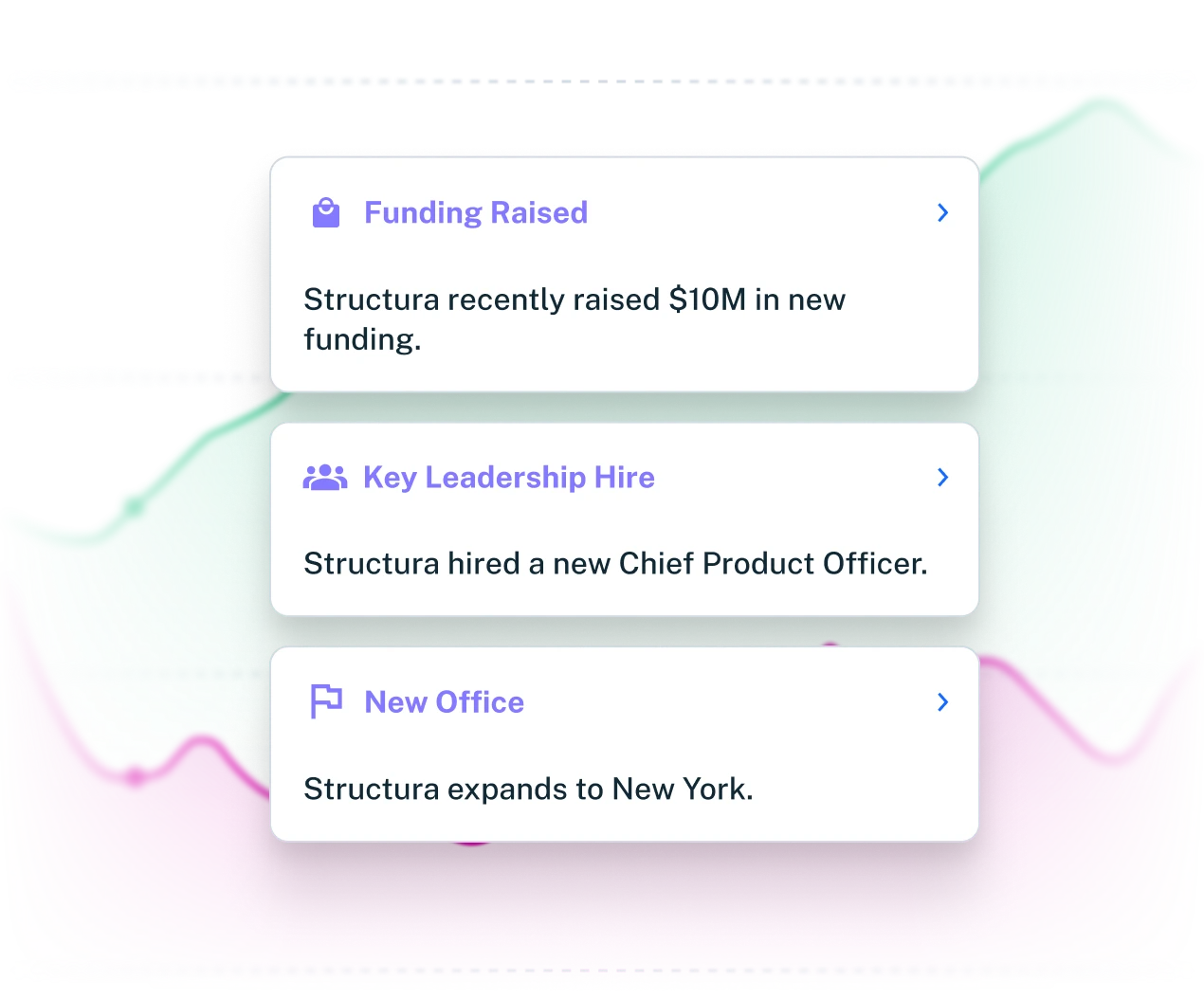
For example, an agency specialising in international SEO might identify a Series B software company opening its first European office. The outreach can address multilingual architecture, local search demand and digital authority in the new market. That is materially different from “I noticed your great website.”
Crunchbase Business adds predictions for growth, funding, acquisition and IPO outcomes. These are model outputs, not facts. Crunchbase's own data terms warn that AI-generated content can be incomplete or incorrect and should be independently verified. Agencies should apply that warning to every predictive signal before putting it in a pitch or client report.
Where Crunchbase falls short
It is company intelligence first, contact data second
Pro can help identify organisations and named people, but it should not be assumed to include a large monthly supply of verified email addresses and direct dials. Crunchbase's contact-level data includes job titles, LinkedIn profiles, email addresses and phone numbers, but the published unlock allowances and packages are tied to Business.
If the core need is to find and sequence thousands of contacts, a sales-intelligence platform such as Apollo may be a better primary tool. If the need is relationship-led social prospecting, LinkedIn Sales Navigator may be more natural. Crunchbase can still play the account-selection role in a combined stack.
It does not send or optimise outreach campaigns
Crunchbase is not an email sequencer, inbox-rotation product or deliverability platform. Exporting 2,000 rows is not the same as creating 2,000 qualified opportunities. Records need verification, segmentation, suppression checks and a relevant message.
For one-to-one drafting, iNet Ventures' free outreach email generator can help structure a concise first message. Human review is essential: remove unsupported claims, explain the specific relevance and make opting out straightforward.
Its strongest coverage may not match your market
Crunchbase covers public and private organisations globally, but its distinctive value is private-market and funding intelligence. An agency selling websites to independent restaurants, paid social to local dentists or reputation management to tradespeople will generally find better prospects in maps, local directories, review platforms and specialist databases.
The free account is useful here. Search 20 to 30 known companies from your real ICP. Check whether the profiles are present, current and detailed enough to support a decision. Do not subscribe based only on total database size.
Data still needs verification
Company databases inevitably contain missing, delayed or conflicting fields. Funding announcements can omit amounts. Employee ranges can lag. Job titles change. Similar-company classifications can be debatable. Community-contributed fields may not have the same evidential strength as a government filing.
Before using a record in outreach or a client deliverable, verify material claims against the company's website, recent announcements, executive profiles and an authoritative filing where appropriate. The database should accelerate due diligence, not replace it.
Export and licensing limits matter for agency delivery
Pro's published allowance of 2,000 exported rows per month is adequate for focused internal prospecting. It can become restrictive if several staff members share a workflow or if the agency intends to enrich client systems at scale.
There is also an important contractual distinction between using data internally and redistributing it. Crunchbase's API guidance says users may not license, sell, distribute or otherwise provide Crunchbase data to third parties unless their licence allows it. An agency planning to deliver raw datasets or embed Crunchbase-derived data in a client product should confirm the permitted use in writing.
Build E-E-A-T Authority
Get quoted by journalists and featured as an expert in high-authority publications.
A practical Crunchbase workflow for agencies
- Define one ICP and one offer. Write down geography, industry, company stage, employee range, exclusion criteria and the problem your service solves. Avoid beginning with every service the agency sells.
- Build the company search. Combine firmographic filters with a meaningful event such as a recent funding round, new leadership or expansion. Save the search so new matches are visible.
- Score accounts before finding contacts. Assign points for ICP fit, timing signal, visible marketing need and commercial potential. Remove agencies, consultancies, existing customers and obvious bad fits.
- Verify the top accounts manually. Check the company site, recent news, leadership and current strategy. If you are proposing link building, assess the site's existing authority and competitors with a proper domain intelligence tool; Crunchbase cannot evaluate backlink quality.
- Find and validate the relevant person. Use Crunchbase Business contacts, a complementary contact database, LinkedIn or the company's own team pages. Select the person who owns the problem, not simply the most senior executive.
- Send a small, relevant batch. Reference a verified trigger, explain one material observation and propose a low-friction next step. Track replies, meetings and qualified opportunities by search segment.
- Review after 30 days. Keep searches that produce qualified conversations. Tighten or remove those that only generate records. Measure value in pipeline and research time saved, not exports consumed.
How to calculate whether Crunchbase pays for itself
The right calculation depends on your gross profit per new client, not just contract value. Start with the avoidable monthly cost of the selected plan and any contact, CRM or enrichment tools required to make it usable.
For illustration, the table below uses the published $99 Pro monthly price. It does not claim that Crunchbase will produce any particular conversion rate.
| Gross profit from one new client | Monthly Pro cost | Clients needed to cover 12 months | Interpretation |
|---|---|---|---|
| $500 | $99 | 2.38 | Three incremental clients a year would exceed the annual monthly-plan cost. |
| $1,500 | $99 | 0.79 | One incremental client a year would exceed the annual monthly-plan cost. |
| $5,000 | $99 | 0.24 | One client would cover several years of Pro at the current monthly rate. |
The formula is simple; attribution is not. A company may have been discovered in Crunchbase, researched on its website, contacted through LinkedIn and converted after a referral. Use a CRM source field and record the originating saved search so the platform receives neither all the credit nor none of it.
Time saved is a secondary return. If a strategist saves five hours a month that would otherwise be spent assembling funding and company data, multiply those hours by the person's real loaded cost. Count the saving only if the time is redirected to revenue-producing or client work.
Crunchbase alternatives for digital marketing agencies
| Tool or source | Best at | Better than Crunchbase when... | Main trade-off |
|---|---|---|---|
| Apollo | Contact data, prospecting and outbound engagement | You need emails, phone data, sequences and sales workflows more than private-market analysis. | Funding and investor intelligence is not its central differentiator. |
| LinkedIn Sales Navigator | People search, role changes and relationship-led prospecting | Your targeting begins with people, seniority, careers and mutual networks. | Exports and structured private-company financial data are more limited. |
| Dealroom | Startup, investor and ecosystem intelligence | You need deep technology-ecosystem research, especially for innovation or economic-development work. | Its published Premium plan starts at €12,600 per year and three seats, far above Pro. |
| PitchBook | Institutional private-capital research | Private equity, venture capital, transactions and valuation research justify enterprise-level depth. | Usually excessive for ordinary agency new business. |
| Google, company sites and filings | Primary-source verification | Volume is low and a researcher can investigate a small named market manually. | Slow to standardise, monitor and compare. |
| Local and vertical directories | SMBs in a place or specialist trade | Your clients are dentists, restaurants, solicitors, builders or another local category. | Usually weak on funding, investor and growth signals. |
Apollo's live pricing and plan page confirms its emphasis on contact data, email campaigns and sales integrations. Dealroom publishes its Premium price and export allowances. For every platform, compare the current plan at checkout; allowances and packaging change frequently.
Which types of agency should buy it?
Strong candidates
- B2B SaaS and technology marketing agencies
- Digital PR teams covering startups, funding or innovation
- Agencies serving venture-backed companies
- Account-based marketing specialists
- International growth agencies targeting scaleups
- Consultancies doing market and competitor research
Weak candidates
- Local SEO and small-business web agencies
- Consumer-only performance agencies
- Teams mainly seeking journalist or publisher contacts
- High-volume cold-email operations needing an all-in-one sequencer
- Agencies buying it for backlink data
- Teams without a defined ICP or follow-up process
Link-building agencies occupy the middle. Crunchbase can reveal funded brands that may need authority and organic visibility, but it does not identify suitable publishing sites or assess links. Agencies needing scalable fulfilment can instead review iNet Ventures' white-label link-building service, which handles prospecting, outreach, content and placement delivery.
Privacy and outreach compliance
Access to business information does not create permission to use it however you like. Rules depend on the recipient, channel and jurisdiction. Agencies should document their lawful basis, provide required privacy information, respect objections, maintain suppression lists and avoid collecting more personal data than needed.
For UK campaigns, the Information Commissioner's Office states that PECR treats corporate subscribers differently from sole traders and some partnerships, while the UK GDPR still applies when personal data is processed. Read the ICO's current B2B marketing guidance and obtain legal advice for your specific workflow and target markets.
Also follow Crunchbase's licence terms. A technically possible export is not necessarily contractually permitted for redistribution, resale or client-facing products.
For agencies comparing company intelligence with client-discovery platforms, see our ranked guide to the best business directories for SEO and digital PR agencies. It explains where Crunchbase fits alongside Clutch, LinkedIn, specialist partner directories and review platforms.
Final verdict: is Crunchbase worth it for digital marketing agencies?
Yes, for the right agency. Crunchbase Pro can easily justify $99 a month when one qualified private-market client is valuable, the agency has a narrow B2B ICP and funding or growth events materially improve account selection. Saved searches and alerts make the platform more valuable because they turn occasional research into an ongoing signal.
No, as a default purchase for every agency. It is poor value when the target market is mainly local or consumer-facing, when the team really needs verified contact data and sequencing, or when nobody owns a measurable prospecting process. A large export will not fix weak positioning or generic outreach.
The best low-risk decision is to use the free account to audit coverage of real target companies, then run the seven-day Pro trial with one ICP and one offer. Before the trial ends, count qualified accounts, verify the fields you rely on, test saved-search usefulness and price the complete workflow—including any contact or CRM add-ons. Upgrade only if the evidence supports it.
Frequently asked questions
Frequently Asked Questions
Find answers to common questions about this topic


