

Start with Clutch, an eligible Google Business Profile and LinkedIn Services. They cover the three jobs an agency directory should do: prove delivery through reviews, establish a trustworthy local entity and make the people behind the agency discoverable.
Add specialist directories only where the audience matches your services. A HubSpot, Shopify, Webflow, Google or Semrush partner profile can be far more persuasive than ten generic citations—but only when the agency genuinely meets the programme requirements.
Business directories can help an SEO or digital PR agency earn trust, appear in comparison searches, collect independent reviews and enter platform-specific partner ecosystems. They can also consume months of profile work and sponsorship budget without producing one suitable enquiry.
This guide ranks 20 active directories, review platforms and service marketplaces by practical agency value. Every listing model, public price and eligibility statement was checked against first-party information on 3 September 2026. Prices and programme rules change, so use the linked official source before purchasing.
The Top 20 Agency Directories Compared
| Rank | Directory | Cost or access | Best use | Priority |
|---|---|---|---|---|
| 1 | Clutch | Free; Verified $499/year | B2B reviews and agency discovery | Essential |
| 2 | Google Business Profile | Free; eligibility rules apply | Local search, Maps and reviews | Essential if eligible |
| 3 | LinkedIn Services | Free; optional Premium features | Founder-led and relationship-led enquiries | High |
| 4 | DesignRush | Free; paid plans from $200/month | Agency comparison and paid RFP access | High |
| 5 | GoodFirms | Free; Pro $49/month billed annually | Verified reviews on a lower budget | High |
| 6 | The Manifest | Included through a Clutch profile | A second agency-discovery footprint | High after Clutch |
| 7 | Agency Spotter | Free profile; paid upgrades available | Creative, PR and integrated agency discovery | High for brand-led agencies |
| 8 | Sortlist | Free profile; paid Sortlist+ options | European agency discovery and projects | High in Europe |
| 9 | Digital Agency Network | Paid; from $680/year | Global digital-agency visibility | High for multi-service agencies |
| 10 | Bing Places for Business | Free; business verification required | Bing Maps and Microsoft search visibility | High if locally eligible |
| 11 | Semrush Agency Partners | Paid Semrush plan and agency add-on | SEO and paid-search specialism | High for Semrush users |
| 12 | HubSpot Solutions Directory | Free listing with required certification | Inbound, CRM and RevOps agencies | High for HubSpot services |
| 13 | Google Partners Directory | Free after earning Partner status | Paid search credibility | High for PPC agencies |
| 14 | Microsoft Advertising Partner Directory | Conditional partner-program listing | Microsoft Ads and search agencies | Specialist |
| 15 | Shopify Partner Directory | Invitation and tier based | Established ecommerce agencies | High only for Shopify specialists |
| 16 | Webflow Certified Partners | Conditional; paid workspace required | Webflow design and SEO agencies | High for Webflow specialists |
| 17 | Crunchbase | Free company profile | Corporate entity and private-market visibility | High for startup-focused agencies |
| 18 | Trustpilot | Free; paid plans available | Review collection and reputation | Useful for review-led agencies |
| 19 | PRCA Member Directory | Paid membership; fee based on income | PR and communications credibility | High for UK digital PR |
| 20 | Bark | Free profile; pay to contact leads | Small and local project leads | Test carefully |
How We Ranked the Directories
This is an editorial priority ranking, not a claim about unpublished lead volume. A directory moved higher when it satisfied more of the following tests:
We did not rank directories simply because they provide a link. Search engines can ignore, qualify or recalculate links, and directory policies change. The durable value is a profile that helps a real buyer verify the agency.
1. Clutch
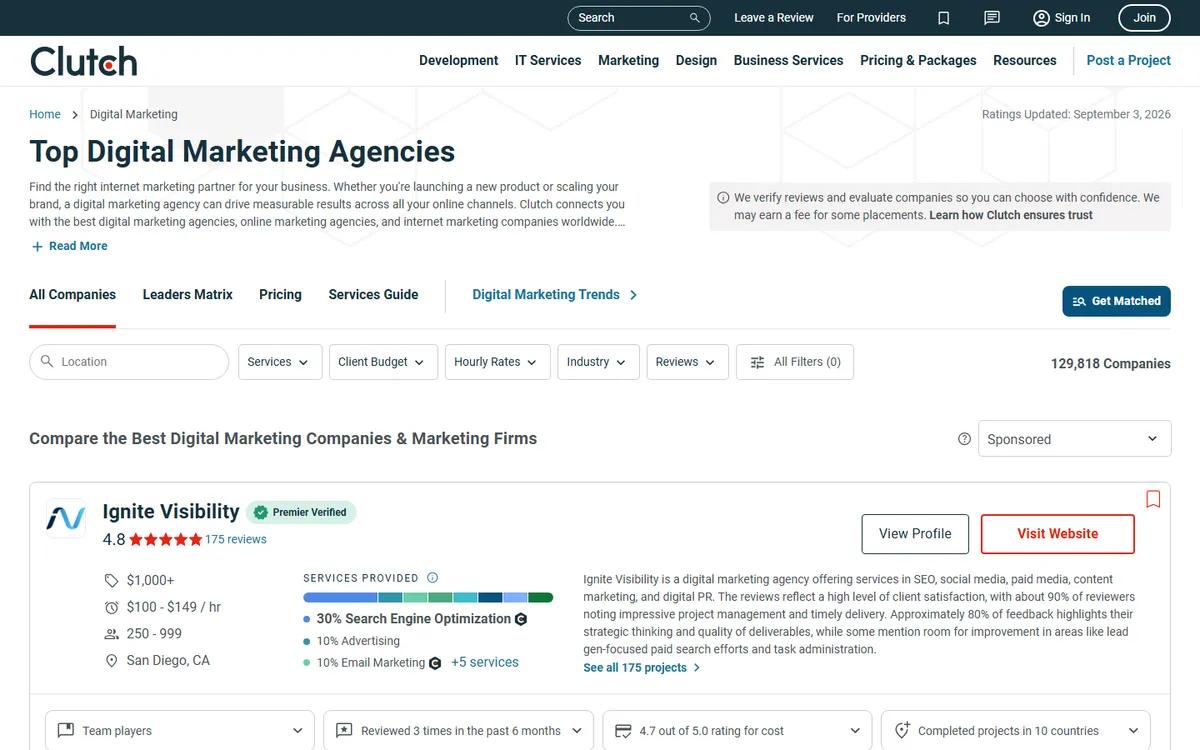
Clutch is the best all-round directory for established SEO and digital PR agencies. It combines detailed service-provider profiles with structured client reviews, project information, service-line percentages, budget ranges, portfolio work and location pages. Buyers can compare firms rather than merely find a name and phone number.
A Basic profile is free. Clutch currently lists Verified at $499 per year, while sponsorship and featured-directory placements use custom pricing. The distinction matters: the free profile can collect reviews and appear in relevant directories, but Verified adds business verification, greater visibility, unlimited case studies and direct website links from directory pages.
Start with the free profile and concentrate on evidence. Complete every relevant service line, add representative projects and request reviews from clients who can discuss objectives, delivery and outcomes. Do not buy sponsorship until the profile already converts visitors. Clutch should function as a third-party proof page, not as a substitute for the agency's own case studies.
Main limitation: competitive categories contain thousands of firms, and paid placements influence visibility. Track profile views, referral traffic and qualified enquiries before renewing an upgrade.
Official information: Clutch listing and eligibility details.
Analyze Your Backlink Profile
Get detailed insights into your backlink quality with Moz, Ahrefs & Majestic data combined.
2. Google Business Profile
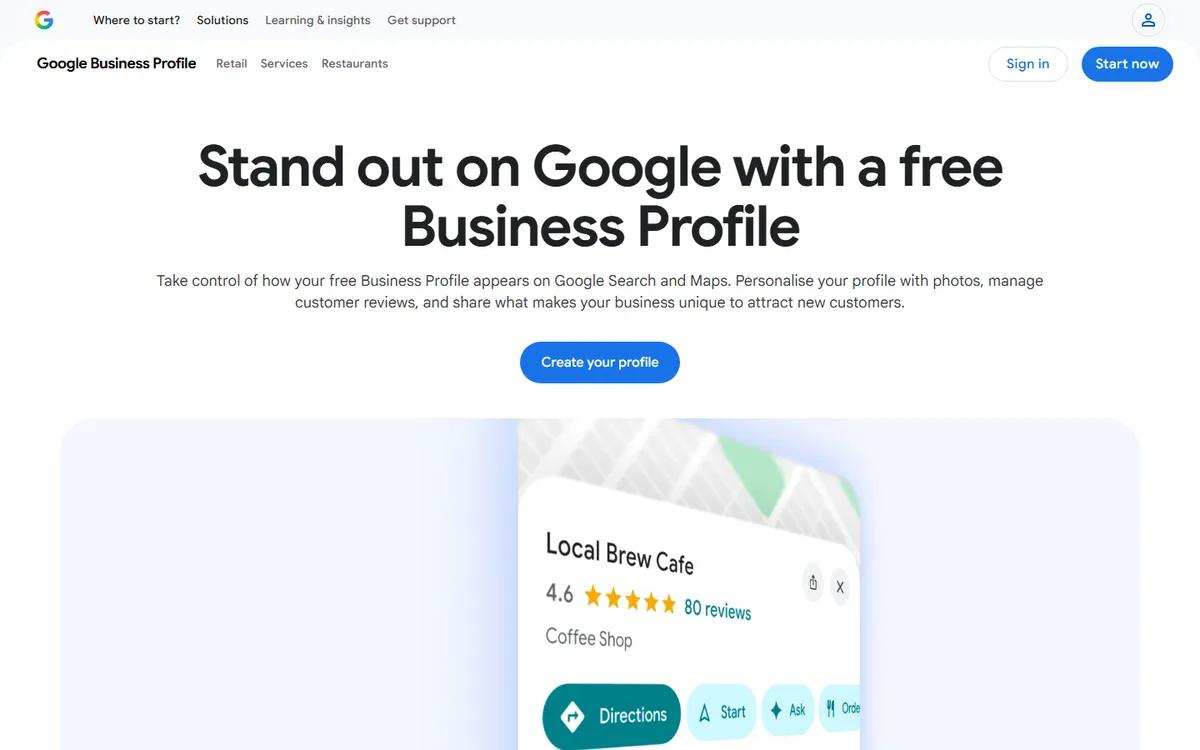
For an agency with an eligible office or a genuine service-area operation, Google Business Profile is the most important local business listing. It can place the agency in Google Search and Maps, display reviews, services, photographs, updates and contact details, and reinforce consistent business information across the web.
Eligibility is the crucial caveat. Google's current rules say a business must make in-person contact with customers during its stated hours. Online-only businesses, lead-generation companies, virtual offices and locations the business does not genuinely occupy are not eligible. An agency should never invent a storefront or use a coworking address solely to obtain a listing.
Use the most accurate primary category available, write services for buyers rather than stuffing locations into the description, and ask real clients for honest reviews without incentives. Agencies managing client profiles should also follow Google's third-party policies and keep each client as owner or co-owner.
If local visibility is part of the strategy, use our local citation service to build consistent supporting listings around an accurate Google profile.
Official information: Google Business Profile listing and eligibility details.
3. LinkedIn Services
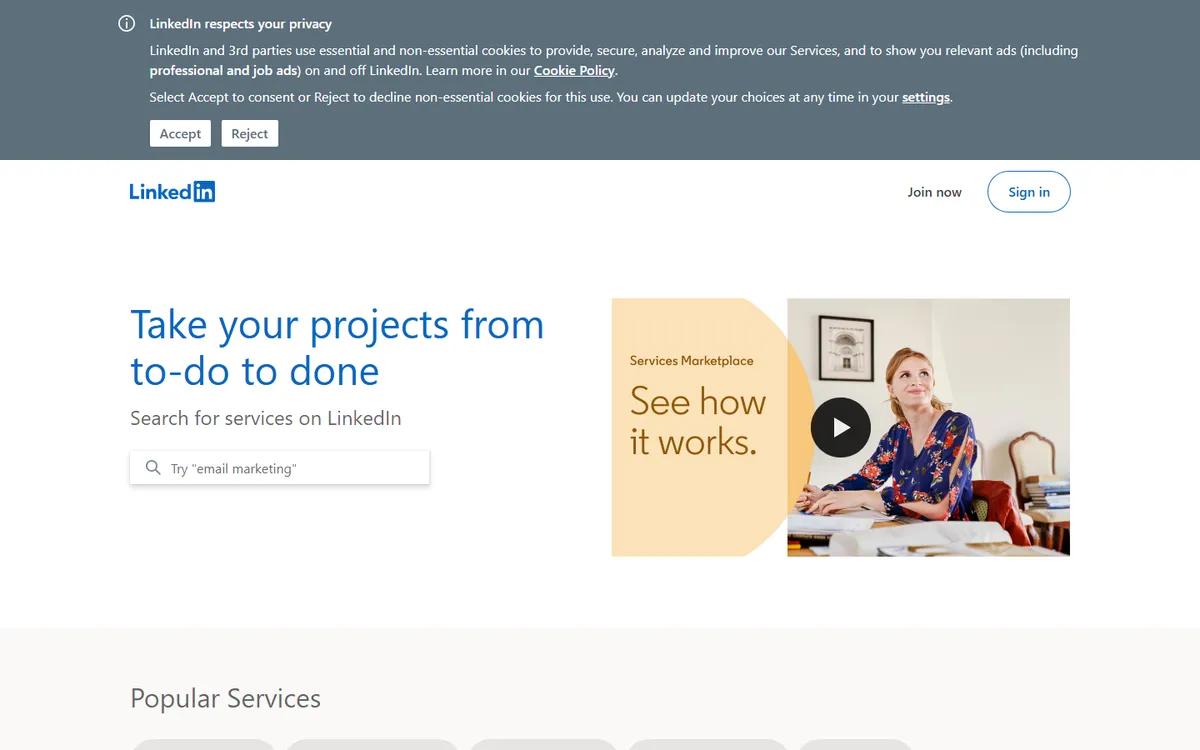
LinkedIn Service Pages turn an individual profile or eligible Company Page into a service-provider listing. Potential clients can view services and contact providers through a request-and-proposal flow even when they are not connected.
LinkedIn states that Service Pages are free and can list up to ten service types. A Company Page can offer services when the company has 500 employees or fewer; profile-managed pages suit a founder or consultant, while Company Page management allows page admins to handle requests. Optional Premium products add features but are not required to create the listing.
This channel performs best when the people behind the agency are active. A complete page with specific services, work examples and a realistic starting rate has little value if nobody publishes useful insights or responds quickly. Digital PR founders can use it to connect public commentary, speaking, journalist relationships and case studies to a clear commercial offer.
Main limitation: discovery is influenced by network and activity. It is not a set-and-forget citation, and broad labels such as “marketing” make comparison difficult.
Official information: LinkedIn Services listing and eligibility details.
4. DesignRush
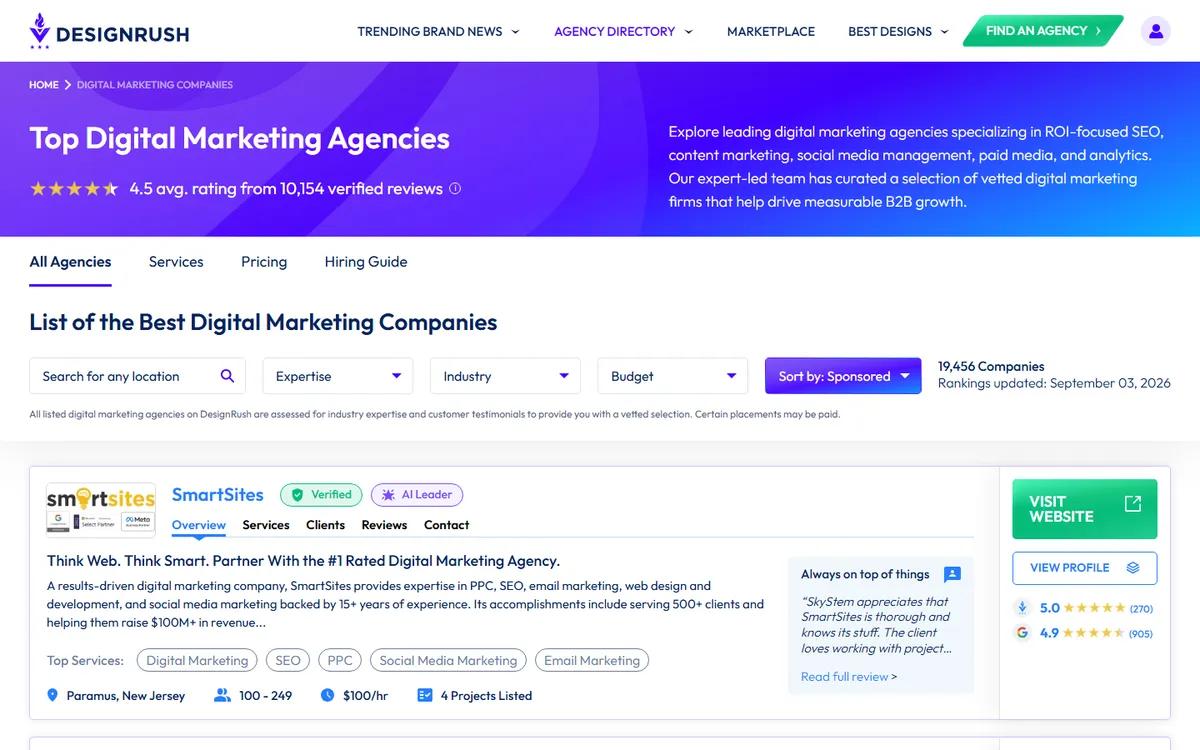
DesignRush operates a large agency directory covering digital marketing, branding, design, development and technology. Profiles expose useful buying fields such as expertise, location, team size, rates, clients, reviews and minimum project budget.
The basic agency profile is free. Its current Marketplace Membership page lists plans at $200, $300 and $500 per month with a one-year minimum, while sponsorship packages range from $500 to $5,000 per month. Paid products add access to RFPs, visitor insights, relationship support and prominent category positions.
SEO and digital PR agencies should first build the free profile around a narrow positioning and add work that proves the claimed specialties. Paid placement only makes sense after calculating the required close rate from the full annual commitment. Ask how many relevant projects appeared in your geography and service category during the previous quarter rather than relying on platform-wide lead claims.
Main limitation: sponsored visibility and marketplace access can become expensive. Separate referral traffic from paid RFP performance when measuring return.
Official information: DesignRush listing and eligibility details.
5. GoodFirms
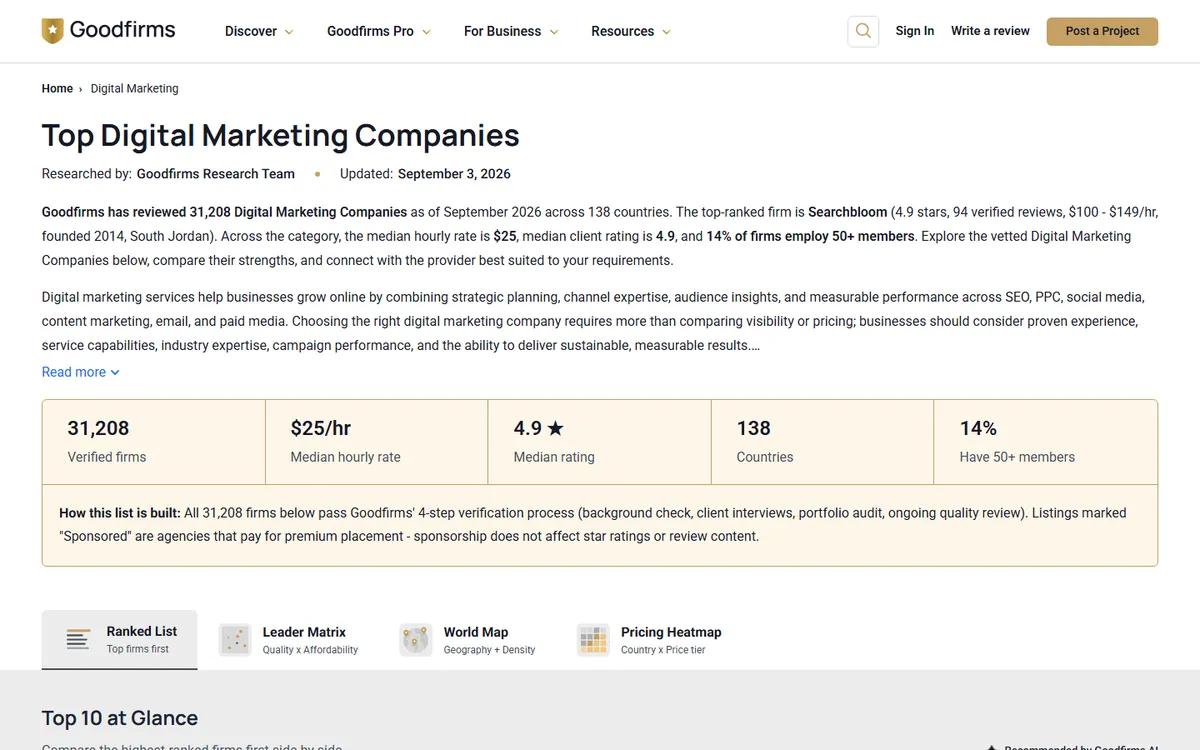
GoodFirms is a strong second review platform after Clutch. It has dedicated directories for digital marketing, SEO, public relations, content marketing and related services, with company profiles, portfolios, rates, team information and client reviews.
GoodFirms currently advertises a free-forever listing subject to its four-step research verification. Its public comparison lists Pro at $49 per month billed annually, or $588 per year. Pro adds a verified-business process, featured placement below sponsored positions, expanded review tools and wider access to buyer opportunities.
The free application is not automatic. GoodFirms says its research team reviews the portfolio, checks the company and contacts client references. Prepare a consistent website, corporate email, named leadership, representative projects and clients who have agreed to verify their relationship.
Main limitation: paid and sponsored firms receive more visibility. Build review depth before upgrading, and avoid copying the same generic company description used on every other platform.
Official information: GoodFirms listing and eligibility details.
6. The Manifest
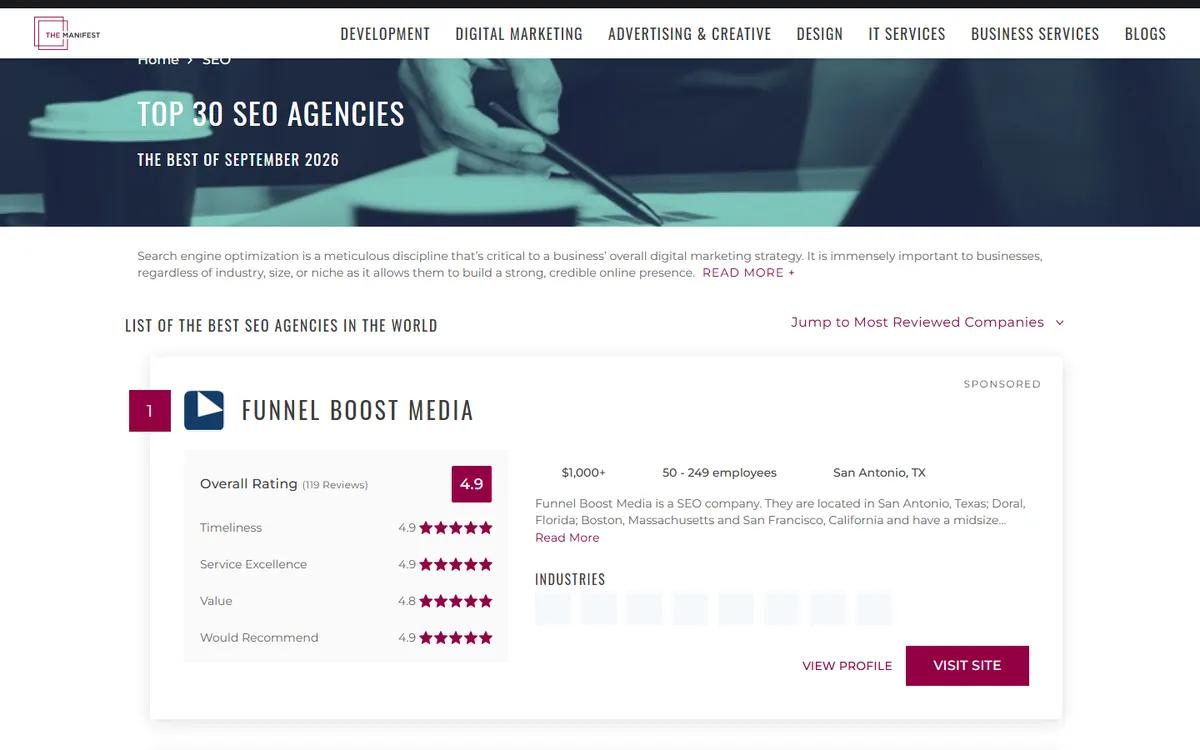
The Manifest publishes service and location shortlists for business buyers, including SEO, digital marketing and public relations agencies. It belongs to the same ecosystem as Clutch and uses Clutch company data and reviews.
There is no separate profile workflow. The Manifest's current instructions tell providers to create or claim a Clutch profile; eligible Clutch profiles are then featured on The Manifest. That makes this a high-efficiency listing: one accurate profile and review programme can support discovery across two domains.
Check that service categories, office locations, project budgets and descriptions are correct in Clutch, because those details determine where the agency can appear. Review the live Manifest page after material updates rather than assuming changes propagate immediately.
Main limitation: creating a Clutch profile does not guarantee a top shortlist position. Editorial selection, review strength, relevance and paid sponsorship all affect visibility. Treat The Manifest as incremental reach from good Clutch maintenance, not a separate acquisition strategy.
Official information: The Manifest listing and eligibility details.
7. Agency Spotter
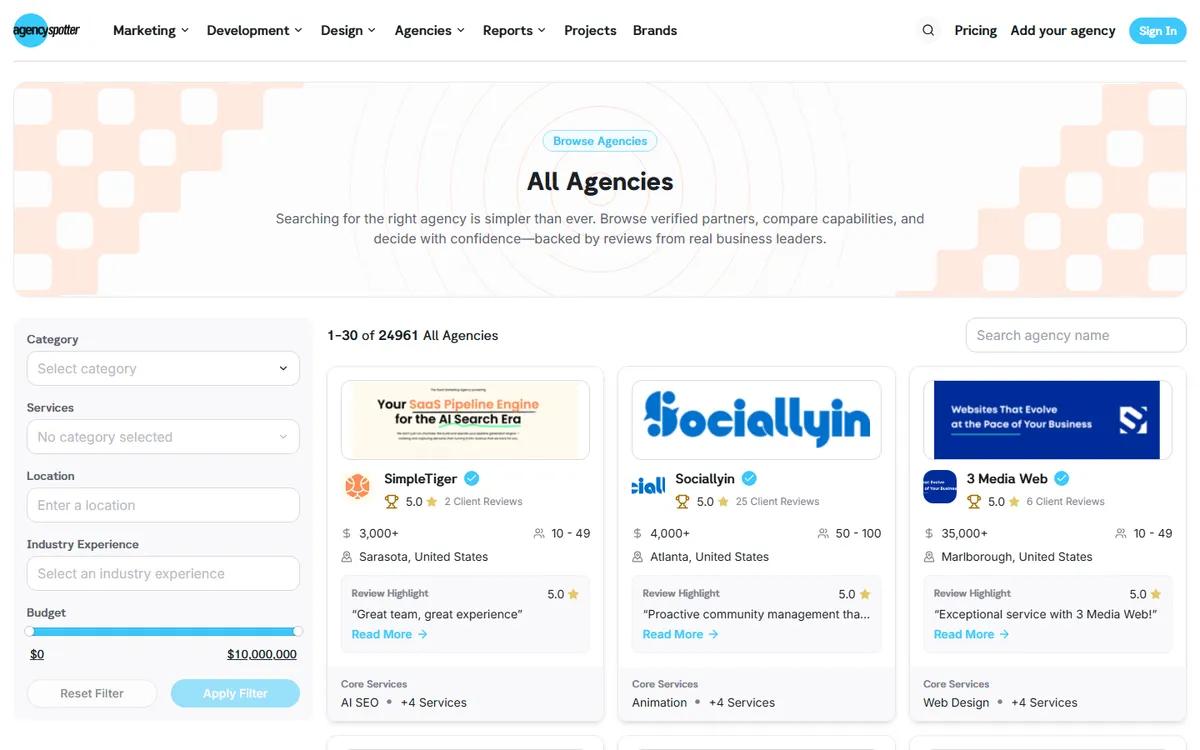
Agency Spotter is built specifically for buyers comparing marketing, advertising, design, digital, content and public relations agencies. Profiles can include capabilities, work, clients and independently validated reviews, while buyers can search and create shortlists.
Its current contact guidance says an agency needs at least two dedicated full-time employees to request or claim a portfolio. A basic presence can be claimed, and premium subscriptions add exposure and buyer intelligence. Public pricing information is not consistently presented across Agency Spotter pages, so request a current written quote before treating any figures elsewhere as reliable.
This directory is particularly relevant to digital PR firms that also sell strategy, creative, content or integrated campaigns. Use visual case studies and explain the agency's role; a logo wall without scope or outcomes gives a buyer little basis for comparison.
Main limitation: it is a better fit for creative and integrated agency searches than narrow technical SEO. Confirm the current free and premium feature boundaries directly.
Official information: Agency Spotter listing and eligibility details.
Authority Link Building
Flexible link building plans with allocation across clients. Track everything via your live dashboard.
8. Sortlist
Sortlist combines a public provider directory with project matching. Agencies can create a branded profile, select services and locations, display work and reviews, and receive opportunities submitted by businesses.
Sortlist confirms that basic registration is free and allows freelancers and one-person firms when this is stated accurately. The profile must fit one of its supported service categories. Paid Sortlist+ products add stronger directory visibility, opportunity access and other commercial features; pricing and credit mechanics should be checked in the agency account for the relevant market.
The platform is strongest for agencies selling across the UK and continental Europe. Complete the “prospection area” carefully, localise the profile where the team can actually sell and deliver, and respond only to opportunities matching budget, scope and decision stage.
Main limitation: marketplace opportunities can attract several providers and paid access does not guarantee a suitable pipeline. Track contact cost, proposal rate and gross profit by service category.
Official information: Sortlist listing and eligibility details.
9. Digital Agency Network
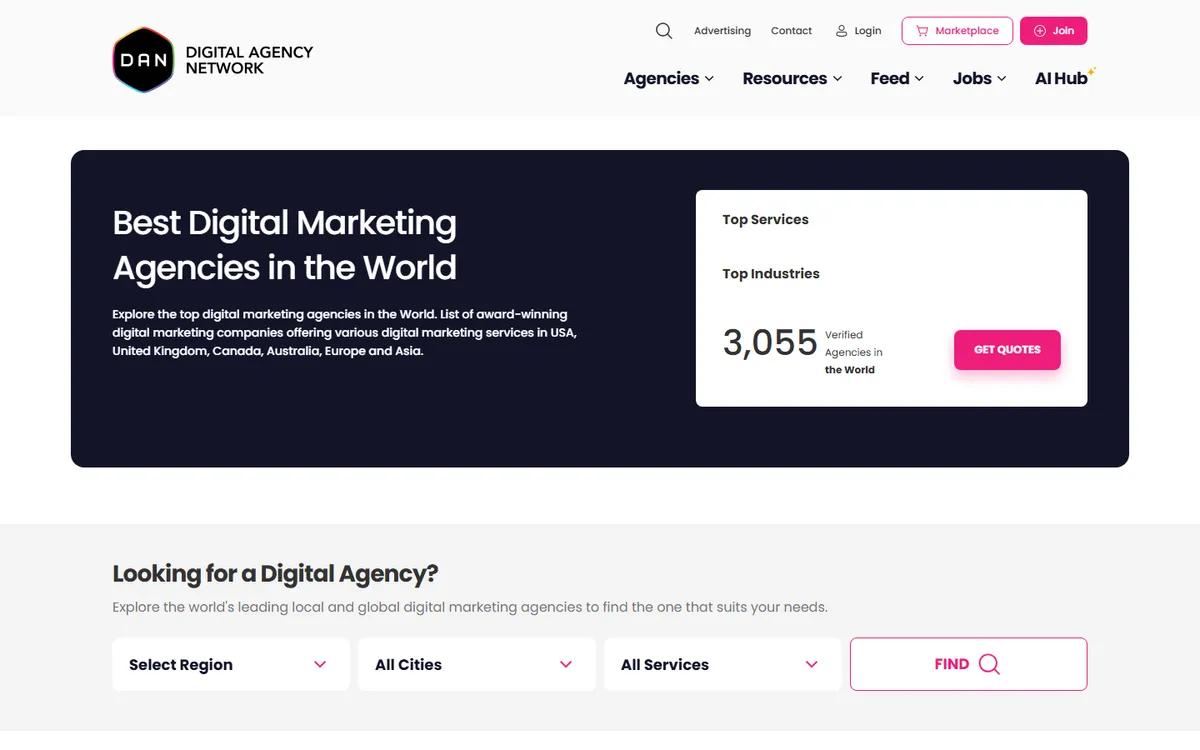
Digital Agency Network, usually shortened to DAN, is a curated directory and membership network for digital marketing and advertising agencies. Buyers can browse by region, city, service and industry, while members can publish agency news, case studies and other material depending on plan.
DAN's live join page currently lists Standard at $680 per year, Gold at $1,160, Premium at $1,980 and Platinum at $2,980, although temporary discounts may be displayed. Applications are reviewed; DAN says portfolio quality, reliable services, sector expertise and team transparency form part of its evaluation.
The value is broader than a profile backlink. An agency with regular launches, appointments, research and case studies can use the network as a distribution and credibility channel. A firm with no content or international sales process is less likely to use the membership fully.
Main limitation: there is no normal free agency tier. Confirm exactly which directory, project and publication benefits are included before choosing a plan.
Official information: Digital Agency Network listing and eligibility details.
10. Bing Places for Business
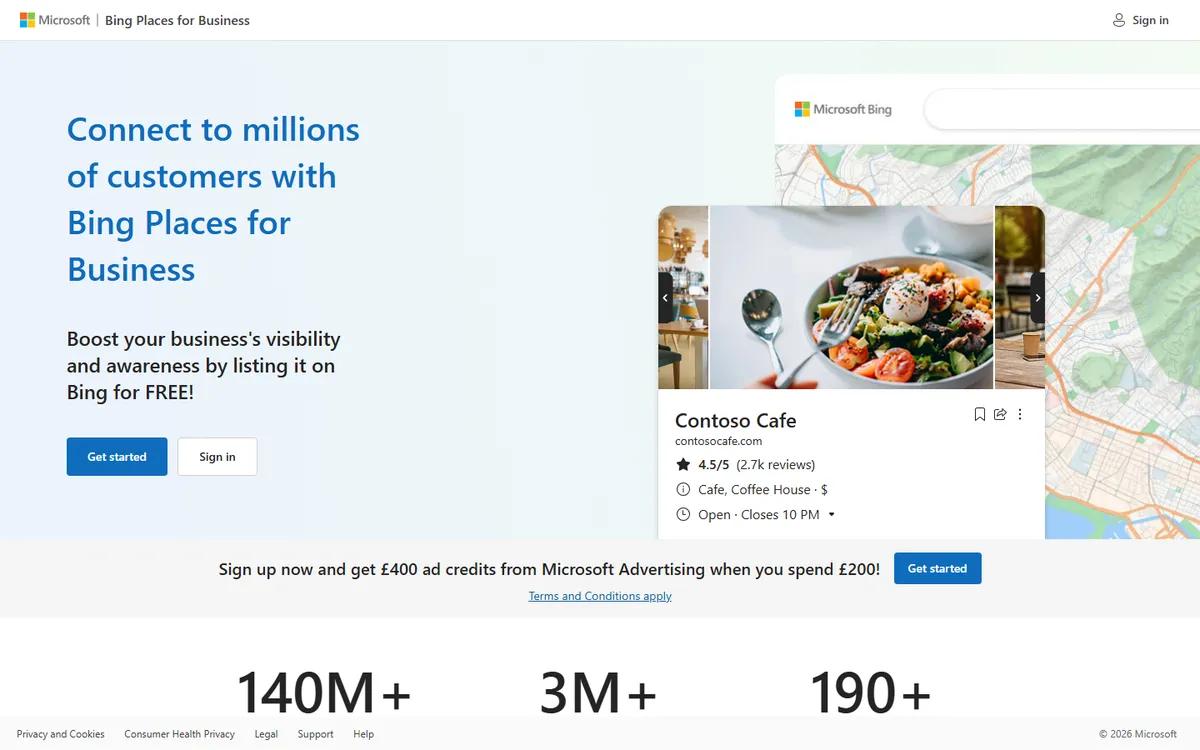
Bing Places for Business is Microsoft's business-listing service for managing how an eligible company appears in Bing Maps and local search results. It is a sensible second local profile after Google because it gives Microsoft a structured source for the agency's name, location, contact details, categories, hours and website.
Microsoft's current support guidance directs businesses to Bing Places to claim or update a listing. Agencies can search for an existing record, claim it or create one, then complete the required verification. Where offered, importing an established Google Business Profile can reduce duplicate data entry, but every field should still be checked.
Use the same accurate name, address policy, phone and core categories used on the agency website. Add real photographs and maintain holiday hours if clients visit the office. As with Google, do not create a false location merely to rank in another city.
Main limitation: Bing normally supplies less direct local discovery than Google. Its value is low-effort entity coverage and Microsoft ecosystem visibility, not a guaranteed source of agency enquiries.
Official information: Bing Places for Business listing and eligibility details.
11. Semrush Agency Partners
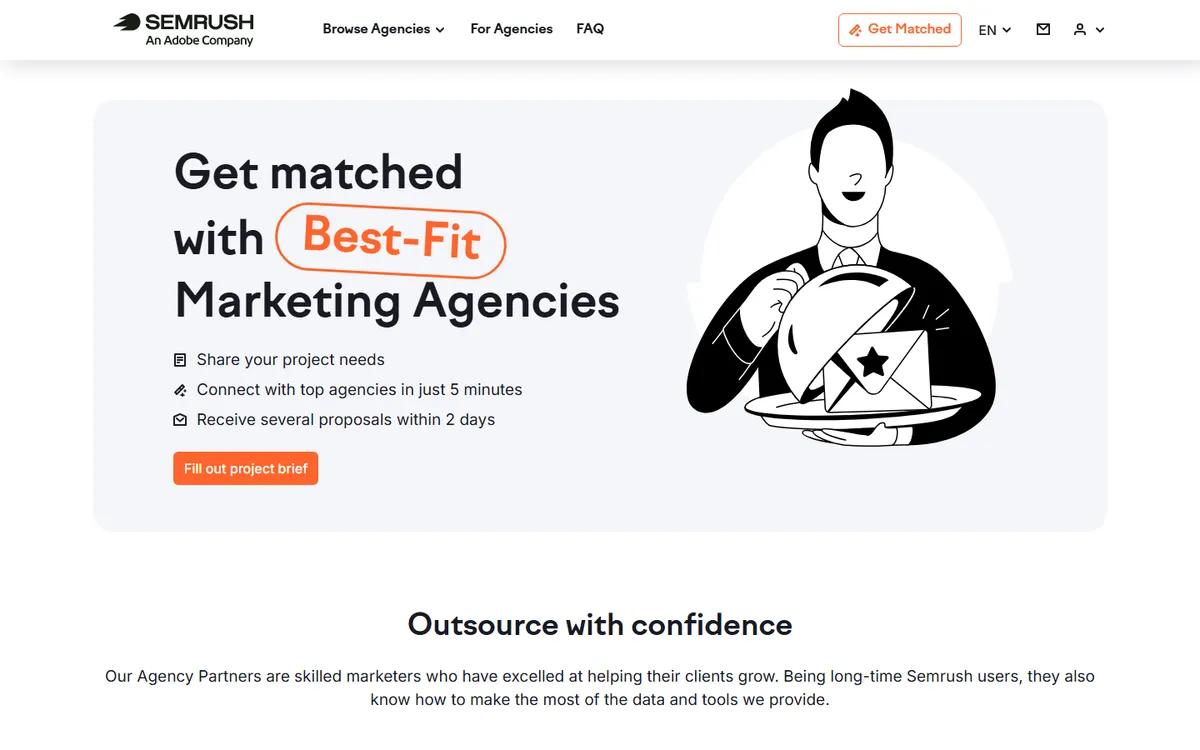
Semrush Agency Partners is one of the most contextually relevant directories for an SEO agency because buyers are already within an SEO and digital marketing ecosystem. Profiles can communicate services, industries, markets, budgets, languages and agency credentials.
It is not a free general listing. Semrush's terms require an active paid Semrush subscription, an Agency Growth Kit or designated agency subscription, relevant Semrush Academy exams and written certification as a service provider. Current package pricing should be confirmed on Semrush's live pricing page because the directory cost sits on top of the core software plan.
This makes most sense when Semrush is already part of delivery. Complete the certifications, publish specific service and industry evidence and use an accurate booking link. The platform credential is strongest when client case studies demonstrate expertise beyond passing an exam.
Main limitation: the combined subscription cost is difficult to justify solely for a directory listing. Attribute leads separately from value received from the software itself.
Official information: Semrush Agency Partners listing and eligibility details.
12. HubSpot Solutions Directory
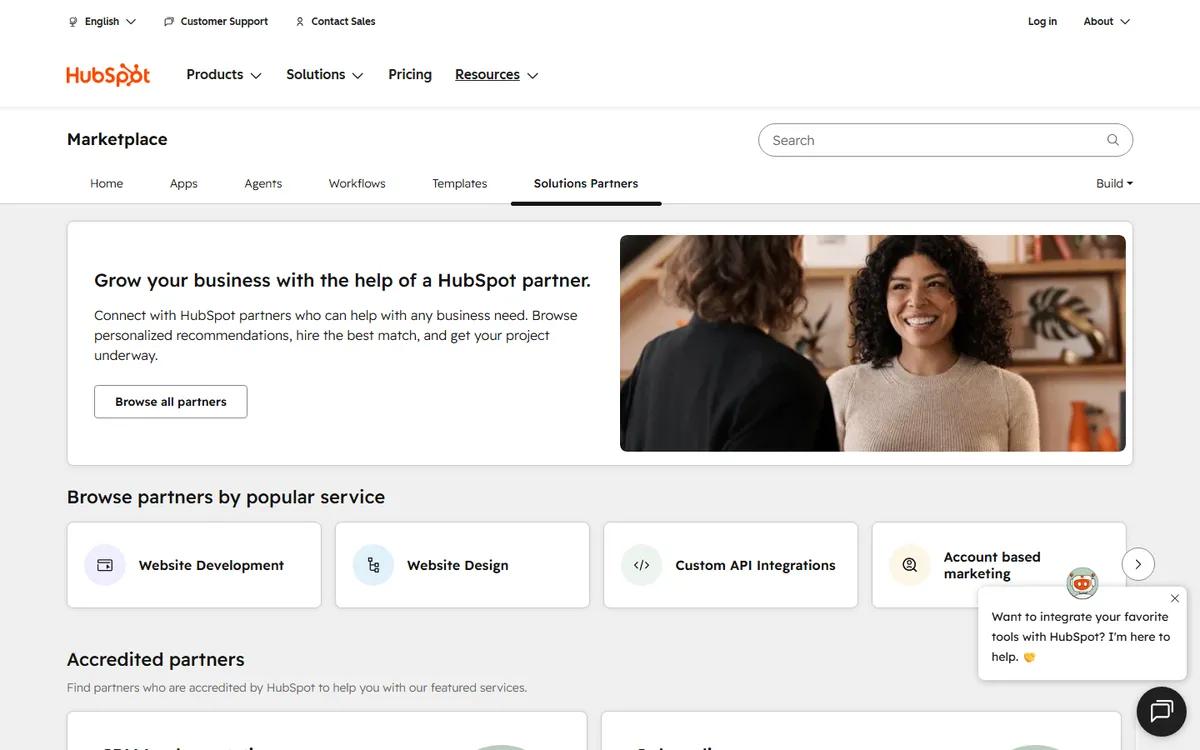
The HubSpot Solutions Directory connects HubSpot customers with agencies and service providers covering marketing, sales, service, CRM, web design and implementation. Buyers can filter profiles and review services, accreditations, locations and client feedback.
HubSpot's current FAQ says an agency does not have to join the paid Solutions Partner Program merely to be listed, but it does need a valid Inbound Certification. Full partner status provides badges and additional programme benefits and has separate commercial requirements.
Use this directory when the agency genuinely works with inbound strategy, HubSpot onboarding, CRM, content or revenue operations. Select only services the team can deliver and attach reviews to actual HubSpot-related engagements. An SEO agency that never implements or supports HubSpot will look out of place.
Main limitation: this is an ecosystem directory, not a universal marketing directory. Its strongest buyers are already using or evaluating HubSpot.
Official information: HubSpot Solutions Directory listing and eligibility details.
13. Google Partners Directory
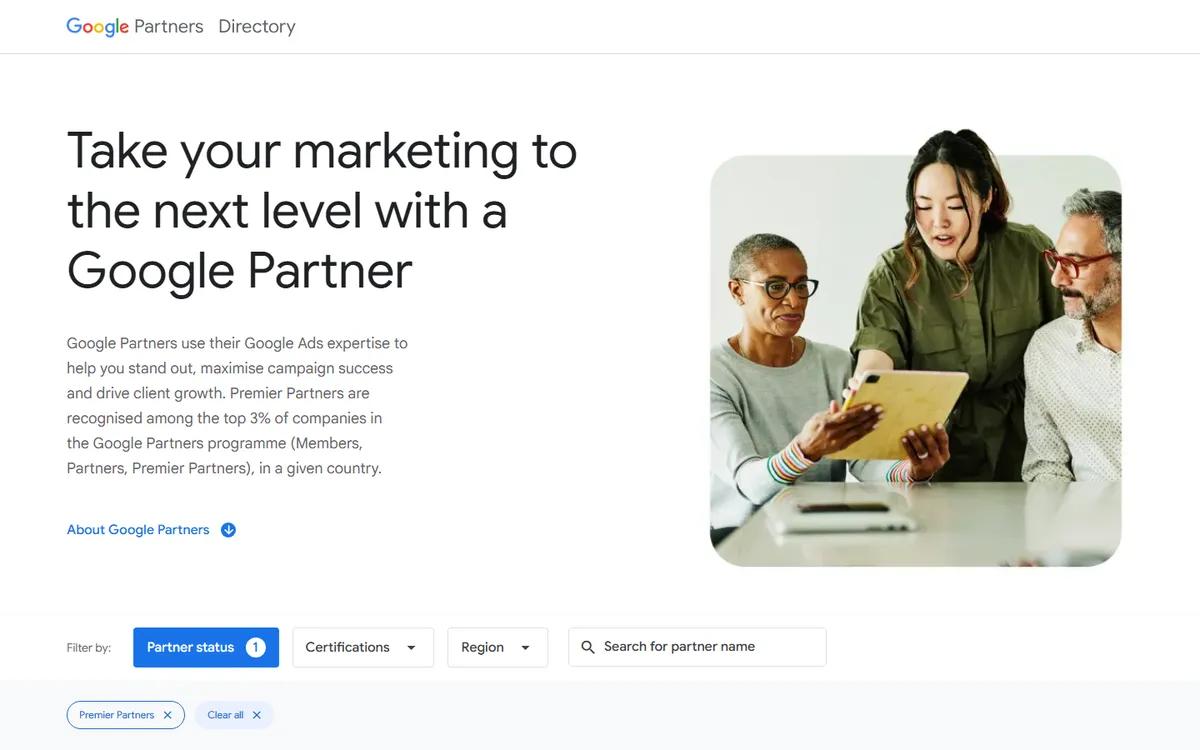
The Google Partners Directory is a qualification-based listing for companies with Google Partner or Premier Partner status. It displays company details, region and the Google Ads product areas in which the team holds certifications.
Google's published Partner requirements currently cover three areas: at least a 70% optimisation score in the registered manager account, $10,000 in managed ad spend over 90 days, and certification for at least 50% of account strategists, with product-area certification rules where spend applies. Requirements are checked daily. Premier Partner status is reserved for the top-performing participating companies in each country.
This is not an organic SEO credential, but it is highly relevant to agencies selling paid search alongside SEO or digital PR. Keep the company name, address, website and certification records accurate, and opt into public directory display.
Main limitation: do not imply that Google endorses all agency work. The badge concerns Google Ads capability and must be used under Google's badge rules.
Official information: Google Partners Directory listing and eligibility details.
Build E-E-A-T Authority
Get quoted by journalists and featured as an expert in high-authority publications.
14. Microsoft Advertising Partner Directory
Microsoft Advertising maintains a public partner directory for agencies, channel partners and technology partners recognised through its partner programme. It gives paid-search agencies a second platform credential beyond Google and helps buyers find specialists familiar with Microsoft's advertising inventory.
The programme is designed for eligible organisations already working with Microsoft Advertising. Microsoft does not publish a simple universal directory fee on the public programme page; agencies are asked to qualify for and join the programme. Benefits include recognition, training, technical resources and community access.
This listing is most valuable when Microsoft Ads forms a genuine part of client delivery. Use it to demonstrate search breadth, especially for B2B campaigns where Microsoft audiences may be strategically important. Keep certifications and programme status current.
Main limitation: it is irrelevant to a pure organic SEO or earned-media agency. Programme entry is conditional, and the public directory can occasionally have loading issues.
Official information: Microsoft Advertising Partner Directory listing and eligibility details.
15. Shopify Partner Directory
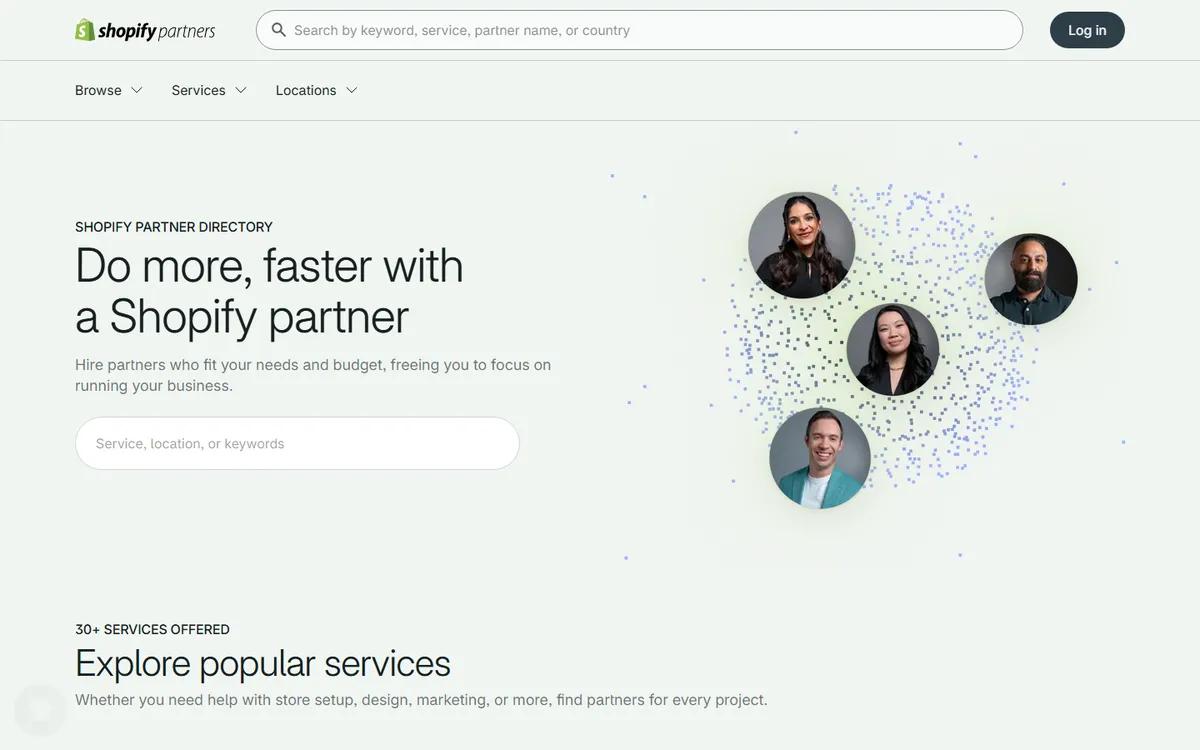
The Shopify Partner Directory is a curated list through which merchants can find partners by service, expertise, location and other criteria. For an ecommerce SEO or digital PR agency with deep Shopify delivery, it can be a far stronger signal than a generic agency directory.
It is not an open listing. Shopify says Plus, Premier and Platinum partners are invited on an ongoing basis, while only a limited number of Registered partners receive access. Guaranteed Plus-tier eligibility involves substantial commercial-impact and credential requirements, including revenue or managed-merchant thresholds, deal minimums and verified skills across multiple employees.
Agencies should treat directory inclusion as the result of a mature Shopify practice, not a quick citation task. Keep availability, industries, languages, locations and services current once invited.
Main limitation: the threshold is intentionally high. An agency that only writes occasional Shopify content should not divert resources toward eligibility solely for the backlink.
Official information: Shopify Partner Directory listing and eligibility details.
16. Webflow Certified Partners
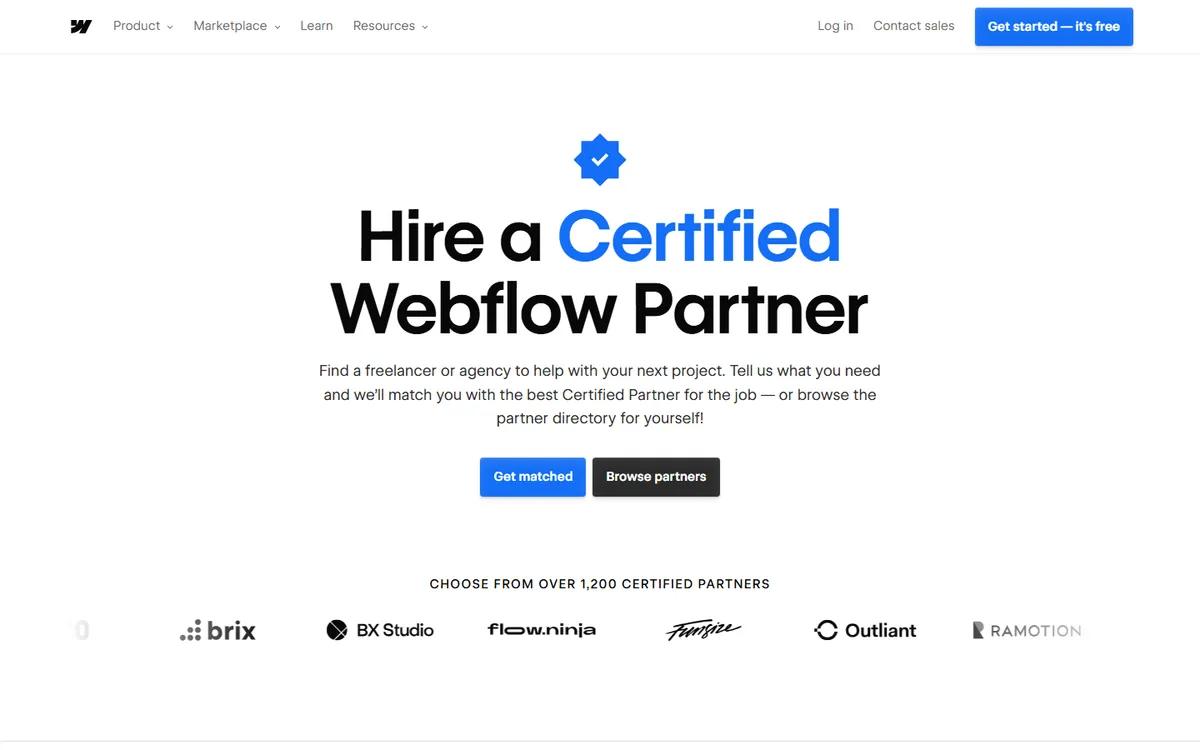
Webflow's Certified Partner directory lets buyers browse or get matched with qualified freelancers and agencies. Profiles can be filtered by services, budget and location, making the directory commercially relevant to teams combining Webflow development, technical SEO, migration and conversion work.
Applicants need an active Freelancer or Agency Workspace, must pass a pre-qualification assessment, build at least three new client sites in Webflow and submit a portfolio of three sites built from scratch. Webflow reviews those sites against design, structure, responsiveness, optimisation and accessibility criteria.
The application work is worthwhile only when Webflow already represents a meaningful delivery line. Select case studies demonstrating different challenges, document the agency's role and resolve visible accessibility or responsive defects before applying.
Main limitation: certification and directory presence do not guarantee leads. Workspace and project requirements create an ongoing cost and evidence threshold.
Official information: Webflow Certified Partners listing and eligibility details.
17. Crunchbase
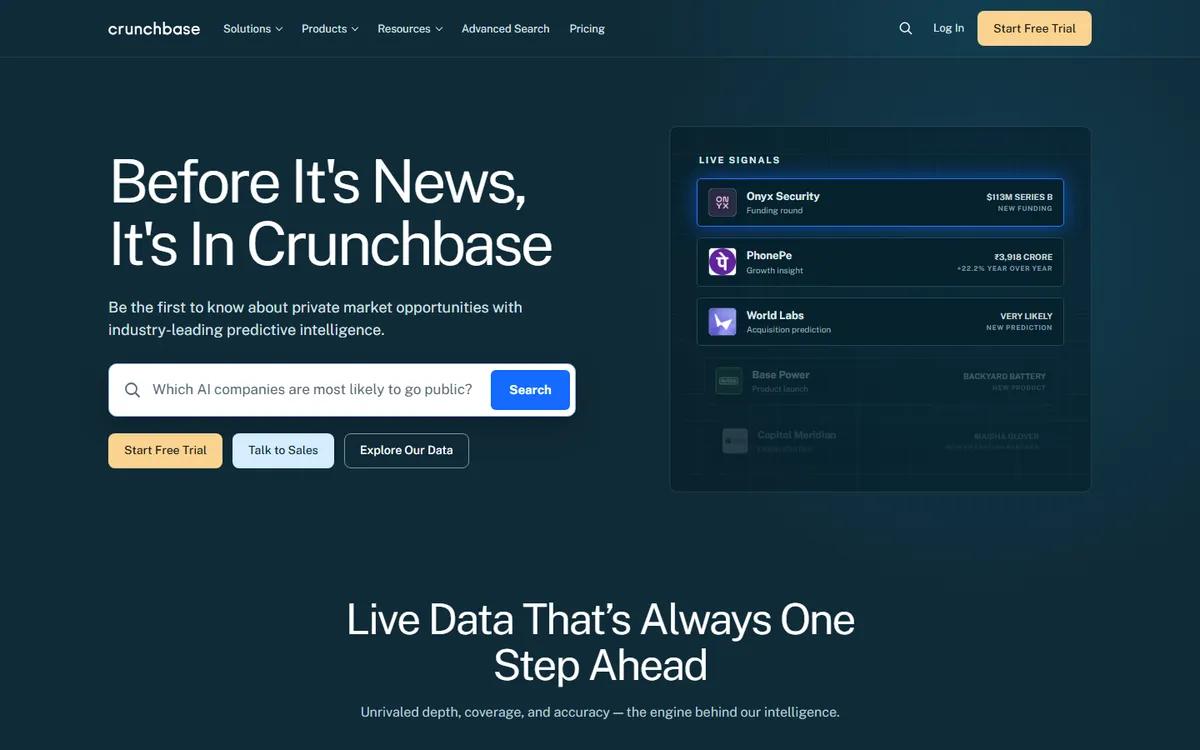
Crunchbase is not an agency review marketplace, but it is a valuable corporate directory for firms serving startups, investors and technology companies. Profiles can document the company, founders, locations, industries, leadership, funding and related organisations, and are frequently consulted during market and media research.
Crunchbase says any registered and socially authenticated user can add a profile. Company representatives may need to verify employment to change locked fields. Write descriptions in the third person, avoid exaggerated sales language and keep founders, employees, website and categories current.
For digital PR, an accurate profile gives journalists and researchers a structured identity source. For SEO agencies, it reinforces entity consistency but should not be presented as a conventional lead channel. Our detailed guide explains whether Crunchbase is worth it for digital marketing agencies, including current paid-plan limits and prospecting workflows.
Main limitation: there are no client reviews and a free profile does not create automatic inbound demand.
Official information: Crunchbase listing and eligibility details.
18. Trustpilot
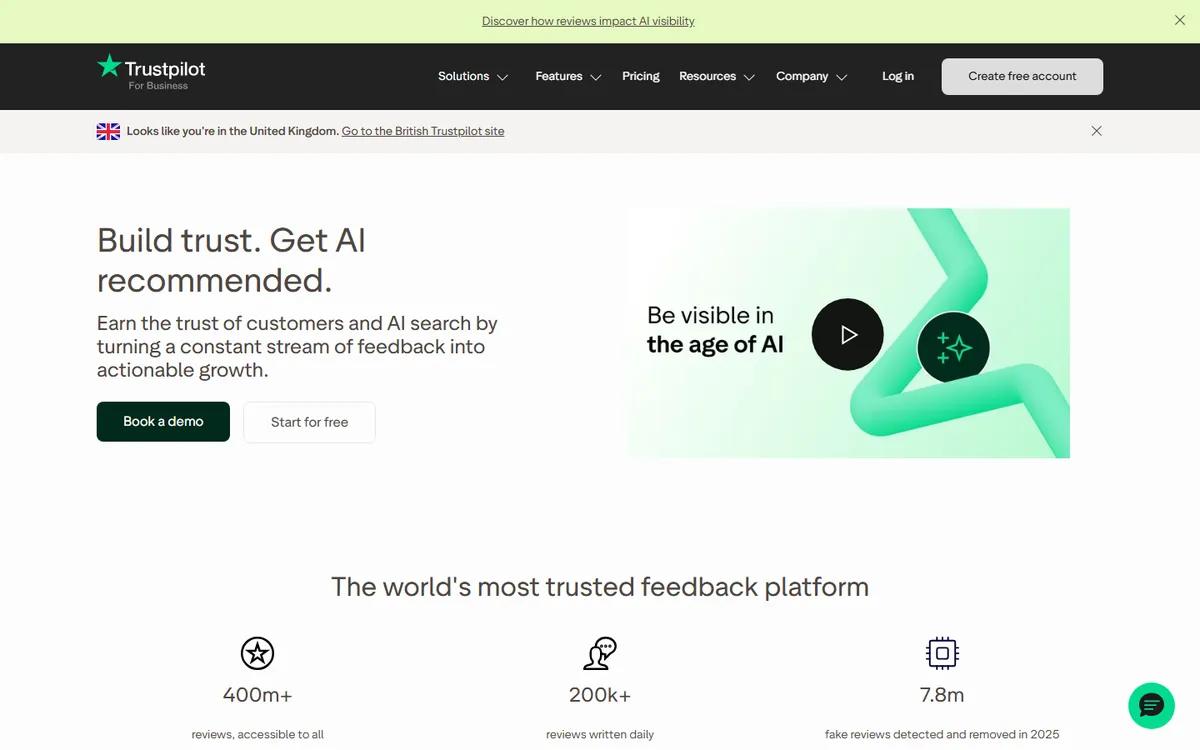
Trustpilot is primarily a review platform rather than an agency-matching marketplace, but its category and company pages can influence branded search, buyer confidence and reputation research. A complete profile gives prospects an independent place to inspect customer feedback and agency responses.
Trustpilot's current free plan includes a business profile, review management, a Review Collector widget and up to 50 invitations per month. A business needs an active website and must verify control of the relevant domain. Paid plans add greater automation, analytics, invitations and display options.
Invite clients consistently at a defensible point in the relationship and use the same neutral process for all eligible customers. Respond to critical reviews with facts and a route to resolution; never pressure a client to alter genuine feedback.
Main limitation: Trustpilot is not specifically designed for B2B agency procurement. Its value is reputation and branded-search proof, not a predictable stream of SEO or PR briefs.
Official information: Trustpilot listing and eligibility details.
19. PRCA Member Directory
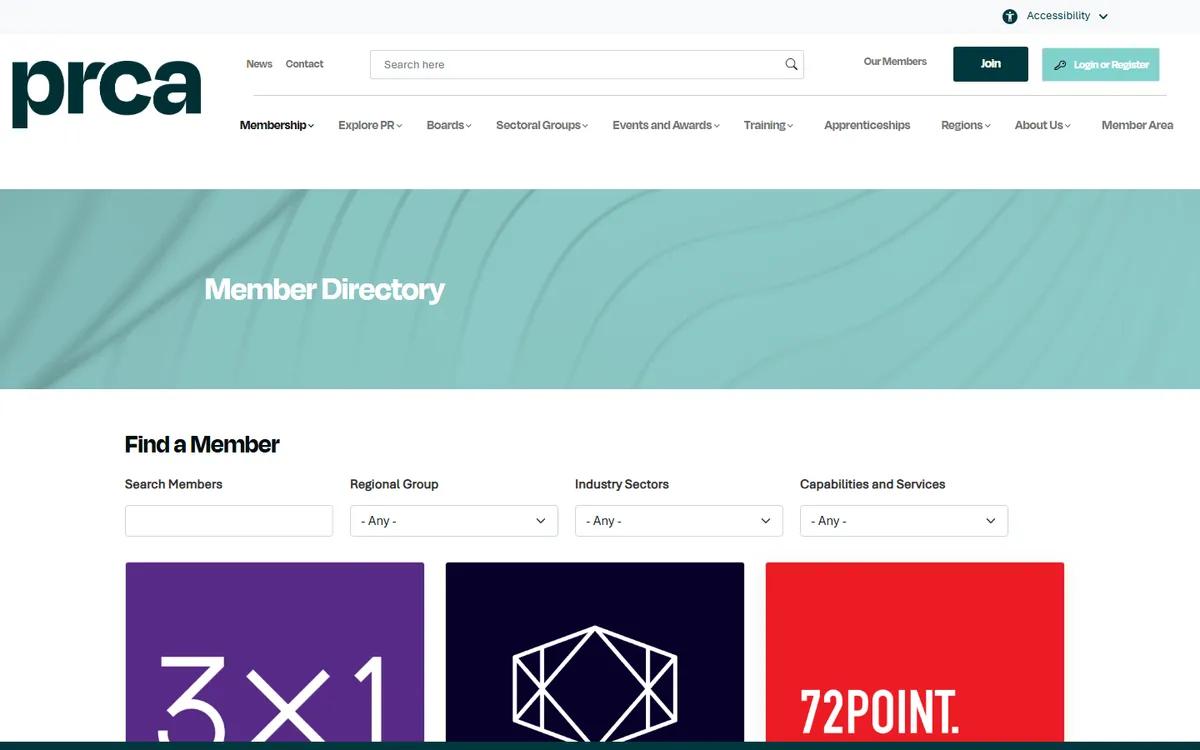
The Public Relations and Communications Association member directory is a specialist trust signal for digital PR and communications agencies. It allows buyers and peers to identify member organisations and supports the wider benefits of professional membership, including training, events, industry data and its agency Matchmaker service.
Agency membership is paid. PRCA states that annual agency fees are calculated from fee income and asks firms to contact its membership team for the current amount. Applicants agree to membership terms and the professional Code of Conduct.
This is more valuable as an industry credential than a conventional SEO backlink. Keep the organisation record accurate, use membership claims precisely and participate in the association rather than treating it as a passive logo rental. It can support procurement and pitch credibility where professional standards matter.
Main limitation: fees are not published as one flat agency price, and the directory is most relevant to PR and communications buyers, particularly in the UK and connected regions.
Official information: PRCA Member Directory listing and eligibility details.
20. Bark
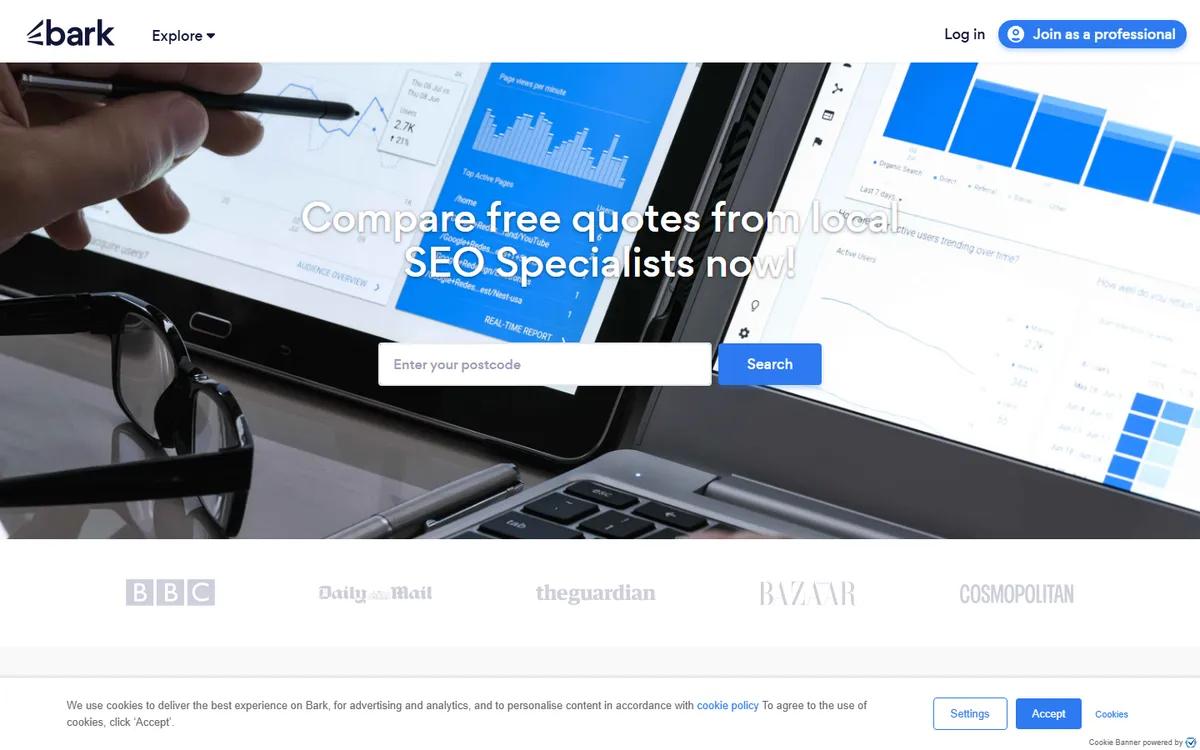
Bark is a service marketplace where buyers describe a requirement and matching professionals receive the lead. Agencies can create a profile and receive opportunities without a listing charge, then use credits or the relevant paid product to unlock and contact selected buyers.
Bark says the contact cost varies by service, job value, supply and demand, and location. Once an introduction is purchased, the professional receives contact details and Bark does not charge commission on the resulting work.
This can suit a smaller agency willing to quote for local SEO, web, social or one-off PR work. Set minimum budget and scope rules before purchasing any lead, respond quickly, and calculate spend per qualified conversation rather than per email address unlocked.
Main limitation: leads are normally shared with competitors and pricing is not fixed publicly for every service. It is a marketplace test, not a citation every agency must maintain.
Official information: Bark listing and eligibility details.
Why UpCity is Not in the Top 20
Many older directory lists recommend UpCity. Its live lists page now states that the site is no longer supported and directs users looking for software to Capterra. We therefore excluded it rather than treating stale provider documentation as an active acquisition channel. Agencies with historic profiles should preserve any review records they need and stop budgeting around future UpCity leads unless Gartner publishes a new active provider route.
Which Directories Should Your Agency Prioritise?
A New SEO Agency
Complete LinkedIn Services first. Add Clutch once at least three clients are willing to provide detailed reviews. Create a Google Business Profile only if the business meets Google's in-person eligibility rules. Add GoodFirms and Bing Places after the website contains real case studies and named company information.
An Established SEO Agency
Treat Clutch as the main comparison profile, then add GoodFirms, The Manifest and the directories connected to software already used in delivery. Semrush Agency Partners makes sense for an existing Semrush customer; Google and Microsoft partner directories make sense when paid search is a material service.
A Digital PR Agency
Prioritise Clutch, Agency Spotter, LinkedIn, Digital Agency Network and PRCA. Reviews should explain campaign strategy, media outcomes and communication—not promise that every placement produced a particular ranking change. Use company profiles such as Crunchbase to keep corporate facts available to journalists and researchers.
An Ecommerce Growth Agency
Use general proof platforms first, then work toward Shopify eligibility or Webflow certification only where those ecosystems reflect real client delivery. A qualified ecosystem listing can carry more trust than a purchased top position on a broad directory.
How to Build a Directory Profile that Wins Enquiries
- Choose one positioning. State who the agency serves, what it does and the commercial problem it solves.
- Keep entity facts consistent. Use the same legal or trading name, website, phone, address policy, founding year and leadership details.
- Select fewer, accurate categories. An SEO specialist should not select every creative and development service to appear in more lists.
- Add evidence before adjectives. Show scope, constraints, work completed and measurable outcomes. Remove unsupported “leading” and “award-winning” claims.
- Request descriptive reviews. Ask clients to discuss the problem, selection process, delivery experience and result in their own words.
- Use tagged links. Add UTM parameters where a platform permits them so analytics can separate directory traffic.
- Assign an owner. Review profiles quarterly and update people, services, prices, office details, availability and case studies.
How to Measure Directory ROI
Create a separate CRM source for every paid directory. Record profile views where available, website sessions, enquiries, qualified opportunities, proposals, won revenue, gross profit and directory spend. Do not let the final click erase the original source: a prospect may discover the agency on Clutch, read its website and return through branded search.
| Metric | What it reveals | Warning sign |
|---|---|---|
| Profile-to-site click rate | Whether positioning motivates deeper research | Views rise but website visits do not |
| Qualified enquiry rate | Whether the directory attracts the right budgets and services | High lead volume with consistently poor fit |
| Cost per opportunity | Paid cost divided by sales-qualified opportunities | Measured only against raw leads |
| Gross-profit return | Gross profit from won work compared with all platform costs | Using contract value without delivery cost |
| Review growth | Whether the profile becomes more defensible over time | Only collecting reviews before renewal |
Directory Mistakes to Avoid
- Buying sponsorship before completing the free profile and tracking conversion.
- Creating an ineligible Google profile at a virtual office.
- Copying one generic description across all 20 sites.
- Claiming certifications or partner status the agency has not earned.
- Offering incentives only for positive reviews or filtering out unhappy clients.
- Measuring success by backlink count rather than qualified pipeline and trust.
- Leaving former employees, old phone numbers or discontinued services live.
- Redistributing data from a directory without checking its licence.
Directory leads still need relevant follow-up. Our free outreach email generator can help structure a concise first response, while agencies needing scalable authority campaigns can explore our digital PR services.
Final Recommendations
Do not create 20 weak profiles at once. Build three excellent profiles where real buyers already look, then add one specialist ecosystem at a time. For most agencies, the right starting stack is Clutch, LinkedIn Services and an eligible Google Business Profile. GoodFirms, The Manifest and Agency Spotter form the next layer.
Pay only when the free profile is complete, review collection is working and the agency can attribute opportunities. Qualification-based directories should be a consequence of genuine expertise; marketplace credits should be treated as a measurable acquisition test.
Finally, keep every profile accurate. Consistent company facts, current work and credible client language help buyers, journalists and search systems understand the agency far more than a folder of forgotten backlinks.
Frequently asked questions
Frequently Asked Questions
Find answers to common questions about this topic


