

Agencies can earn client mentions in Forbes, Business Insider and Entrepreneur by qualifying clients carefully, developing genuinely newsworthy stories, pitching the right journalists and never blurring the line between earned editorial coverage and paid placements. The publications are different in tone and audience, but the fundamentals are the same: a real story, a relevant journalist and a respectful, evidence-led pitch.
The agencies that succeed consistently treat tier-one PR as a research and relationship discipline, not a volume game. They qualify out clients who do not have a story, they refuse to pay for coverage, and they measure results in placements and business impact rather than pitches sent.
Forbes, Business Insider and Entrepreneur are three of the most widely read business publications in the English-speaking world. A mention in any of them can influence a client's investors, customers, partners and talent pipeline. For agencies offering digital PR, the ability to land tier-one coverage is a significant differentiator—but only when the coverage is earned, not bought.
This guide is written for digital PR agencies, marketing agencies and freelancers who want to build or improve a tier-one media outreach capability. It covers how the three publications differ, how to qualify clients, how to build and pitch stories, how to manage the ethical boundaries between earned and paid coverage, and how to measure results. It complements our founder-focused Forbes guide and our analysis of whether a Forbes mention helps SEO.
How the Three Publications Compare
Forbes, Business Insider and Entrepreneur overlap in audience but differ in editorial focus, contributor models and the types of stories they cover. Understanding these differences is the first step in targeting effectively.
| Publication | Editorial focus | Contributor model | Best for |
|---|---|---|---|
| Forbes | Wealth, business, investing, technology, leadership, entrepreneurship | Forbes contributors (independent) and Forbes Councils (paid membership) | Funding rounds, founder profiles, wealth and investing stories, industry data |
| Business Insider | Business, technology, finance, careers, retail, media | Insider contributors and editorial staff | Tech and business news, workplace and career trends, retail and consumer stories |
| Entrepreneur | Entrepreneurship, small business, leadership, marketing, franchise | Entrepreneur Leadership Network (contributor programme) and editorial staff | Founder advice, how-to content, leadership perspectives, small-business trends |
You can review the detailed profiles for each publication on our site: Forbes, Business Insider and Entrepreneur.
Forbes: What Agencies Need to Know

Forbes is the most brand-recognised of the three and tends to attract the most pitch volume. Its editorial team covers wealth, business, investing, technology and leadership. Forbes also has a large contributor network—independent writers who publish on the platform under their own bylines.
The key distinction for agencies is between Forbes editorial (staff-written), Forbes contributors (independent but vetted) and Forbes Councils (paid membership). Only the first two constitute earned coverage. Forbes Councils posts are clearly labelled as contributor content and should not be presented to clients as editorial features.
Forbes publishes its editorial values and standards publicly. Agencies should read them before pitching and should ensure clients understand the difference between earned and paid routes. For a founder-facing explanation of all five Forbes routes, see our Forbes founder guide.
Analyze Your Backlink Profile
Get detailed insights into your backlink quality with Moz, Ahrefs & Majestic data combined.
What Forbes Typically Covers
- Funding rounds and investment stories with clear numbers
- Founder and CEO profiles with an unusual angle or journey
- Industry trend pieces requiring expert commentary
- Wealth and investing stories
- Technology and innovation features
- Leadership and management approaches
Business Insider: What Agencies Need to Know
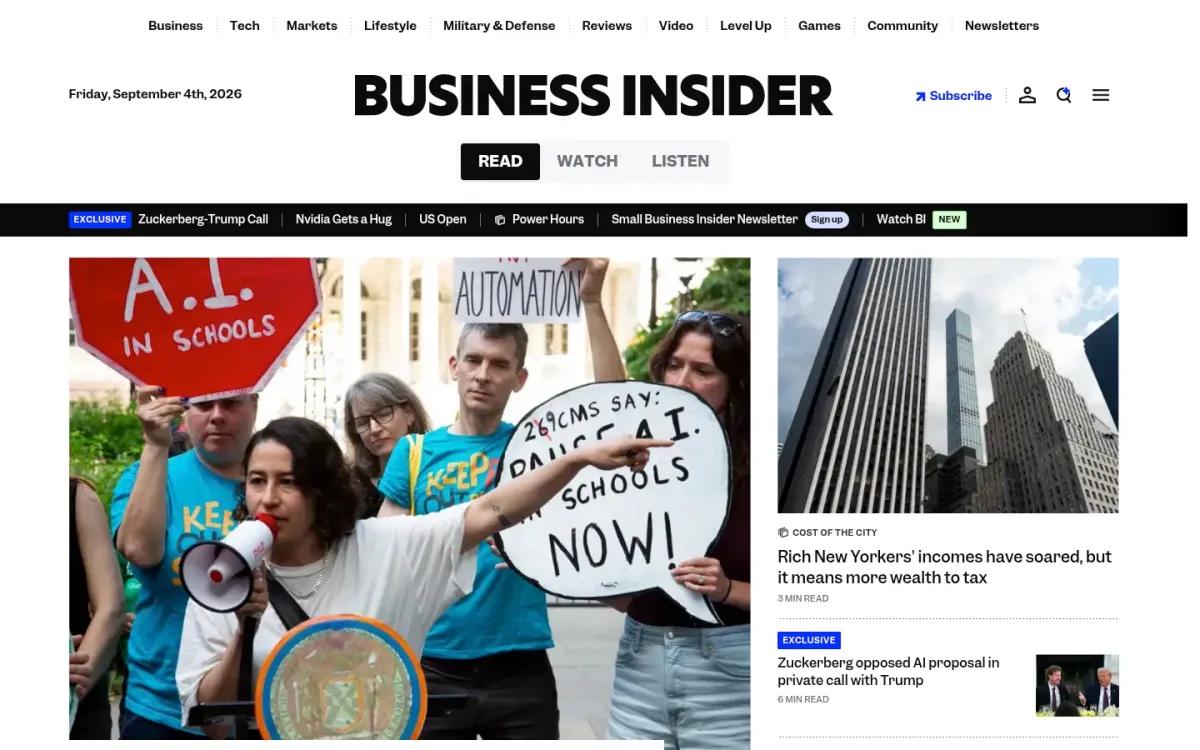
Business Insider covers business, technology, finance, careers and consumer trends. It tends to be faster-moving and more news-driven than Entrepreneur, with a strong focus on tech companies, workplace trends and retail. Its audience skews towards professionals interested in the business behind the news.
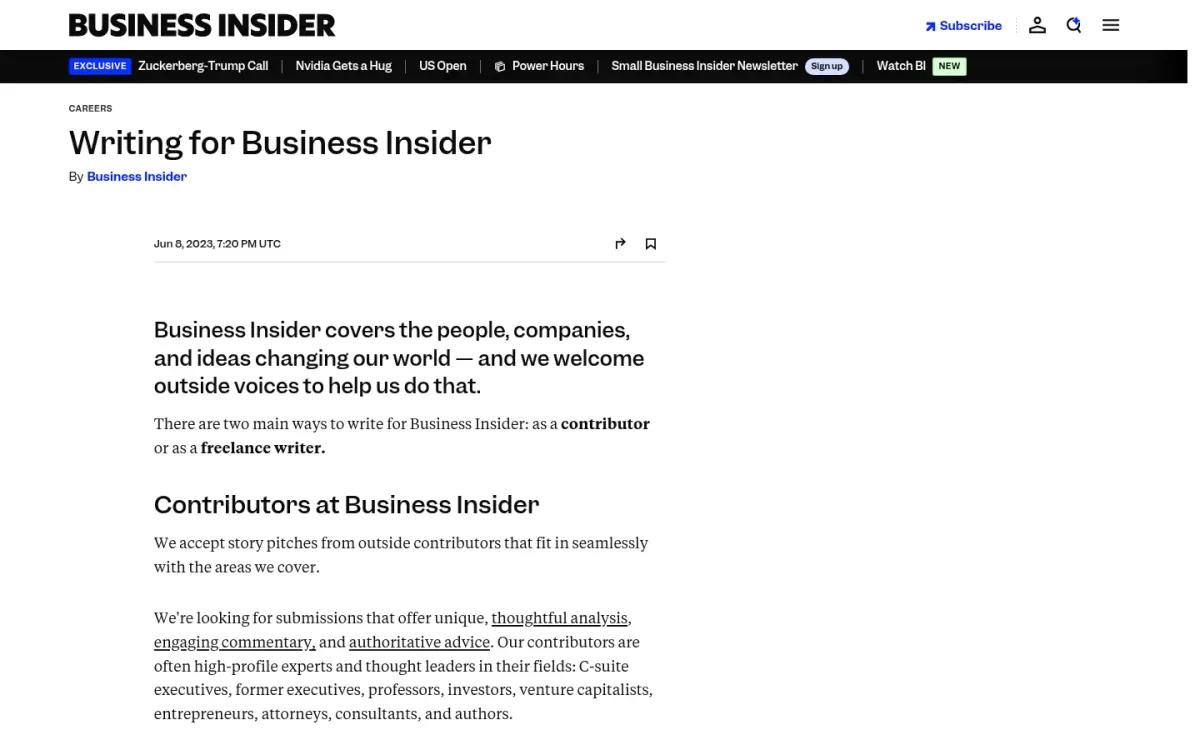
Business Insider has both staff journalists and contributors. The publication accepts story submissions and tips through its editorial channels. Like Forbes, it separates editorial from commercial content, and agencies should not confuse the two.
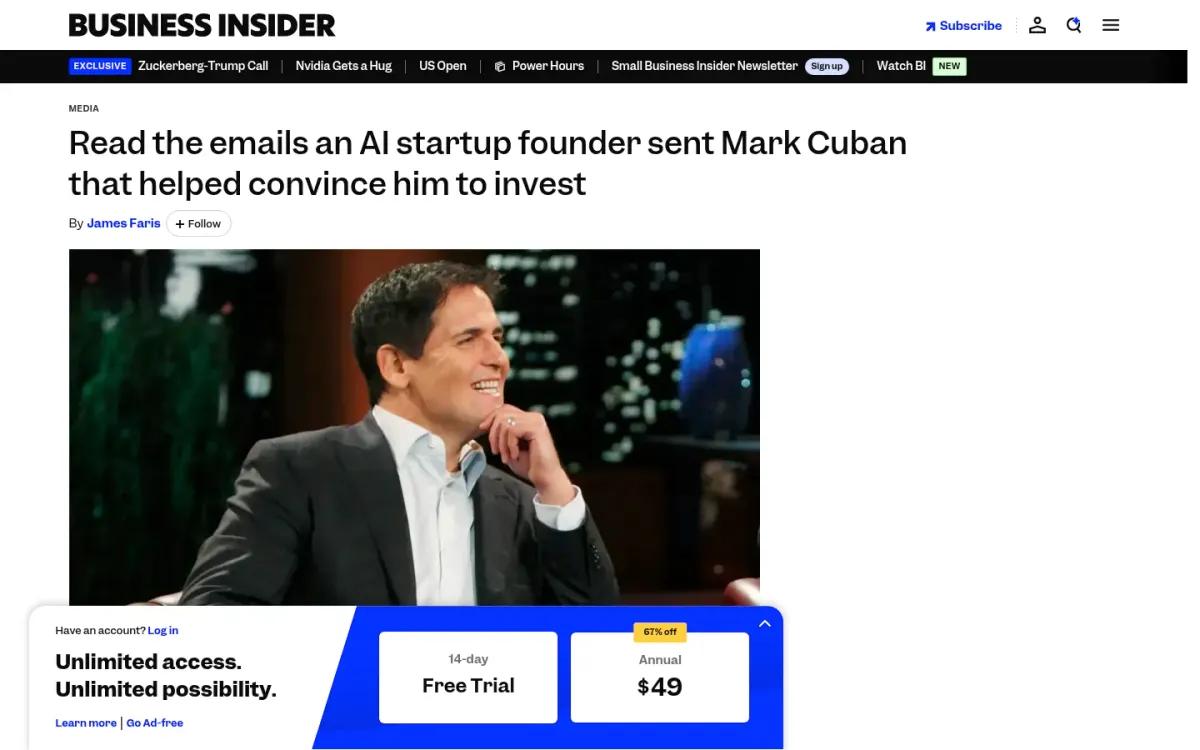
What Business Insider Typically Covers
- Tech company news, product launches and funding
- Workplace, career and compensation trends
- Retail and consumer behaviour stories
- Finance and markets coverage
- Media and industry analysis
- Data-driven stories about how people work and spend
Entrepreneur: What Agencies Need to Know
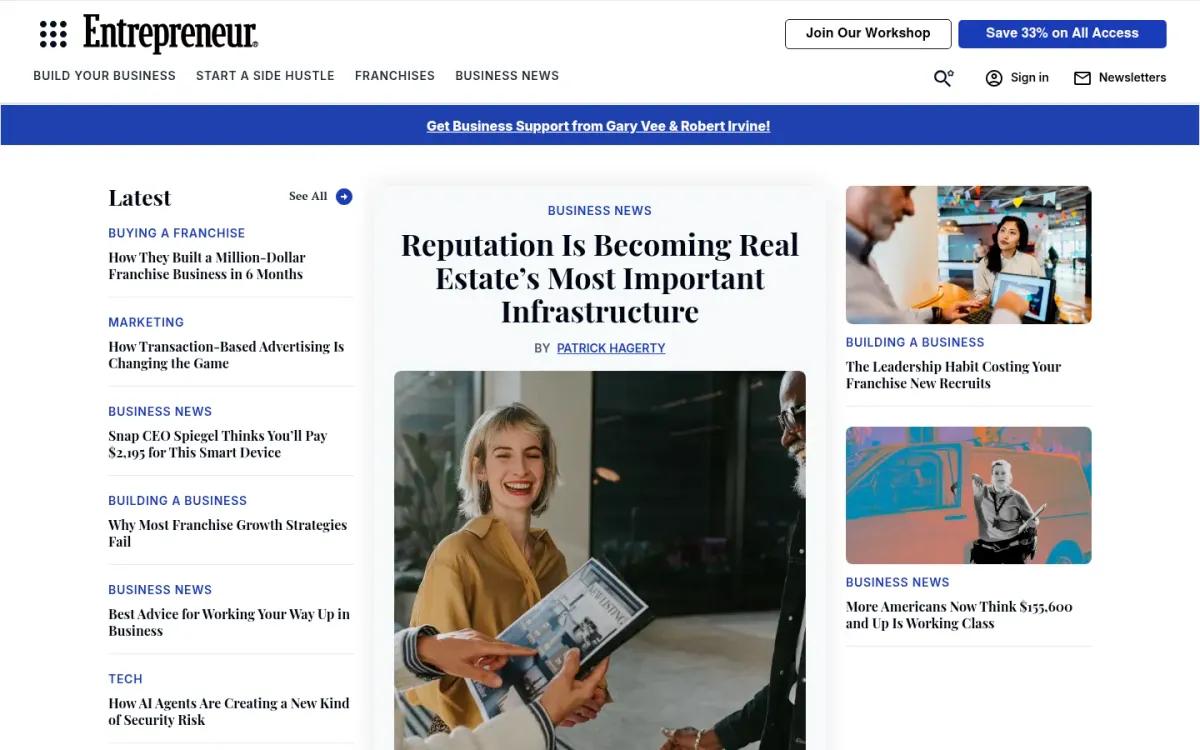
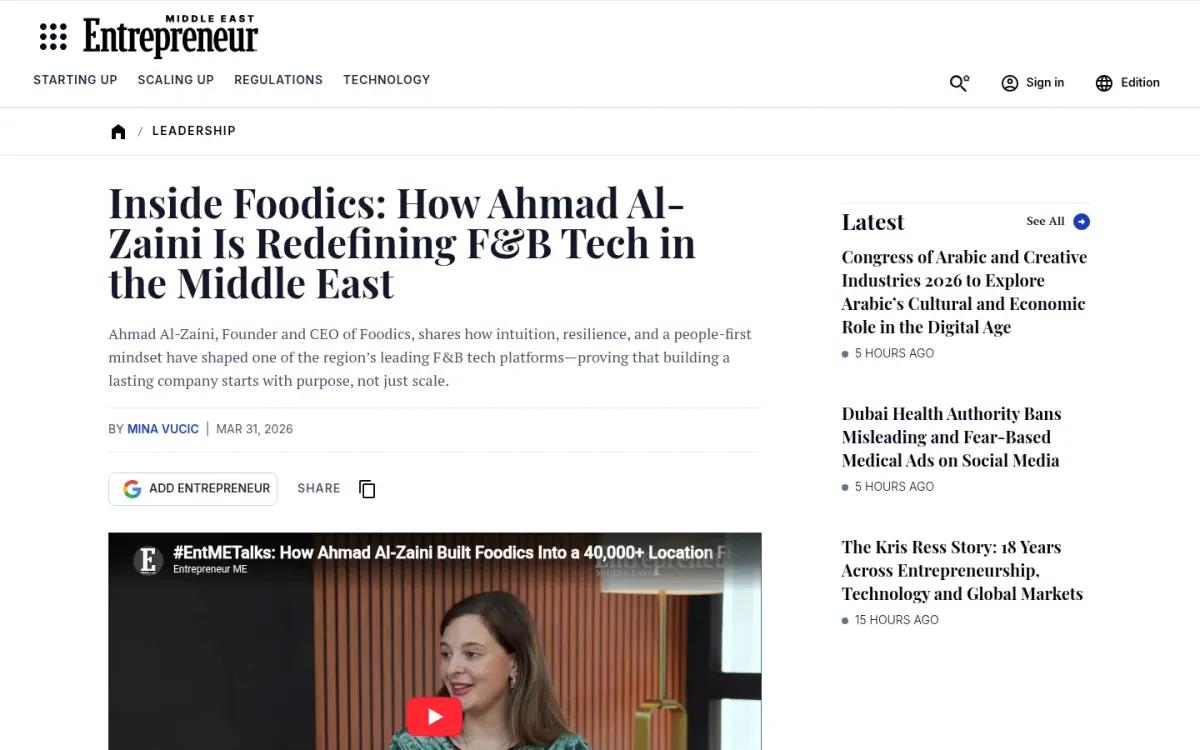
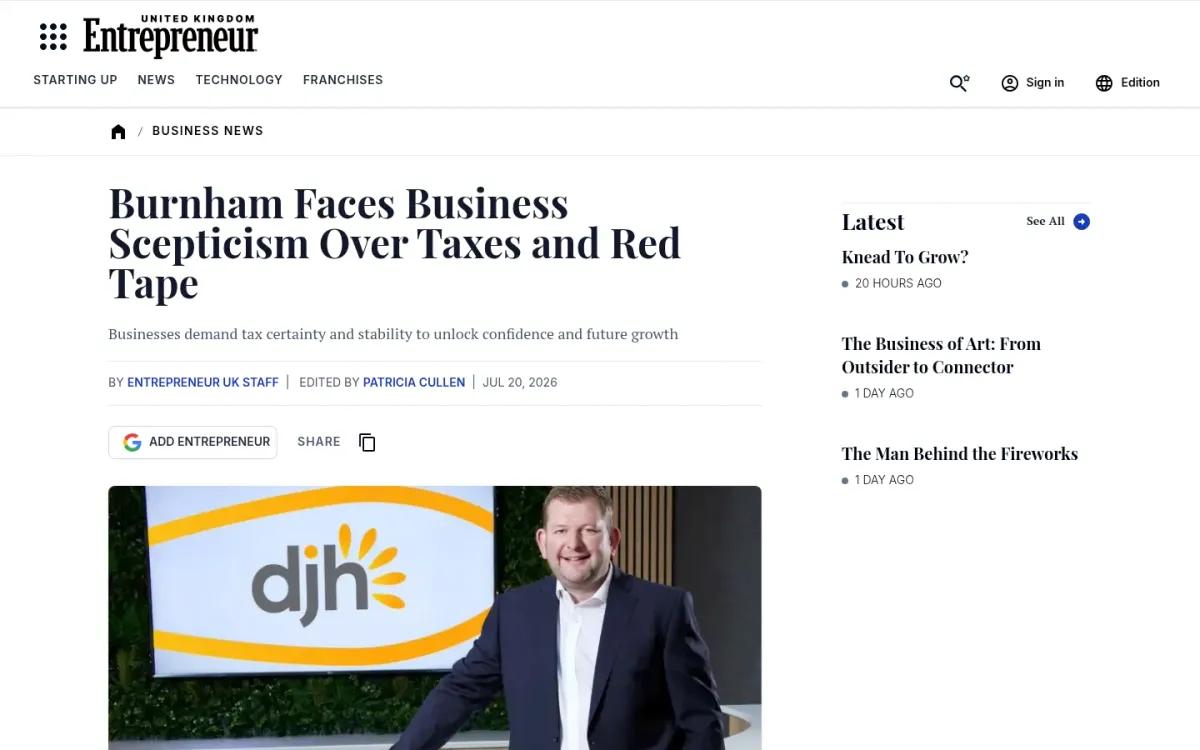
Entrepreneur is focused on entrepreneurship, small business, leadership and franchise opportunities. It is more accessible than Forbes for early-stage founders and small-business stories, and it publishes a high volume of practical, advice-oriented content.
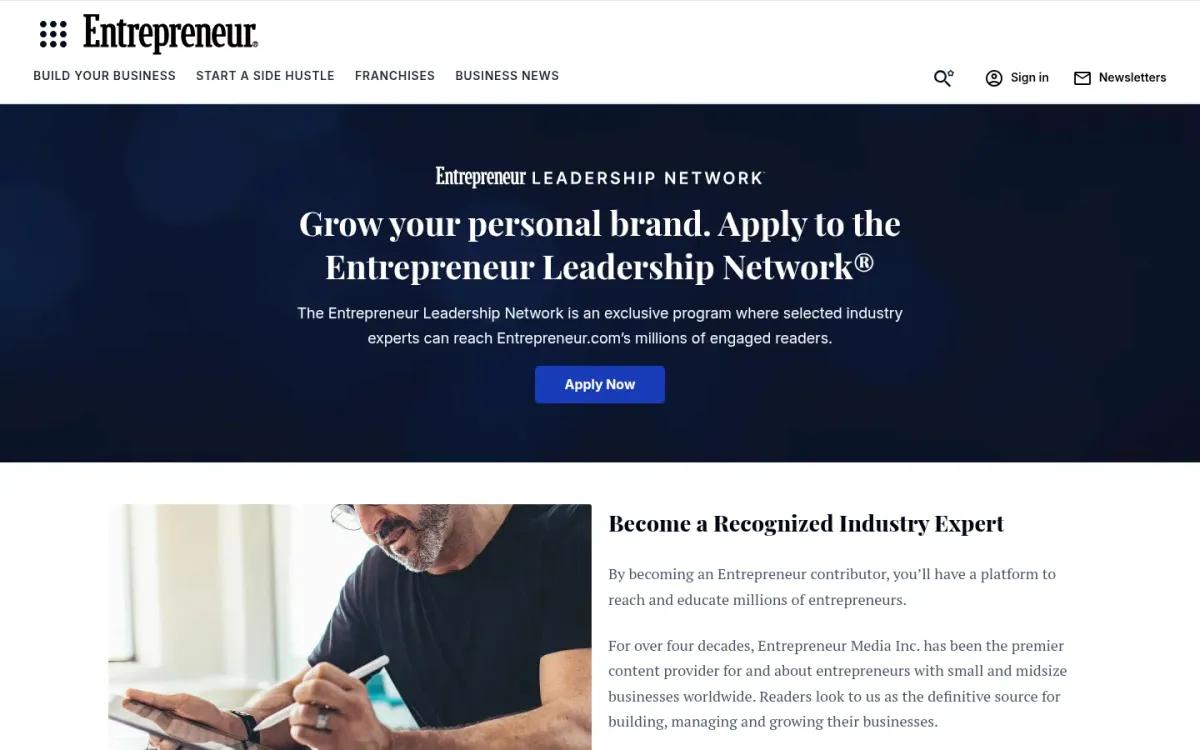
Entrepreneur operates the Entrepreneur Leadership Network, a contributor programme that allows approved business leaders and experts to publish articles on the platform. As with Forbes Councils, these are contributor posts, not editorial features. They can be valuable for thought leadership but should be distinguished from staff-written coverage.
What Entrepreneur Typically Covers
- Founder stories and entrepreneurial journeys
- How-to and advice content for business owners
- Leadership and management perspectives
- Marketing, sales and growth strategies
- Franchise and small-business trends
- Expert commentary on business challenges
Qualifying Clients for Tier-One PR
The most common reason agencies fail to land tier-one coverage is that they take on clients who do not have a story. No amount of pitching skill will produce a Forbes feature for a company with no news, no data, no unusual journey and no expert perspective. Qualifying clients honestly is the single most important step.
A Client is Likely Qualified If
- They have a genuine news moment (funding, launch, acquisition, major milestone)
- They have original data or research no one else has
- The founder has an unusual or compelling personal story
- They have a defensible expert perspective on their industry
- They are willing to share real numbers
- They understand they cannot approve or control the article
- They accept that coverage may not be purely positive
A Client is Likely Not Qualified If
- They want a "Forbes feature" but have no news
- They insist on reviewing and approving the article
- They expect guaranteed positive coverage
- They have no data, no milestone and no unusual story
- They want to pay for editorial placement
- They cannot share verifiable numbers
- They treat PR as a paid advertising transaction
Turning down an unqualified client is uncomfortable but necessary. An agency that promises tier-one coverage to a client without a story will either fail to deliver or be tempted into paid placement, which damages both the agency and the client's reputation. A better approach is to help the client build a story over three to six months—original research, a milestone, a contrarian point of view—before pitching.
Authority Link Building
Flexible link building plans with allocation across clients. Track everything via your live dashboard.
Building Stories that Work Across All Three Publications
While the three publications differ in focus, certain story types consistently perform across all of them. Agencies should develop a repertoire of these formats and match them to the right client and publication.
| Story type | Forbes | Business Insider | Entrepreneur | What you need |
|---|---|---|---|---|
| Original research / data | Strong | Strong | Moderate | Proprietary data, survey results, industry benchmarks |
| Funding announcement | Strong | Strong | Moderate | Round size, investors, use of funds, growth metrics |
| Founder profile | Strong | Moderate | Strong | Unusual journey, contrarian decision, measurable outcome |
| Industry trend commentary | Strong | Strong | Strong | Defensible expert perspective tied to a current trend |
| Workplace / culture story | Moderate | Strong | Moderate | Unusual policy, measurable result, employee perspective |
| How-to / advice | Weak | Weak | Strong | Practical, experience-based guidance with examples |
| Product launch | Moderate | Strong | Moderate | Genuinely novel product, early traction, market context |
Original research is the most versatile format. A well-designed survey or data study can be pitched to all three publications with different angles—Forbes might focus on the business implication, Business Insider on the consumer or workplace angle, and Entrepreneur on what it means for founders. Our digital PR ideas tool can help develop research-led angles, and the methodology is covered in detail in our digital PR guide.
The Agency Pitching Workflow
- Qualify the client and the story. Before any outreach, confirm the client has a genuine story and understands the rules of earned media. Document what the story is, who it is for and what evidence supports it.
- Research target journalists and contributors. For each publication, identify 5–10 writers who cover the relevant beat. Read their recent work. Note their angles, sources and contact preferences.
- Prepare the assets. Create a one-page story brief, a short pitch email, a headshot, product screenshots, a founder bio and any supporting data. Have them ready before you pitch.
- Pitch one journalist at a time per publication. Unless the client is offering an exclusive, pitch one writer per publication first. If they decline or do not respond within a week, move to the next. Mass-pitching multiple journalists at the same publication signals that you have not done your research.
- Follow up once. A single, polite follow-up after 5–7 days is reasonable. Multiple follow-ups will damage your reputation with that journalist for future pitches.
- Respond quickly if a journalist is interested. Provide everything they need within their timeframe. Offer access to the founder, data, customers or other sources. Do not try to control the angle.
- Support the journalist during writing. Be available for fact-checking, provide additional context if asked and offer to connect them with other sources who can corroborate the story.
- Do not ask to review the article. Editorial coverage is the journalist's work. You may request correction of factual errors after publication, but you cannot review, approve or request tone changes.
- Amplify after publication. Help the client share the coverage authentically. Thank the journalist. Track referral traffic and branded search impact.
- Record and learn. Log which journalists responded, which angles worked and which did not. Use this to refine future pitches and build a media list that improves over time.
Using HARO and Journalist Request Services
Journalist request services such as HARO (Help A Reporter Out), Connectively and Qwoted connect journalists who need sources with experts who can provide commentary. These services are a legitimate and efficient way to earn mentions in Forbes, Business Insider and Entrepreneur without cold-pitching.
The key to success with journalist requests is speed and relevance. When a journalist posts a request, they typically need sources within 24–48 hours. Agencies should monitor relevant requests daily and respond quickly with a concise, evidence-backed answer from the client.
For a detailed process, see our HARO link building guide and our expert quote link building guide, which cover how to monitor requests, draft responses and manage follow-up.
Get Major Publication Links
Get featured in tier-1 media outlets like Forbes, Business Insider, and industry publications.
Ethical Boundaries: Earned Versus Paid Coverage
This is the most important section of this guide. The line between earned and paid coverage is clear, and crossing it damages the agency, the client and the publication.
| Practice | Is it ethical? | Why |
|---|---|---|
| Pitching a journalist with a genuine story | Yes | This is the definition of earned media. |
| Offering a contributor exclusive data or access | Yes | Contributors need content ideas; providing them is legitimate. |
| Responding to journalist requests (HARO, Qwoted) | Yes | The journalist asked for sources; you are providing one. |
| Paying a contributor to write about a client | No | Violates Forbes, Business Insider and Entrepreneur editorial policies. Risks removal and reputational damage. |
| Describing a Forbes Councils post as an editorial feature | No | Misrepresents the nature of the coverage to the client and their audience. |
| Describing BrandVoice as "being featured in Forbes" | No | BrandVoice is paid sponsored content, not editorial coverage. |
| Buying "guaranteed Forbes" packages from third parties | No | Either violates editorial policies or delivers a paid route mislabelled as editorial. |
| Requiring a link as a condition of an expert quote | No | Journalists are not obligated to link. Demanding one damages the relationship. |
The rule that prevents most problems: if you cannot tell the client exactly which route produced the coverage—editorial, contributor, Councils or sponsored—do not pursue it. If you cannot tell the journalist that you are pitching on behalf of a client, do not pitch. Transparency with both sides is non-negotiable.
Managing Client Expectations
Tier-one PR is not predictable. A strong story may not land because the journalist is busy, a bigger story breaks that day, or the angle does not fit the current editorial calendar. Agencies must set realistic expectations before starting work.
What to Promise
- A defined story and target list
- A set number of pitches per month
- Transparent reporting on outreach and responses
- Relationship-building with target journalists over time
- Coverage when the story and timing align
- Honest assessment if the client is not ready
What Not to Promise
- Guaranteed placement in a specific publication
- A specific number of features per month
- Control over the article's angle or tone
- Approval of the article before publication
- Coverage within a specific timeframe
- Positive-only coverage
Agencies that guarantee tier-one coverage are either lying or selling paid placement. Both are unsustainable. A more honest proposition is: "We will develop your story, target the right journalists, pitch professionally and report transparently. Coverage depends on the story, the journalist and the news cycle."
Measuring Agency PR Performance
Agencies should measure and report on both activity and outcomes. Activity metrics show the client that work is being done; outcome metrics show whether the work is producing results.
| Metric type | Examples | What it tells you |
|---|---|---|
| Activity | Pitches sent, journalists contacted, follow-ups, journalist requests responded to | Whether the agency is doing the work consistently |
| Engagement | Journalist responses, requests for more information, interviews scheduled | Whether the story and targeting are resonating |
| Placements | Articles published, publication name, journalist, date, URL | The primary output metric |
| Quality | Editorial vs contributor vs sponsored, mention vs feature, link inclusion, anchor text | Whether the placement is worth what was invested |
| Impact | Referral traffic (GA4), branded search (Search Console), domain authority change, AI-search visibility | Whether the coverage is producing business value |
For tracking referral traffic, use Google Analytics' traffic acquisition report to segment by source. For branded search, use Google Search Console's branded queries filter, introduced in March 2025. For the SEO value of Forbes links specifically, see our guide Does a Forbes Mention Help SEO?
Building a Media List that Compounds
The most valuable asset a PR agency builds over time is not a client roster—it is a media list of journalists who know, trust and respond to the agency. Every successful placement should strengthen that list.
- Track every interaction. Record which journalists covered which clients, what angle worked and how they prefer to be contacted.
- Maintain relationships between pitches. Share journalists' work, send relevant data points without asking for anything and congratulate them on career moves.
- Never burn a contact. One bad pitch—spamming, demanding a link, offering payment—can close a door permanently. The journalist's long-term value far exceeds any single client placement.
- Segment by beat and publication. A journalist who covers fintech at Forbes is different from one who covers workplace trends at Business Insider. Maintain separate, specific lists.
- Update regularly. Journalists change beats, publications and jobs. Review the list quarterly and remove contacts who have moved.
When to Use White-Label PR Support
Agencies that want to offer tier-one PR without building the full capability in-house can white-label part or all of the workflow. iNet Ventures' digital PR service handles story development, journalist outreach and placement, and can operate under a partner agency's brand.
White-label PR is most useful when:
- The agency has a client request for tier-one coverage but no in-house PR specialist
- The agency wants to test PR as a service line before hiring
- The agency needs overflow capacity for a large client roster
- The client's story requires specialist outreach the agency does not typically handle
For agencies that also need link-building fulfilment, our white-label link-building service covers prospecting, outreach, content and placement. For a broader overview, see our white-label link building guide.
Common Agency Mistakes in Tier-One PR
Operational Mistakes
- Mass-pitching journalists without reading their work
- Pitching a story before it is ready
- Following up too aggressively
- Offering the same exclusive to multiple journalists
- Failing to prepare assets before pitching
- Not tracking which journalist was pitched and when
- Pitching the wrong beat
Ethical Mistakes
- Paying contributors for coverage
- Describing paid placements as editorial features
- Selling "guaranteed" tier-one coverage
- Hiding the client's involvement from the journalist
- Demanding links as a condition of commentary
- Using the Forbes logo without following branding guidelines
- Misrepresenting coverage in client reports
Related Resources
- How to Get Featured in Forbes: A Practical Guide for Founders — the founder-facing companion to this guide
- Does a Forbes Mention Help SEO? — analysis of the SEO value of Forbes links
- Digital PR Guide: Earn Premium Media Coverage and Backlinks — the broader digital PR methodology
- Expert Quote Link Building Guide — using expert commentary to earn media links
- HARO Link Building Guide — responding to journalist requests at scale
- Best Business Directories for SEO and Digital PR Agencies — complementary directory-based authority building
- Forbes site profile | Business Insider site profile | Entrepreneur site profile
Frequently Asked Questions
- Can an agency guarantee Forbes, Business Insider or Entrepreneur coverage?
- No legitimate agency can guarantee earned editorial coverage in any of these publications. Coverage depends on the story, the journalist and the news cycle. Any agency that guarantees placement is either selling a paid route (Councils, BrandVoice, sponsored content) or misrepresenting what they can deliver.
- How much should an agency charge for tier-one PR?
- Pricing depends on the scope of work, the client's story readiness and the agency's track record. Tier-one PR is typically charged as a monthly retainer that covers story development, journalist outreach and reporting. Be wary of pricing that is contingent on placement, as it creates an incentive to use paid routes.
- Is it ethical to pay a Forbes contributor to write about a client?
- No. Forbes' editorial standards prohibit contributors from accepting payment for coverage. Business Insider and Entrepreneur have similar policies. Paying a contributor risks article removal, contributor termination and reputational damage to both the agency and the client.
- What is the difference between Forbes Councils and Forbes editorial coverage?
- Forbes Councils is a paid membership programme that lets members publish contributor articles on the Forbes platform. Forbes editorial coverage is written by staff journalists or approved contributors who chose to cover the subject. Councils posts are clearly labelled as contributor content and should not be presented as editorial features.
- How long does it take for an agency to land tier-one coverage?
- For a client with a ready story, an agency may land coverage within 4–8 weeks of pitching. For a client that needs story development first, expect 3–6 months before the first placement. Major news moments can produce coverage faster, but most coverage requires sustained relationship-building.
- Should an agency pitch multiple journalists at the same publication simultaneously?
- Generally no. Pitch one journalist per publication first, wait 5–7 days, and move to the next if they decline or do not respond. Mass-pitching signals a lack of research and can result in multiple journalists pursuing the same story, which creates editorial conflict.
- Do Forbes, Business Insider and Entrepreneur links help SEO?
- Most outbound links from these publications are marked as nofollow or sponsored, meaning they do not pass direct ranking credit. However, mentions can help SEO indirectly through referral traffic, branded search, entity signals and AI-search visibility. See our dedicated guide, Does a Forbes Mention Help SEO?, for a detailed analysis.
- Can an agency use HARO to get tier-one coverage?
- Yes. Journalist request services like HARO, Connectively and Qwoted are a legitimate way to earn mentions in Forbes, Business Insider and Entrepreneur. The key is speed, relevance and a concise, evidence-backed response. See our HARO guide for a detailed process.
- What should an agency do if a client has no story?
- Be honest. Explain that tier-one coverage requires a newsworthy story and help the client build one—original research, a milestone, a contrarian perspective—over 3–6 months before pitching. Taking on a client without a story leads to failed outreach or the temptation to use paid placements.
- How should an agency report PR results to a client?
- Report both activity (pitches sent, journalists contacted, requests responded to) and outcomes (placements, referral traffic, branded search, AI-search visibility). Be transparent about which route produced each placement—editorial, contributor or sponsored. Never describe a paid placement as an editorial feature in a client report.
Frequently Asked Questions
Find answers to common questions about this topic


