
Tiny House Blog
tinyhouseblog.com
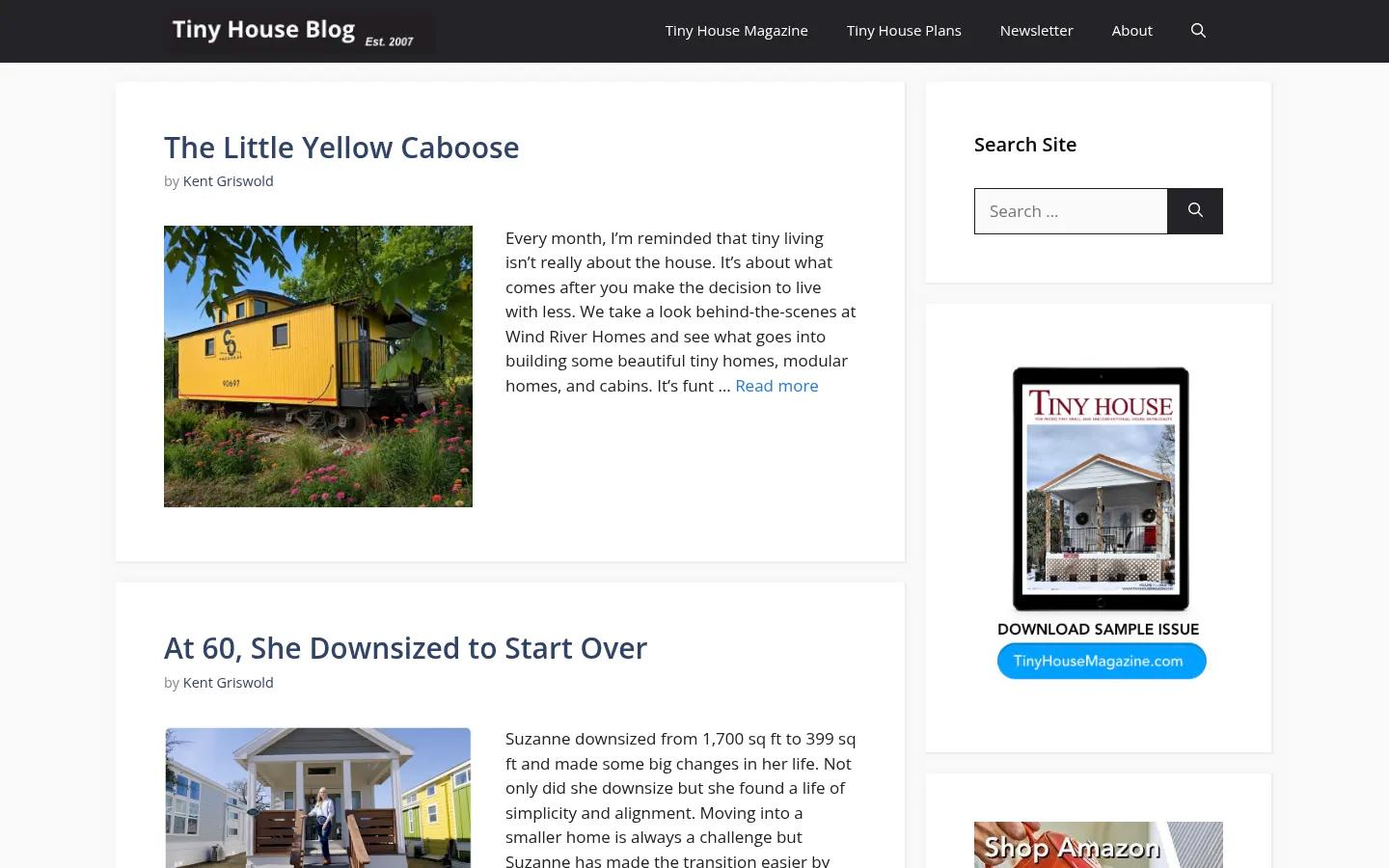
Tiny House Blog is an independent specialist publication focused on tiny houses, cabins, small-space living, alternative construction, downsizing, and the broader tiny-house movement. Founded by Kent Griswold in 2007, it combines original editorial features, reader-submitted home stories, practical building content, video-led house tours, product and design coverage, and related resources such as Tiny House Magazine and tiny-house plans.
60
58
1.8K
0
Our Verdict
Strong niche Digital PR potential for genuinely relevant tiny-house, alternative-housing, design, and sustainability stories; routine link inserts and guest posts are poor prospects, and sponsorship availability is not clearly documented.
Who Owns or Publishes It?
What Does It Cover?
In-Depth Analysis
Tiny House Blog is a long-running independent website dedicated to tiny houses, small cabins, compact dwellings, minimalism, and the lifestyle choices associated with living with less. Kent Griswold says he launched the site in 2007 after researching simple cabins, yurts, and alternative structures and discovering Jay Shafer’s early Tumbleweed Tiny Houses website. The project began as a personal blog built with early WordPress and initially concentrated on construction ideas, designs, photographs, and links to emerging tiny-house resources. Griswold describes the site as one of the earliest blogs to help spread awareness of the modern tiny-house movement, a claim that is consistent with its early publication history and substantial archive. The first post was about Montana Mobile Cabins, and the site later broadened into stories about people actually building and living in small homes.
The publication’s editorial focus is broad within its niche. It covers tiny houses on wheels, stick-built cabins, yurts, vans, RVs, vintage trailers, off-grid systems, solar power, heating, electricity, building methods, interior design, floor plans, legal and practical issues, financial considerations, and simple living. Its current homepage features house profiles, downsizing stories, trailer and camper concepts, DIY projects, and reflective lifestyle articles. The archive is unusually extensive, with hundreds of paginated posts and material dating back to the early years of the movement. This gives the site historical value: it documents how tiny-house ideas evolved from an alternative-living subculture into a recognizable housing, design, and media category.
The site’s distinctive editorial approach is personal, visual, and community-oriented rather than news-driven. Many pieces are structured around a particular home, builder, owner, or life transition. Articles commonly include descriptive tours of layouts, materials, dimensions, costs, construction decisions, storage solutions, energy systems, and the owners’ motivations. This makes the content useful to readers who are researching feasibility rather than merely browsing inspirational photography. The site also embeds or references YouTube videos and social accounts belonging to featured homeowners, builders, and advocates. Some features are written by Griswold, while others have been produced by contributors including Christina Nellemann and Alexis Stephens. The About page identifies Nellemann as a writer associated with the site since 2008 and Stephens as a documentary filmmaker and tiny-house advocate connected with Tiny House Expedition.
A notable extension of the brand is Tiny House Magazine, an eMagazine that began in 2013 and has been distributed in PDF and iOS formats. The site also links to tiny-house plans, a newsletter, directories, historical archives, and other resources. These features make Tiny House Blog more than a sequence of blog posts: it functions as an enduring reference library and discovery platform for the tiny-house community. Its archive includes personal case studies, house tours, product and design inspiration, practical construction material, and community stories. The site’s legacy is particularly relevant because the early tiny-house web was fragmented, and blogs such as this one helped connect builders, designers, vendors, advocates, and people considering downsizing.
The audience is primarily consumer and enthusiast-oriented. Readers are likely to include prospective tiny-home owners, DIY builders, minimalist-lifestyle followers, alternative-housing advocates, small-space designers, RV and camper enthusiasts, architects, landowners, and businesses serving the tiny-house market. The editorial mix appeals both to aspirational readers looking for visual inspiration and to more practical researchers seeking examples of construction, budgets, parking, energy, and day-to-day living. Its market position is that of an established niche authority and community archive rather than a large mainstream housing publication. The site’s longevity, recognizable domain, historical archive, and association with respected figures in the movement give it credibility within the niche, although its own 2024 retrospective acknowledged that traffic had declined and that short-form video had changed audience behavior.
Content quality is uneven in the way that is common for an independent blog with a long history. Stronger articles offer detailed first-person accounts, useful specifications, clear visual documentation, and practical context. Older posts can be brief, highly promotional, lightly edited, or primarily link-based, reflecting the publishing norms of the late-2000s and early-2010s blogging era. The site is not presented as a formally staffed newsroom with a public style guide, rigorous fact-checking policy, or transparent corrections process. It should therefore be treated as an experienced specialist publication and editorial discovery source, not as a substitute for building-code authorities, engineers, legal professionals, or independent product testing.
There has been an identifiable tension between community usefulness and commercial activity. In a 2011 editorial discussion, Griswold acknowledged reader concerns that the blog was becoming too commercial and resembled a tiny-house classifieds site. The discussion referenced advertising, listings, affiliate relationships, product promotions, and homes for sale. Another response explained that the site could earn a portion of sales generated through links to tiny-house plans, books, workshops, and related products. This is not evidence of a current scandal, but it is an important editorial consideration for PR professionals: commercial relationships and product coverage have historically been part of the business model, while readers have also expected authenticity and transparency.
For digital PR and link-building professionals, Tiny House Blog is most valuable when a campaign has genuine relevance to small-space housing, alternative construction, sustainable living, compact design, off-grid technology, housing affordability, or a compelling human story. It is a plausible target for original research about tiny-home costs, zoning, energy use, design trends, construction methods, or the demographics of downsizing, provided the data is genuinely useful and the pitch is tailored. It may also be suitable for expert commentary from architects, builders, code specialists, designers, or experienced tiny-home residents. Routine link inserts, generic SEO articles, unrelated commercial offers, and low-quality guest posts are poor fits. The contact page explicitly states that the site is not accepting new writers, which materially reduces the likelihood of conventional guest-post placements.
Compared with larger or more commercially structured competitors such as The Tiny Life, Tiny House Talk, TinyHouse.com, and Living in a Shoebox, Tiny House Blog is more founder-led and archival. It generally has less of the structured buying guidance, marketplace functionality, or professional editorial packaging found on larger niche platforms, but it benefits from historical continuity and a strong connection to the movement’s early online community. Compared with brand-owned builders and design companies, it is more independent and therefore potentially more credible for editorial storytelling, although its commercial and affiliate history means outreach should still be transparent. Overall, the site matters because it offers niche authority, durable archive value, real-world homeowner stories, and a recognizable platform for highly relevant campaigns, but it should be approached as a selective editorial opportunity rather than a scalable placement network.
Editorial Intelligence
Personal, visual, accessible, and enthusiast-led, with a strong emphasis on homeowner stories, design inspiration, and practical examples. The tone is generally encouraging and community-oriented, though older material can be informal, lightly edited, or commercially adjacent.
Link Policy
The site uses external links to sources, featured homeowners, builders, products, plans, social profiles, and related resources. Historical posts also describe affiliate relationships, but no current public rule specifying dofollow, nofollow, or sponsored treatment was found.
Author Bio Policy
No current public author-bio policy was verified; contributor credits appear on some articles, but the site currently says it is not accepting new writers.
Outreach Intelligence
Use the site’s contact form and address Kent Griswold or the Tiny House Blog team with a concise, highly relevant pitch rather than a generic SEO request. Lead with a real homeowner story, original data, a practical building insight, a compelling visual asset, or expert commentary on tiny-house legality, costs, design, or sustainability. Explain why the story matters to tiny-home readers, provide original photographs or video where possible, and disclose any commercial relationship. Do not pitch guest posts as the contact page currently says new writers are not being accepted, and avoid asking for link edits, guaranteed anchors, or publication of a press release.
Newsletter, Podcast & Feeds
The site promotes an email newsletter intended to keep readers updated on the tiny-house movement, but no current newsletter name, frequency, or subscriber count was verified.
Editorial Model
The site is founder-led and publishes original features, interviews, profiles, commentary, and practical stories, while also using reader-submitted and contributor-produced material. Its contact page currently says it is not accepting new writers, and no current sponsored-content or press-release policy was verified.
Who Reads It?
The readership consists mainly of people researching or interested in tiny homes, small cabins, downsizing, minimalist living, DIY construction, alternative housing, and compact design. It also attracts builders, designers, advocates, vendors, and existing tiny-home residents.
Audience Interests
Audience Quality
Is It Suitable for PR & Link Building?
The site has strong topical relevance and a long-standing archive for original research, human-interest stories, housing trends, design features, and expert commentary, but its current publishing cadence and audience scale are not fully verifiable.
Explore Digital PR ServicesArchitects, builders, code specialists, designers, and experienced tiny-home residents can fit the site when commentary is practical and directly relevant to tiny living.
Explore Expert Quote Link BuildingRelevant builders, products, technologies, books, plans, and services have historically appeared in features, but mentions should be supported by a useful story rather than a purely promotional request.
Explore Brand Mention ServicesThere is no verified link-insertion service or public policy, and unsolicited requests to edit established articles would conflict with the site’s editorial model.
The contact page explicitly says Tiny House Blog is not accepting new writers at present.
Advertising and affiliate monetization have existed historically, but no current advertising rate card or active sponsorship page was verified.
Why This Matters
This is a credible niche target for a small number of highly tailored campaigns, particularly those involving real homes, original data, practical building expertise, or meaningful lifestyle outcomes. It is not a good fit for scaled outreach, generic SEO content, or campaigns whose only objective is acquiring an exact-match backlink. Success depends on a genuinely useful story and transparent disclosure of any commercial connection.
Link & Content Behaviour
Best Suited For
Not Suitable For
Guest Content & Sponsorship
The current Contact page explicitly states that Tiny House Blog is not accepting new writers, although the site has historically published reader-submitted stories and contributor material.
SEO Metrics
Ahrefs Metrics
Majestic Metrics
Link Profile
Metrics last updated: 2 September 2026
Metrics can change. SEO metrics are estimates from third-party providers and may differ from real-time values. They should be used as indicators rather than exact figures.
Contact Information
Publicly sourcedSocial Profiles
Frequently Asked Questions
Is Tiny House Blog a good target for digital PR
Yes, for campaigns directly connected to tiny homes, alternative housing, downsizing, small-space design, DIY construction, off-grid systems, or sustainability. The strongest pitches will contain original research, a compelling real-person story, useful expert insight, or distinctive visual material rather than a basic brand announcement.
Does Tiny House Blog accept guest posts
The current Contact page says that Tiny House Blog is not accepting new writers. Reader stories and contributor articles have appeared historically, but marketers should not assume that a conventional guest-post opportunity is open.
Can I buy a link insertion on TinyHouseBlog.com
No verified link-insertion service or public policy was found. The site’s editorial structure and established archive suggest that unsolicited paid edits are unlikely to be an appropriate outreach route.
Are links on Tiny House Blog dofollow
The site does not publish a clear current policy covering link attributes. Articles contain contextual editorial, affiliate, source, and business links, so the treatment may vary and should be checked on the specific live page rather than assumed.
Does Tiny House Blog publish sponsored content or press releases
Historical material confirms advertising and affiliate monetization, but no current sponsorship rate card, advertorial policy, or press-release submission page was verified. Treat paid content availability as unknown and ask directly through the contact form.
What types of brands are most relevant to Tiny House Blog
Relevant brands include tiny-house builders, trailer manufacturers, architects, designers, solar and off-grid equipment companies, compact-appliance makers, material suppliers, plan publishers, tiny-house communities, and services connected to legal or practical alternative housing. The brand should be part of a useful story rather than the entire purpose of the pitch.
Who should I contact about an editorial feature
The public contact route is the Tiny House Blog contact form at https://tinyhouseblog.com/contact-2/. The site identifies Kent Griswold as founder and publisher and presents the Tiny House Blog team as the editorial group, but it does not publicly list a dedicated current editorial email.
How quickly does Tiny House Blog respond to outreach
No published response-time commitment was found. Because the site is independent and currently has a less predictable publishing cadence, response times should be treated as unknown and follow-ups should be limited, polite, and spaced apart.
Are commercial relationships a consideration when pitching the site
Yes. Historical posts discuss display advertising, affiliate revenue, product promotion, and reader concerns about commercial material appearing too much like editorial content. Pitches should therefore be transparent about sponsorship, affiliate relationships, product ownership, or business involvement.
What should a successful pitch to Tiny House Blog include
Provide a concise explanation of the story, why it matters to tiny-house readers, original photographs or video, verifiable facts, and access to a homeowner, builder, architect, or subject-matter expert. Avoid generic guest-post offers, mass-produced copy, aggressive anchor-text requests, and unrelated commercial topics.
Represent this publication?
If you work for Tiny House Blog and want to suggest an update — corrected contact details, editorial policy changes, or commercial information — we'd like to hear from you.
Suggest an UpdateExplore suitable opportunities on Tiny House Blog
iNet Ventures can help you assess whether Tiny House Blog fits your Digital PR or link building campaign.
Discuss a Digital PR campaignBuild Better Backlinks with iNet Ventures
We've worked with thousands of publishers. Let us handle your outreach — real, manual, white-label link building.
Trusted by 200+ agencies worldwide