iNet Ventures logoiNet Ventures
Primary navigation

Our services

Three ways to build authority for your clients.

Blogger OutreachNew articles on real, relevant sitesfrom £59Order →
Link InsertsLinks added to articles that already rankfrom £59Order →
Digital PRPress coverage and brand mentionsfrom £299Order →
Not sure which fits?Compare all three on the Pricing page
PricingHow It Works
Tools

Follow us across the web

Join our fast-growing community!

Services
  • Blogger Outreach
  • Link Inserts
  • Digital PR
Industries
  • iGaming
  • SaaS
  • Finance
  • Crypto
  • E-commerce

Company

  • About
  • Blog
  • Sites
  • Tools
  • For Publishers
  • Contact

Legal

  • Terms
  • Privacy
  • Refund Policy
iNet Ventures logo

© 2026 iNet Ventures, Ltd. All rights reserved.

    iNet Ventures logoiNet Ventures
    Primary navigation

    Our services

    Three ways to build authority for your clients.

    Blogger OutreachNew articles on real, relevant sitesfrom £59Order →
    Link InsertsLinks added to articles that already rankfrom £59Order →
    Digital PRPress coverage and brand mentionsfrom £299Order →
    Not sure which fits?Compare all three on the Pricing page
    PricingHow It Works
    Tools
    Home/Blog/Google Search
    Google Search

    Why Google Removed FAQ Rich Results (And What SEOs Missed)

    Sarang BhargavaSarang Bhargava
    Jun 14, 2026
    6 min read
    Share Article
    Share on X
    Tweet this article
    Share on Facebook
    Post to timeline
    Share on LinkedIn
    Professional network
    Share via Email
    Send to contacts
    Table of Contents
    • What Exactly Happened?
    • Why Did Google Remove FAQ Rich Results?
    • What SEOs Missed: The Bigger Picture
    • What Should SEOs Do Now? Practical Advice
    • The Opportunity in the Change
    High Authority

    Need Major Publication Links?

    Get featured in tier-1 media like Forbes, Business Insider & top industry publications.

    DR 50-90+ publications
    Real journalist pitching
    Brand mentions & links
    Fully white-label
    View Digital PR

    Premium media coverage

    Google’s decision to fully deprecate FAQ rich results as of May 7, 2026, marks the end of a popular SERP feature that many SEOs relied on for extra visibility. The expandable FAQ accordions that once dominated search result listings for countless pages are now gone for most sites. This change, building on restrictions announced in August 2023, has left many wondering about the reasons, impacts, and next steps.

    What Exactly Happened?

    In August 2023, Google announced changes to provide a “cleaner and more consistent search experience.” FAQPage structured data were restricted primarily to well-known, authoritative government and health websites. For everyone else, they stopped appearing regularly. How-To rich results were limited to desktop.

    By May 7, 2026, Google took the final step: FAQ rich results no longer appear in Google Search for any sites. Supporting elements in Search Console (reports, rich results test support) are being phased out through June and August 2026. Google added a clear notice to its FAQ structured data documentation but issued no dedicated blog post or detailed explanation at the time of full deprecation.

    Key timeline:

    • August 2023: Heavy restrictions begin.
    • May 7, 2026: Rich results stop appearing.
    • June 2026: Reporting and testing tools drop support.
    • August 2026: API support ends.

    Why Did Google Remove FAQ Rich Results?

    Google’s stated goal was cleaner SERPs. FAQ expansions took significant visual real estate, often pushing organic results further down the page. Over time, the feature became heavily abused:

    • Overuse and spam: Marketers added FAQ sections to nearly every page—product pages, blog posts, homepages—regardless of user need. Questions were often repetitive, keyword-stuffed, or fabricated purely for SEO.
    • Low-quality content: Many FAQs featured thin, duplicated, or promotional answers that didn’t genuinely help users.
    • Cluttered experience: Expandable sections made results inconsistent and overwhelming, especially on mobile.

    This aligns with Google’s broader pattern of pruning SERP enhancements that publishers control. Similar moves hit How-To results, and other structured data types in 2025. As Google invests heavily in AI-synthesized answers and generative search, it prefers dynamic, AI-generated content over static publisher-formatted snippets. FAQ rich results gave too much control to sites, sometimes at the expense of relevance or quality.

    Google has long emphasized that structured data should describe existing content accurately, not manipulate display. When the incentive became “add schema for more pixels,” abuse followed, prompting restrictions and eventual removal.

    What SEOs Missed: The Bigger Picture

    Many SEOs treated FAQ schema as a quick win for CTR and visibility. They missed several critical signals:

    1. It was never guaranteed: Even at its peak, eligibility depended on quality, relevance, and Google’s discretion. Tests showed mixed or temporary CTR lifts.
    2. Content quality over markup: Google always required visible, useful FAQ content on the page. Schema was a descriptor, not a ranking factor. Over-optimized sections often signaled thin content.
    3. Shift to AI and semantic understanding: Google’s move toward AI-driven answers (like AI Overviews) reduces reliance on publisher-controlled rich results. Well-structured, authoritative Q&A content still helps with entity understanding, knowledge graph building, and AI citations—but not through visible accordions.
    4. Data and testing gaps: Many didn’t audit performance deeply. Post-2023, impressions from FAQ rich results already plummeted for most sites.
    SearchPilot Split Test (2024): “Removing valid FAQ schema alone had no statistically significant impact on organic traffic.” — This confirms that once rich results disappeared, the markup itself no longer moved the needle for visibility or clicks.
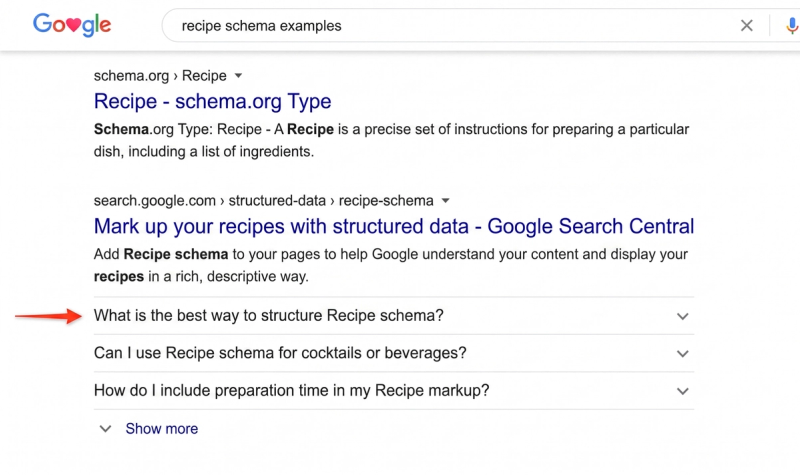
    Long-term SERP evolution: Chasing fleeting features distracts from core SEO: satisfying user intent, building topical authority, and creating genuinely helpful content. Google is reclaiming SERP real estate for its own features.

    Common questions answered:

    • Does this hurt rankings? No direct ranking penalty. It’s a display change, not an algorithmic demotion.
    • Should I remove FAQ schema? Not necessarily. Google says unused structured data causes no problems. Leaving accurate markup can still aid understanding. Remove only if it’s spammy or irrelevant.
    • What about traffic/CTR? Sites that relied heavily on the feature may see reduced SERP prominence and potentially lower CTR, especially if listings now appear smaller. However, many saw minimal impact because the rich results had already faded. Monitor via Search Console performance reports.
    • Does schema still matter? Yes, for other supported rich results and for helping Google parse content for AI/search features. FAQPage remains valid Schema.org markup. Learn more in our guide: Do Rich Snippets Help SEO?
    • Government/health sites exception? Even they lost the broad rich result treatment in the final 2026 change, though highly authoritative pages may still get special treatment in some contexts.

    Build E-E-A-T Authority

    Expert quotes via Digital PR — your spokesperson quoted in DR 50+ publications.

    View Expert Quotes

    What Should SEOs Do Now? Practical Advice

    Audit and optimize existing FAQs:

    • Review content for quality: Are questions real user queries? Are answers comprehensive, accurate, and original?
    • Ensure content is visible on the page (not hidden solely for schema).
    • Fix or remove repetitive, stuffed, or low-value sections.

    Focus on user-first Q&A:

    • Integrate natural FAQs into content where they address pain points.
    • Use proper heading structure (H2/H3) for scannability.
    • Optimize for featured snippets, People Also Ask, and AI Overviews by providing clear, direct answers.

    Embrace broader schema and structured data:

    • Prioritize supported types that still earn rich results.
    • Use schema for better entity signals and semantic SEO.

    Measure and adapt:

    • Export historical Search Console data before reports disappear.
    • Track CTR, impressions, and traffic for affected pages.
    • Test content improvements rather than markup tweaks.

    Long-term strategy:

    • Build topical authority with in-depth, helpful content.
    • Optimize for conversational/AI search (AEO).
    • Diversify traffic sources beyond Google SERPs. Focus on earning high-quality backlinks that truly strengthen your site’s authority.

    The Opportunity in the Change

    While the loss of FAQ rich results feels like a setback, it refocuses SEO on fundamentals. High-quality FAQ content still drives value: better on-page experience, lower bounce rates, higher engagement, and stronger chances of appearing in AI summaries or voice search. Sites that used FAQs authentically will continue benefiting; those that gamed the system lose a crutch.

    Google Official Notice (May 2026): “FAQ rich results are no longer appearing in Google Search. We will be dropping the FAQ search appearance, rich result report, and support in the Rich results test in June 2026.” — Straight from Google’s FAQ structured data documentation, underscoring the clean break from publisher-controlled expansions.

    As detailed in coverage from Search Engine Journal, FAQ schema can stay on pages without causing issues, as it remains valid for machine understanding even if the rich display is gone.

    Google’s actions reinforce a truth many missed: SERP features come and go, but helpful content and technical clarity endure. The deprecation is less a death knell for FAQs and more a call to create content that stands on its own merit—visible in search or not.

    In summary, Google removed FAQ rich results to declutter SERPs, curb abuse, and align with its AI-powered future. SEOs who over-invested in the tactic missed the emphasis on substance over presentation. By auditing content, prioritizing quality, and adapting to modern search behaviors, forward-thinking optimizers can turn this change into an advantage. The era of easy accordion wins is over; the era of resilient, user-centric SEO continues.

    Sarang Bhargava
    Sarang BhargavaDigital Innovation

    Sarang Bhargava is an avid technology enthusiast and content creator with over half a decade of experience. As a part of Systweak Software, he specializes in writing about software, apps, cybersecurity, and SEO-related topics. His passion for writing stems from experimenting with various apps and software across devices and operating systems. He also loves to stay updated with the latest trends, innovations, and search optimization strategies in technology.

    View More Posts

    Ready to Build Better Links for Your Clients?

    Explore services, view pricing and manage campaigns in one place.

    Create Free Account→

    No subscription required • 100% white-label

    Related Articles

    Continue exploring our latest insights and strategies for digital marketing success.

    Is Ahrefs Missing Organic Keywords? We Tested It Against Google
    21m

    Is Ahrefs Missing Organic Keywords? We Tested It Against Google

    Read Article
    Why Localised SEO is the Secret to Scaling Tech Brands Globally
    4m

    Why Localised SEO is the Secret to Scaling Tech Brands Globally

    Read Article
    How Many Backlinks Per Month Is Safe? What Google Actually Says About Link Velocity
    9m

    How Many Backlinks Per Month Is Safe? What Google Actually Says About Link Velocity

    Read Article

    Follow us across the web

    Join our fast-growing community!

    Services
    • Blogger Outreach
    • Link Inserts
    • Digital PR
    Industries
    • iGaming
    • SaaS
    • Finance
    • Crypto
    • E-commerce

    Company

    • About
    • Blog
    • Sites
    • Tools
    • For Publishers
    • Contact

    Legal

    • Terms
    • Privacy
    • Refund Policy
    iNet Ventures logo

    © 2026 iNet Ventures, Ltd. All rights reserved.