Understand how Domain Authority impacts your site's ranking and credibility online.
 iNet Ventures
Domain Authority is a metric developed by Moz that predicts how likely a website is to rank in search engine results, based largely on its backlink profile and overall trust signals.
If you’re still getting to grips with the basics, you’re in the right place — this guide is all about breaking down Domain Authority in a clear, practical way, so you fully understand what it is, how it works, and why it can sometimes feel frustratingly slow to improve.
What makes DA tricky is that it operates on a logarithmic scale, meaning each jump becomes harder than the last. This is one of the core reasons people underestimate how long it takes. You’re not just improving your own site — you’re competing against an entire ecosystem of websites that are also building links, publishing content, and increasing their authority at the same time.
On top of that, DA is a relative metric, meaning your score can stay the same — or even drop — if competitors grow faster than you.
Here’s a realistic breakdown based on consistent SEO and link building:
| Stage | Typical Timeframe | What’s Happening |
|---|---|---|
| DA 0 → 10 | 1–3 months | Initial trust + indexing |
| DA 10 → 20 | 3–6 months | Early authority signals |
| DA 20 → 40 | 6–12 months | Competitive growth phase |
| DA 40 → 60 | 12–24 months | Strong backlink profile required |
| DA 60+ | 2–5+ years | Elite competition |
These timelines assume you’re actively building links and improving your site. Without that, it’s very common for sites to stay stuck at the same DA level for years.
One of the biggest frustrations is how little movement you see in the short term.
You might spend weeks building backlinks, publishing content, and improving your site, only to see no visible change in your Domain Authority score.
This happens because Domain Authority doesn’t update in real time. It relies on crawling, indexing, and recalculating authority across millions of sites. Because of this, growth tends to happen in bursts rather than steady increases.
You may see no movement for weeks, followed by a sudden jump once enough signals are processed.
Understanding the data helps explain why patience is required.
This highlights an important truth: increasing Domain Authority isn’t just about adding links — it’s about catching up to competitors who may already be far ahead.
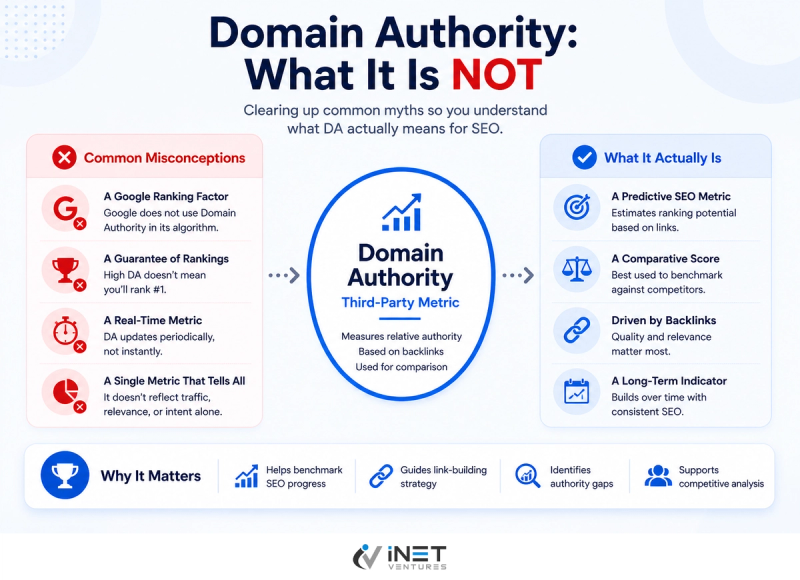
Backlinks are the foundation of Domain Authority, but not all links are equal.
A single strong, relevant backlink can have more impact than dozens of weak ones. This is because DA is heavily influenced by the authority of the domains linking to you.
If your link profile is weak, your growth will be slow. If it’s strong and relevant, you’ll see much faster progress.
Consistency matters more than short bursts.
If you build links aggressively for a short period and then stop, your growth will stall. But if you build links consistently over time, your authority compounds.
This steady growth pattern is one of the biggest differences between sites that grow and sites that stay stuck.
Content plays a massive role in how fast your Domain Authority increases.
If your content isn’t worth linking to, your growth will always rely on manual outreach — which is slower and harder to scale.
Strong content solves problems, offers unique insights, and goes deeper than competing articles.
Competition plays a huge role in timelines.
In some niches, DA 20–30 is enough to rank. In others, especially competitive industries, you may need DA 50+ just to compete.
This means your progress isn’t just about what you do — it’s about what everyone else is doing too.
If your Domain Authority isn’t increasing, there’s usually a clear reason.
Common issues include low-quality backlinks, irrelevant links, inconsistent SEO efforts, and weak content.
If you’re stuck, it’s worth understanding why your Domain Authority is low so you can identify and fix the underlying issues.
One mistake many people make is checking their DA occasionally without context.
To properly track progress, you should monitor backlink growth, compare competitors, and look at trends over time.
Using a reliable Domain Authority checker can help you see where you stand and how your authority is improving.
If you’re doing things properly:
If you’re not actively building links or improving content, your DA may not increase at all.
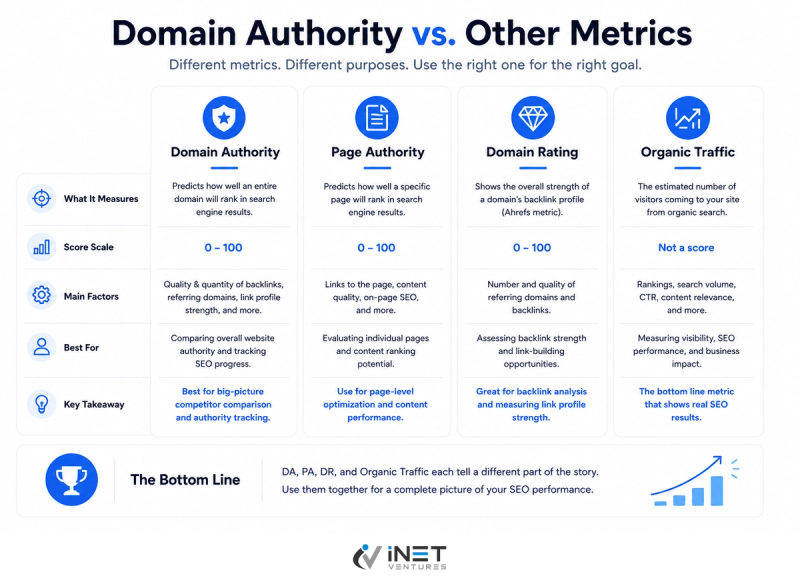
Increasing Domain Authority isn’t about quick wins — it’s about building long-term authority.
The sites that succeed are the ones that build high-quality links consistently, create content worth linking to, and stay patient while results compound.
Once you understand that, DA stops feeling random — and starts becoming something you can actually grow strategically.
Explore services, view pricing and manage campaigns in one place.
No subscription required • 100% white-label
Related Articles
Continue exploring our latest insights and strategies for digital marketing success.


![Insider Instagram Tips [2026 Guide]](/_next/image?url=https%3A%2F%2Fcdn.sanity.io%2Fimages%2F90630dz3%2Fproduction%2Fe1d9c1ac1321fbf3cfd8d993a935a7b5873d68e4-1600x2000.jpg%3Fw%3D1200&w=3840&q=75)
![How to Increase X Followers - 30 Tips and Tricks [2026]](/_next/image?url=https%3A%2F%2Fcdn.sanity.io%2Fimages%2F90630dz3%2Fproduction%2Fdd58619f91e7cf66ffddbc41dea4435f6458221f-1672x941.png%3Fw%3D1200&w=3840&q=75)