Delve into the complexities of Private Blog Networks and their impact on SEO strategies and search engine rankings.
 iNet Ventures
It’s a term splashed around the SEO environment, but what is a PBN? This article explores the benefits and disadvantages of a PBN and will help to explain what it means. Let’s begin.
A PBN is a shorted term for Private Blog Network, just as SEO means Search Engine Optimisation. It already sounds ugly when you mention the term ‘network’, especially within the digital marketing world. After all, search engines are smart and don’t wish to witness unnatural manipulation from where search results are controlled by networks of owners.
Of course, private blog networks are to be avoided where possible, since they can send a negative signal to the likes of Google. When assessing link opportunities, many website owners now rely on tools such as a domain authority checker to better understand the strength and credibility of a website before pursuing a link.
Savvy Private Blog Network owners will make it hard or impossible for a person to detect that they are the king of the hierarchy of many websites. Bad owners will keep their network easily known – at least from a marketing thought.
This is why analysing backlink profiles has become increasingly important. Using a backlink analyzer can help uncover patterns that suggest whether a site is part of a wider network or operating independently.
Whilst Google isn’t able to install law, it can dictate which websites are indexed within its algorithm. Thus, PBNs are clearly an area that Google looks at, especially the poorly created websites – which many are. In fact, I believe this is really where the likes of Google home in on – poor websites that are created for the primary reason to sell links.
Google treats Private Blog Networks as part of link schemes when they are used to manipulate rankings. With modern advancements in detection, including AI-driven systems, Google is increasingly effective at identifying patterns between websites, ownership signals, and unnatural linking behaviour, as outlined in Google’s link spam policies.
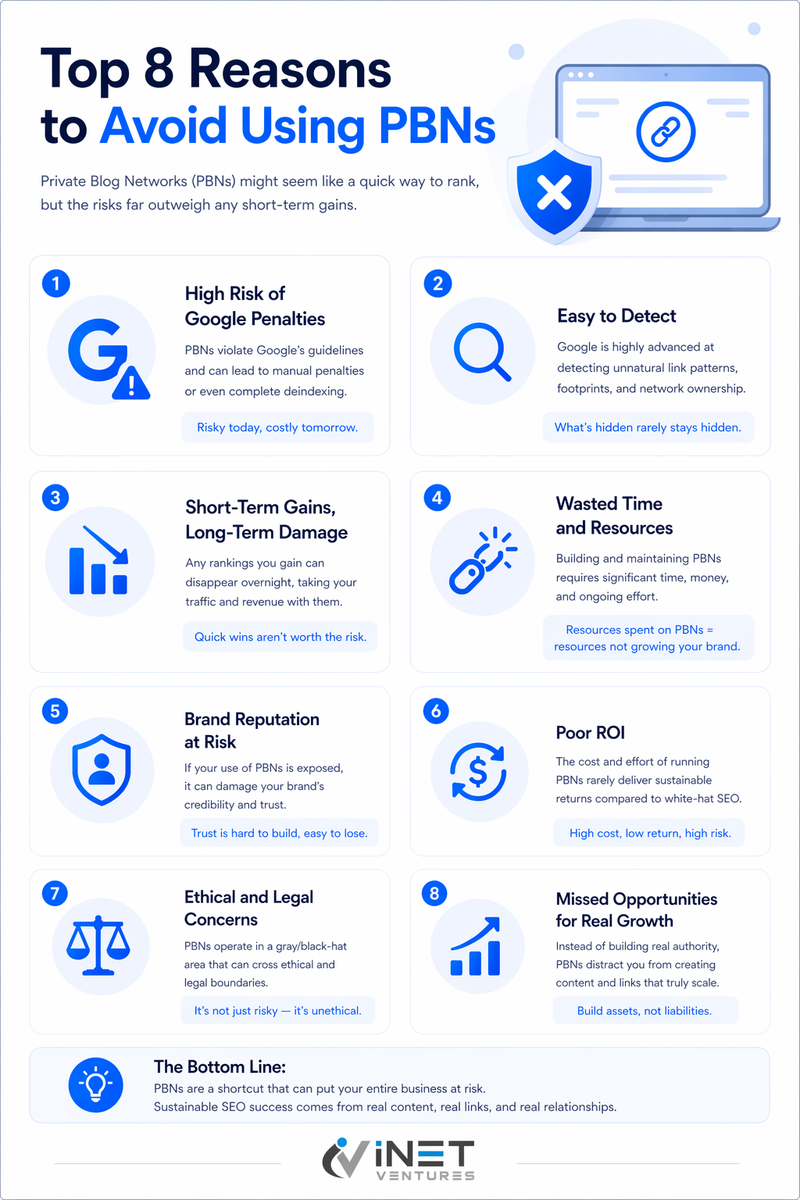
PBNs that offer true value are unlikely to be harmed by Google, websites that have the correct ingredients offer value, who ever owns them; great content that inform a user with the information they searched for.
However, it is important to understand that intent matters. If a network of websites is created primarily to influence rankings through controlled links, it may still be considered manipulative regardless of content quality. In many cases today, such links are simply ignored or devalued rather than rewarded.
When reviewing potential placements, it’s also wise to check factors such as spam signals. Using a spam score checker can help identify risky domains before placing content.
As a website owner, you should adapt a natural approach to marketing. Since links play an important role in this, you should think carefully about the strategy you employ. Well crafted content providing a natural mention isn’t likely to cause any negativity in regards to how a search engine views your website – beneficial? Yes.
Imagine for one minute that you are one of the masterminds behind Google and its algorithm, you can hardly blame them from wanting to keep the search results indexed in a manner that isn’t easily manipulated. Once upon a time, website owners could easily manipulate search results by using quick methods from which had zero value for the user.
For a broader understanding of how backlinks influence rankings, resources like Moz’s backlink guide provide useful foundational insight.
Get quoted by journalists and featured as an expert in high-authority publications.
| Check | Possible PBN Link | Real / Editorial Link |
|---|---|---|
| Website purpose | Site exists mainly to publish guest posts or outbound links | Site has a clear brand, audience, and real business/content purpose |
| Content quality | Thin, generic, AI-spun, or unrelated articles across many niches | Useful, original content focused around a consistent topic |
| Outbound links | Links to casinos, CBD, loans, crypto, SEO, adult, or random client sites | Links are relevant, natural, and support the article |
| Traffic | Little or no organic traffic despite high DR/DA | Receives real search traffic and ranks for relevant keywords |
| Topical relevance | Publishes content on unrelated topics: pets, finance, gaming, law, travel | Content stays within a focused niche or related categories |
| Author profiles | Fake authors, no bios, stock photos, or no social presence | Real authors with bios, credentials, and external profiles |
| Site design | Basic theme, poor branding, generic logo, little trust information | Professional design, clear navigation, About page, contact details |
| Link placement | Exact-match anchor placed awkwardly inside low-value content | Anchor text fits naturally and adds value to the reader |
| Indexing | Many pages are deindexed or not ranking at all | Pages are indexed and visible for relevant search terms |
| Ownership footprint | Multiple sites share the same IP, theme, analytics ID, or writing style | No obvious network footprint or repeated patterns |
| Engagement | No comments, social shares, newsletter, audience, or brand mentions | Signs of real readership, mentions, shares, and engagement |
| Link value | Looks strong only because of inflated metrics | Has relevance, traffic, trust, and genuine editorial value |
Whilst some networks may still appear to influence rankings in the short term, the long-term reliability of PBNs has significantly decreased. Modern search engines are more likely to neutralise the impact of these links rather than reward them.
This means that even well-built networks can lose effectiveness over time, making them a risky strategy compared to more sustainable approaches such as blogger outreach and earning genuine editorial links.
For those looking to scale link building in a safer way, services such as link inserts (also known as niche edits) are commonly used to place links within existing, relevant content rather than relying on owned networks.
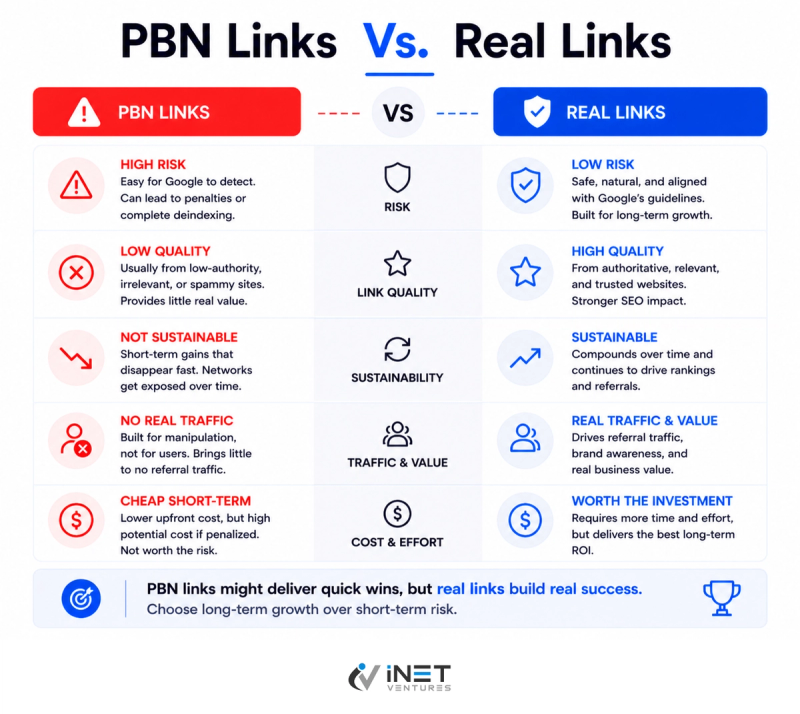
Many marketing agencies work with PBN owners, or even have their very own network of websites. At iNet Ventures, we avoid outreaching to PBNs, since we know that they do come with risk.
Instead, focusing on legitimate placements, strong content, and properly vetted websites tends to produce more consistent long-term results.
So there you go, that’s what a PBN (private blog network) is along with the uses, benefits and negatives that they deliver.
Explore services, view pricing and manage campaigns in one place.
No subscription required • 100% white-label
Related Articles
Continue exploring our latest insights and strategies for digital marketing success.


![Insider Instagram Tips [2026 Guide]](/_next/image?url=https%3A%2F%2Fcdn.sanity.io%2Fimages%2F90630dz3%2Fproduction%2Fe1d9c1ac1321fbf3cfd8d993a935a7b5873d68e4-1600x2000.jpg%3Fw%3D1200&w=3840&q=75)
![How to Increase X Followers - 30 Tips and Tricks [2026]](/_next/image?url=https%3A%2F%2Fcdn.sanity.io%2Fimages%2F90630dz3%2Fproduction%2Fdd58619f91e7cf66ffddbc41dea4435f6458221f-1672x941.png%3Fw%3D1200&w=3840&q=75)