The 2016 playbook is dead. Here is what actually moves reach, engagement and followers on Instagram in 2026 and 2027 — from Reels and carousels to the five-hashtag limit and Instagram search.
 iNet Ventures
When we first published this article in October 2016, Instagram was a very different place. The advice of the day was simple: be active, mine hashtags, follow the people who liked similar posts and hope they followed you back. Back then, 60 million photos a day felt like an unmanageable flood.
Today, Instagram has 3 billion monthly active users — a milestone Mark Zuckerberg confirmed in September 2025 — and roughly 2 billion people open the app every single day. The feed you post into is ranked by machine-learning systems that score watch time, sends and saves in milliseconds, and most of what people see is no longer from accounts they follow at all.
So we have rewritten this guide from scratch. Every recommendation below is grounded in what Instagram has published about its own ranking systems, what its leadership has said publicly, and what large independent studies of millions of posts measured across 2025 and 2026. If a tactic only worked in 2016 — or never really worked at all — it is not here. And where one of our own original tips has aged badly, we say so explicitly.
Instagram growth in 2026 comes down to four things: Reels watch time, shares per reach, saves (carousels), and being findable in Instagram search. Post Reels of 7–30 seconds with a strong first-three-seconds hook, use carousels for depth, write keyword-rich captions instead of stacking hashtags (you only get five now), and measure sends per reach — not follower count.
The first thing to understand is that there is no single Instagram algorithm.
“Instagram doesn’t have a singular algorithm that oversees what people do and don’t see on the app. We use a variety of algorithms, classifiers, and processes, each with its own purpose.”
— Adam Mosseri, Head of Instagram, in Instagram Ranking Explained
That means Feed, Stories, Explore, Reels and Search each rank content differently. Feed weighs your relationship with the poster. Stories prioritises viewing history and closeness. Explore and Reels are discovery engines built around content you have engaged with, mostly from accounts you do not follow. A tactic that works in Stories (replying to DMs, polls) is not the same as one that works in Reels (watch time, shares), and treating Instagram as one channel is the most common strategic mistake we see.
When Instagram chief Adam Mosseri talks about what actually moves distribution, three measures come up again and again:
Of those three, sends are the one most accounts ignore. Instagram has repeatedly signalled that shares — people DMing your Reel to a friend — are among the strongest indications that content deserves wider distribution. Before you publish anything, it is worth asking one blunt question: is this worth sending to someone? If it is not, the ranking systems will treat that as data.
More than half of what the average user sees is recommended content from accounts they do not follow. That single fact explains why “posting consistently” alone does not grow accounts any more. Every post competes in a global pool, ranked on predicted engagement, not just for your existing followers’ attention — which is also why small accounts can still break out, and why big accounts can quietly fade.
Get detailed insights into your backlink quality with Moz, Ahrefs & Majestic data combined.
If you want new followers in 2026, Reels are still where that happens. Sensor Tower’s 2025 data showed Reels accounting for 46% of time spent in Instagram in the US — up from 37% the year before. Reels drive around four times the interactions of single-image posts according to Metricool’s 2026 study of 24.3 million posts across 375,000 accounts.
Average watch time on Reels roughly doubled year over year to 8.5 seconds in Metricool’s study — but length is the biggest lever you control. Reels under 15 seconds keep roughly two-thirds of their length watched on average, while Reels over a minute retain less than a fifth. Instagram counts the moments past the three-second mark as a view, and Mosseri has confirmed watch time is the strongest Reels ranking signal.
Practically, that means: put your hook on screen immediately. Text overlay stating the payoff, motion in the first frame, no slow intros, no “wait for it”. Edit as if the viewer is one second from scrolling — because they are.
Match the length to the job. A 60-second Reel that could have been 20 seconds is not ambition — it is a retention problem you built on purpose.
Trial Reels, launched in late 2024, show your Reel to non-followers first and gather engagement data before it is shown to your existing audience. It is the closest thing Instagram has ever built to a free A/B testing tool, and it is purpose-made for the scariest part of the format: finding a hook that works. Use it before committing your best ideas to your main feed.
Meta launched Edits in April 2025 — a free, watermark-free video editor built for Reels, with a teleprompter, a frame-accurate timeline, AI tools and built-in insights. By its first anniversary it had shipped more than 130 features. If you are still cutting Reels in a general-purpose editor and exporting through three apps, you are making the hardest part of Instagram harder than it needs to be.
Rotate between them deliberately and let Trial Reels tell you which one your audience answers. Most accounts find one pattern outperforms the others by a wide margin within a month of testing.
While everyone chases Reels, carousels quietly post the highest engagement rate of any feed format. In Socialinsider’s Q2 2026 benchmark, carousels averaged 0.50% engagement by follower — ahead of Reels at 0.48% and single images at 0.33%.
The mechanics are simple. Each swipe is an engagement signal. Saves — which Instagram weighs heavily — happen far more often on reference-style content. And a carousel earns two impressions from a single viewer: once when it appears, once when they swipe through. Single-image posts, by contrast, are the only format declining on every metric Metricool measured.
Use carousels for educational how-tos, before-and-afters, step-by-step breakdowns and list-style reference posts. The first slide is a headline, not an introduction — it exists to earn the second swipe.
Monthly retainer combining Blogger Outreach, Link Insert and Digital PR placements. Track everything via your live dashboard.
Here is the biggest change since this article was first written. In December 2025, Instagram capped posts and Reels at five hashtags, formally ending the 30-tag era that the original version of this article recommended.
The cap simply codified what Mosseri had been saying for years:
“Contrary to popular belief, hashtags are not a way to get more reach. They’re a great way to let people know what your post is about and connect posts. They’re useful for things like search.”
— Adam Mosseri, Head of Instagram
In other words: hashtags are a classification signal, not a distribution lever. They help Instagram — and people searching — understand what your content is about. They do not carry it to new audiences on their own.
Mid-tier tags in the 10K–500K post range consistently outperform mega-tags, because your content can actually compete there. Later’s hashtag guide is a solid reference for building the mix.
The 2016 version of this article told you to “steal hashtags” and mine them for followers. That entire workflow has been replaced by something more useful: Instagram search.
In a 2026 Q&A, Mosseri explained that Instagram search reads far more than captions. It analyses captions and comments as text signals, and it runs the photo or video itself through embedding models that map visual content and search queries into the same mathematical space. Your Reel about sourdough can surface for “sourdough starter” even if those exact words appear nowhere in your caption.
The practical consequences:
A quick example. A caption like “Monday mood — love this one 🥰” is invisible to search. “How I plan a week of Instagram content in 30 minutes” tells the search index, the recommendation classifier and the human scanning their feed exactly what they get. Same photo, completely different discoverability.
If you want a companion walkthrough of the growth side of this, our guide on how to increase Instagram followers covers the profile-level fundamentals.
Engagement rate per follower has collapsed — Socialinsider measured the all-format median at roughly 0.45% in Q2 2026, down about a quarter year over year. That is not a sign the platform is dying; it is a sign the interactions moved somewhere followers cannot see: DMs.
Broadcast channels are the structured version of this. They are one-to-many channels inside Instagram’s DMs where your biggest fans opt in to hear from you directly. They cannot be scheduled by third-party tools, which is exactly the point — they reward accounts that show up live. Use them for drops, Q&As, behind-the-scenes and anything your superfans would want before everyone else. It is the same shift that has chat apps reshaping Gen Z social behaviour more broadly: the feed is the shop window, the DM is where the relationship actually lives.
For the same reason, treat sends as a content KPI. “Comment GUIDE and I’ll DM it to you” style prompts are now a legitimate native pattern — they convert passive scrollers into DM conversations, and DM conversations into the strongest distribution signal Instagram tracks.
Stories are ranked completely differently from the feed — Instagram’s own ranking explainer shows they lean on three signals: your viewing history with an account, your engagement history (likes and DM replies), and predicted closeness. In other words, Stories do not exist to reach new people. They exist to deepen the relationships you already have, which is exactly why they pair so well with Reels: Reels recruit, Stories retain.
The mechanics that matter are interactive stickers. Polls, quizzes, sliders and question boxes each register as engagement, and question boxes do something more valuable — they turn passive viewers into DM conversations, which feed the same closeness signals that keep you at the front of the tray. A daily Stories habit with one interactive element will outperform a polished weekly dump, every time.
Use highlights to archive your best Stories into a permanent grid-level pitch: an “About” reel, results, FAQs, and product tours. New profile visitors read highlights like a website’s navigation bar before they ever decide to follow.
Expert quotes via Digital PR — your spokesperson quoted in DR 50+ publications.
A new category of tool arrived properly in 2026: AI agents that don’t just draft your captions but actually connect to your Instagram and do work — replying to comments, managing your inbox, publishing on a schedule and monitoring your niche while you sleep. Grok Bot, xAI’s always-on agent product (launched in beta in August 2026), runs on its own cloud computer and — through official connectors like Postiz — can schedule and publish to Instagram and 30+ other platforms on a routine, flagging you for approval before anything goes live. ChatGPT and Claude agents can do similar work through official-API tools, and Meta’s own AI assistant is now built directly into the app.
The dividing line matters more than the tool. Everything legitimate runs through Instagram’s official API and approved platforms; everything that simulates a logged-in user or asks for your password is the category that gets accounts restricted.
ManyChat is the reference case: an official Meta Business Partner powering DM automation for over 100,000 Instagram accounts. Two patterns are worth setting up:
What Meta bans is the other category: browser bots that simulate a logged-in user, tools that ask for your password, automated likes at volume, and aggressive follow/unfollow behaviour. Even approved tools get flagged if you push volume too hard — automation should sound like you on your best day, not like a machine at scale.
The pattern that works in practice is human-in-the-loop: the agent drafts, schedules, monitors and reports; you approve. Let it clear your comment queue at 2am so you can spend your actual hours on the two things no agent can do — having the ideas, and being the person your audience came for.
A content mix that works for most accounts in 2026 looks roughly like this:
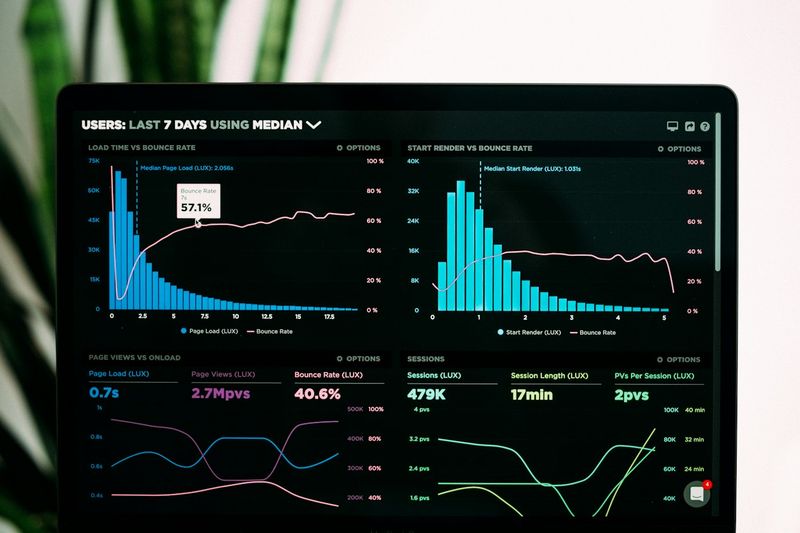
Cadence matters less than consistency of quality. With median engagement at 0.45%, follower count is a vanity metric — the four numbers worth tracking in Insights are sends per reach, average watch time, saves per reach and follows per reach. They map directly to how Instagram decides to distribute your content.
Instagram’s recommendation systems need to understand what your account is about in order to show it to the right non-followers. In 2026 the app even lets users view and edit the topics that shape their own recommendations through the “Your Algorithm” controls. The flip side: if you post about five unrelated things, the classifier cannot work out who to show you to. Niche consistency is not a creative limitation — it is a distribution strategy.
This article originally recommended tactics that were common in 2016 but are now ineffective, restricted, or outright counterproductive. Here is the honest accounting — what we said then, what happened to it, and what replaced it.
| 2016 tip | What happened to it | What to do instead |
|---|---|---|
| “Steal hashtags” from big accounts | Posts are now capped at five hashtags, and Instagram says hashtags don’t drive reach. | Write keyword-rich captions for Instagram search, then pick five targeted tags. |
| Mine hashtags and follow people who liked similar posts | Follow/unfollow patterns are detected as spam and can get accounts restricted. | Earn follows through Reels and Explore distribution instead. |
| Like hundreds of photos in your niche daily | Mass automated liking violates the guidelines and gets rate-limited. | Reply genuinely to comments and DMs on your own content. |
| Search locations and follow recent visitors | Same spam detection — and it scales to nothing. | Tag locations on your content so local discovery works for you. |
| Repost other people’s content with credit | Instagram now demotes unoriginal and watermarked content in recommendations. | Create original content, or use licensed collaboration formats. |
| “Let other people pay” — engage with audiences reached by competitors’ ads | Engagement bait doesn’t influence ranking, and it burns hours. | Run your own small paid tests, or use collab posts to borrow audiences. |
The common thread is that everything which tried to extract attention from the system without adding value has been engineered away. What is left is the part that was always true: make content people actually want to watch, save and send.
Instagram rewards content, but business growth runs on authority. The strongest Instagram presences we work with are quoted in their industry’s publications, featured as expert sources, and discoverable well beyond the app. That is a digital PR discipline: journalist requests, expert commentary, and earned coverage that mentions your brand where your buyers already read.
It also compounds with repurposing. A strong Reel becomes a blog post; a carousel becomes an email; a Q&A becomes a guide. Creators who treat Instagram as one output in a portfolio — rather than the whole business — are more resilient to every algorithm change, which is really the point of understanding what it means to be a digital creator in 2026. If you are growing on multiple fronts, our guide to making the most of Threads is a natural next step, since Instagram will cross-post your content there natively.
Instagram now labels AI-generated media and has been explicit that original content is prioritised in recommendations while unoriginal, recycled and watermarked content is demoted. None of that makes AI off-limits — used as a production tool (editing, caption drafts, idea generation) it is genuinely useful. Used as a content firehose, it is a distribution risk. The rule of thumb for 2026 and 2027: keep a human in the loop, make something only you could make, and disclose AI involvement when the platform asks for it.

Quality beats volume, but volume still matters. Most accounts do well with 3–5 feed posts a week (weighted toward Reels and carousels) plus daily Stories. If you can only manage one post a week, make it a Reel with a strong hook rather than spreading thin across formats.
As a reach tool, no — and Instagram says so itself. As a classification and search tool, yes. You get five per post: use them to label what the post is about, not to chase distribution.
They do different jobs. Reels reach the most non-followers and drive discovery; carousels earn the highest engagement and save rates. A mix of both outperforms either alone, and both outperform single images, which are declining on every metric.
The all-format median is around 0.45% by follower and falling. Anything above 1% is genuinely strong in most niches. Track engagement by reach rather than by follower — it is a fairer measure as recommended content takes over feeds.
Less than it used to — ranked feeds stretch content lifetimes for weeks — but early engagement still seeds distribution. Post when your audience is active (check Insights), and give each post its first hour of attention: reply to comments and DMs as they come in.
Not banned — labelled, and increasingly demoted when it is unoriginal. Instagram prioritises original content in recommendations and attaches AI labels to synthetic media. Using AI as a production tool is fine; publishing raw AI output as your content strategy is the risky version.
The 2016 version of this article was a list of workarounds. The 2026 version is shorter to summarise because the platform finally rewards the thing it was always pretending to reward: content people genuinely want to watch, save and send. Master the three-second hook, build for saves and sends, write for Instagram search, and measure reach — not followers.
For the profile-level fundamentals that pair with this guide — bio, name field, highlights, grid planning — read our companion piece on how to increase Instagram followers.
Explore services, view pricing and manage campaigns in one place.
No subscription required • 100% white-label
Related Articles
Continue exploring our latest insights and strategies for digital marketing success.


![How to Increase X Followers - 30 Tips and Tricks [2026]](/_next/image?url=https%3A%2F%2Fcdn.sanity.io%2Fimages%2F90630dz3%2Fproduction%2Fdd58619f91e7cf66ffddbc41dea4435f6458221f-1672x941.png%3Fw%3D1200&w=3840&q=75)
