
If you're still optimizing exclusively for Google's traditional search results in 2026, you're missing half the visibility game. The rise of AI-powered search—ChatGPT, Perplexity, Google AI Overviews, and Claude—has created an entirely new discipline: Generative Engine Optimization (GEO).
But here's the truth most marketers won't tell you: GEO and SEO aren't competitors. They're complementary strategies that, when executed together, create a visibility moat your competitors can't easily replicate.
What is Generative Engine Optimization (GEO)?
GEO is the practice of optimizing your content and brand presence to appear in AI-generated responses. When someone asks ChatGPT "What's the best link building agency?" or searches Perplexity for "how to improve domain authority," the AI synthesizes information from multiple sources to provide an answer.
Unlike traditional SEO where you compete for 10 blue links, GEO is about becoming the cited source in that AI response. You can check your current authority baseline with a domain authority checker before developing your GEO strategy.
How GEO Actually Works
AI models like GPT-4 and Claude are trained on vast datasets, but they also retrieve real-time information through various mechanisms:
- Knowledge Graphs: Structured entity data that helps AI understand relationships between brands, people, and concepts
- Citation Sources: High-authority websites that AI systems trust for accurate, up-to-date information
- Community Signals: Reddit, Quora, and niche forums that AI systems scrape for authentic user opinions
- Structured Data: JSON-LD markup that explicitly tells AI what your content means. Use a schema markup generator to implement this correctly.
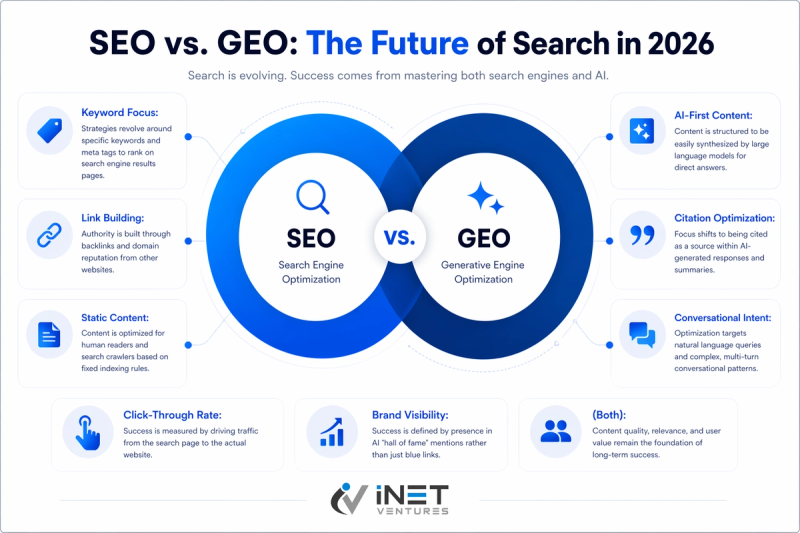
GEO vs. SEO: The Key Differences
While both disciplines aim to increase visibility, they operate on fundamentally different principles:
| Aspect | Traditional SEO | Generative Engine Optimization (GEO) |
|---|---|---|
| Primary Goal | Rank in search results (position 1-10) | Be cited in AI-generated responses |
| Success Metric | Rankings, organic traffic, CTR | Brand mentions, citation frequency, AI visibility |
| Content Focus | Keyword optimization, user intent matching | Entity clarity, factual accuracy, quotability |
| Link Strategy | PageRank, domain authority signals | Citation sources AI systems trust |
| Technical Elements | Core Web Vitals, crawlability, indexation | Schema markup, Knowledge Graph presence |
| Timeline | 3-12 months for results | Ongoing brand building + immediate retrieval |
| Competition | 10 organic positions per SERP | 1-3 cited sources per AI response |
Why You Need Both: The Compound Visibility Effect
Here's what we've observed across hundreds of client campaigns: brands that excel at traditional SEO have a significant advantage in GEO. Why? Because the same signals that Google rewards—authority, trustworthiness, expert content—are precisely what AI systems look for when selecting citation sources.
This creates a compound effect. Strong digital PR campaigns earn backlinks that boost your SEO, while simultaneously getting your brand mentioned in the high-authority publications that AI systems cite. One investment, two visibility channels.
Building a GEO Strategy That Works
Based on our experience optimizing for both traditional and AI search, here's a framework that delivers results:
1. Establish Entity Authority
AI systems need to understand who you are before they can recommend you. This means:
- Claiming and optimizing your Google Knowledge Panel
- Consistent NAP (Name, Address, Phone) across all platforms
- Wikipedia presence or citations from Wikipedia-level sources
- Author entities with clear expertise signals (E-E-A-T)
2. Create Quotable, Factual Content
AI systems love content that can be easily quoted. Structure your content with:
- Clear definitions: "Link building is the process of acquiring hyperlinks from other websites to your own."
- Specific statistics: "Studies show that 91% of web pages get no organic traffic from Google."
- Expert opinions: First-person insights that demonstrate real experience
3. Build Citation-Worthy Backlinks
Not all backlinks are equal for GEO. Focus on placements in publications that AI systems trust and cite. Our blogger outreach and link insert services specifically target these high-trust publications.
4. Dominate the Long-Tail Conversation
AI queries tend to be more conversational and specific than traditional searches. Instead of optimizing for "SEO agency," optimize for "What should I look for when hiring an SEO agency for SaaS?"
What the Research Shows
According to research from Princeton and other institutions (arXiv), GEO strategies can increase visibility in AI responses by up to 40%. The study found that "source citations, quotations, and statistics" were among the most effective optimization tactics.
How to Measure GEO Success
Unlike SEO with its clear ranking positions, GEO measurement requires different approaches:
- Brand Mention Monitoring: Track when and where your brand appears in AI responses
- Citation Tracking: Monitor which of your pages are being cited by AI systems
- Query Testing: Regularly test relevant queries in ChatGPT, Perplexity, and Google AI Overviews
- Authority Metrics: Use our SEO tools to monitor domain authority, which correlates with AI citation likelihood
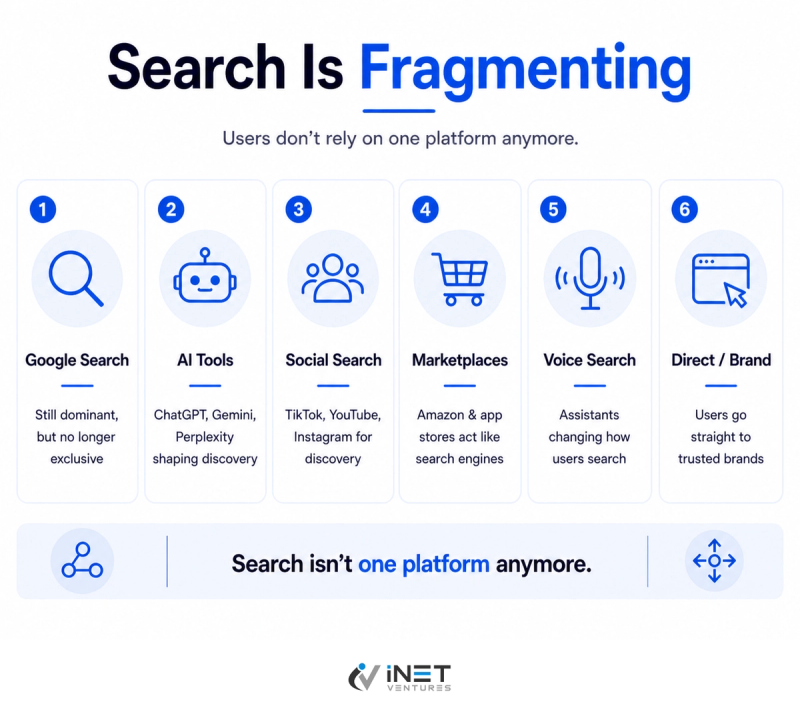
The Future: Search is Fragmenting
By 2027, industry analysts predict that traditional Google search will represent less than 60% of all search queries—down from over 90% just five years prior. The rest will be distributed across:
- AI assistants (ChatGPT, Claude, Gemini)
- AI-powered search engines (Perplexity, You.com)
- Social search (TikTok, Reddit, YouTube)
- Voice assistants (Alexa, Siri with AI integration)
Brands that invest in both SEO and GEO today will own the visibility landscape of tomorrow.
Getting Started: A Practical Approach
You don't need to choose between SEO and GEO—in fact, you shouldn't. The most effective approach is to:
- Audit your current visibility across both traditional search and AI platforms
- Strengthen your entity signals through consistent branding and authoritative content
- Build authority through strategic link building that benefits both channels
- Create quotable content with clear definitions, statistics, and expert insights
- Monitor and iterate based on where your brand appears in AI responses
The search landscape is evolving rapidly, but the fundamentals remain: authority, trust, and valuable content win. Whether that content is surfaced by Google's algorithm or cited by an AI assistant, the brands that invest in quality will continue to thrive. Explore our full range of services to build visibility across every search channel.

James is the founder and CEO of iNet Ventures, bringing over two decades of experience in SEO, link building, and online growth. He has helped online agencies scale through white-label solutions and has overseen the delivery of 25,000+ links, combining proven strategies with AI-driven workflows to drive efficient, long-term results.
View More Posts

